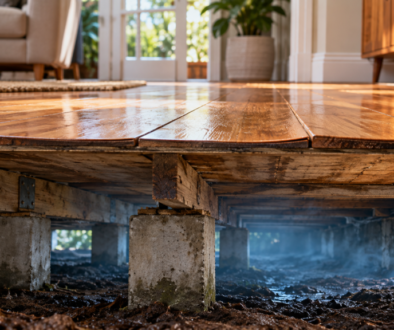
A musty smell when you walk through the front door, cold floors in winter, or mould that returns after every clean can all point below the house. So, is subfloor moisture dangerous? It can be, particularly when damp conditions persist unnoticed. Moisture beneath a home may affect indoor air quality, encourage mould growth, damage timber framing and make the living spaces above less comfortable.
Not every damp subfloor is an emergency, and a little seasonal moisture does not automatically mean your home is unsafe. The concern is ongoing moisture with no clear path to dry out. In Melbourne and across Victoria, older homes with enclosed subfloors, poor drainage or limited underfloor airflow are especially prone to this problem after wet weather.
Why subfloor moisture can become dangerous
A subfloor is designed to remain reasonably dry and ventilated. When moisture enters through the ground, plumbing leaks, poor site drainage or humid outside air, it can become trapped under the floor. That trapped moisture raises relative humidity, allowing biological growth and timber deterioration to take hold.
The issue rarely stays contained beneath the house. Air naturally moves through gaps around floorboards, service penetrations, wall cavities and ductwork. Damp, musty air from the subfloor can therefore make its way into bedrooms and living areas. This is why some homes smell stale even when windows are opened and the visible rooms appear clean.
Mould and indoor air quality concerns
Damp subfloors create favourable conditions for mould growth on timber, stored materials, insulation and dust. Mould spores and microbial particles can move into the home with air leakage, potentially aggravating symptoms for people with asthma, allergies or respiratory sensitivities.
A musty odour is not proof of harmful mould levels, but it is a useful warning sign. If occupants experience recurring sneezing, coughing, irritated eyes or worsening asthma that seems more noticeable at home, the subfloor should be part of the investigation. Health symptoms have many possible causes, so it is sensible to seek medical advice as well as identifying the moisture source.
Damage to timber floors and structural components
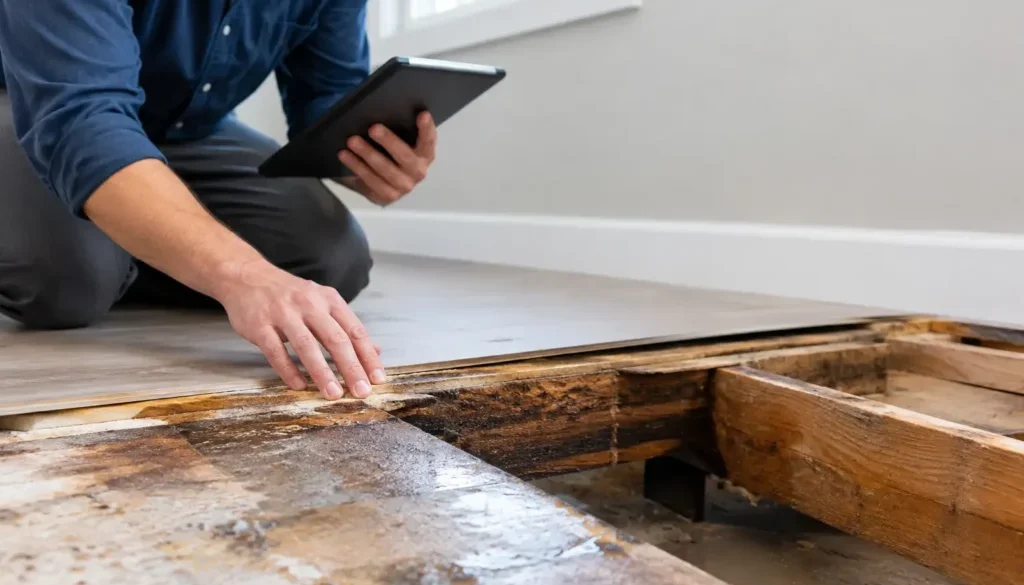
Timber absorbs and releases moisture from the surrounding air. When subfloor humidity remains high, floor joists, bearers, stumps, floorboards and other timber components may swell, cup, warp or begin to decay. Engineered timber flooring and finishes above can also move as conditions change below.
Decay does not happen overnight. However, prolonged dampness can reduce the service life of structural timber and turn a manageable ventilation or drainage issue into a larger repair project. Termites are also attracted to damp environments, although moisture does not cause termites by itself. Keeping the subfloor dry makes inspection easier and removes one condition that can support pest activity.
Condensation, cold floors and higher heating demand
A damp subfloor often makes a home feel colder. Moist air and wet ground can cool the underside of floors, while gaps in older homes allow cold air to rise into rooms. Homeowners may run heating for longer without achieving consistent comfort.
This is where moisture control supports energy efficiency as well as building protection. A dry, well-managed subfloor helps the floor structure perform more predictably and can reduce the clammy feeling that causes people to overheat the home.
Signs subfloor moisture needs attention
The most obvious sign is water under the house, but problems are often less visible. You may notice a persistent earthy or musty smell, especially after rain; cold or damp-feeling timber floors; cupping floorboards; peeling paint near skirting boards; or mould recurring in lower-level rooms.
Outside, pooling water near the perimeter of the home, blocked downpipes, overflowing gutters and soil sloping towards the building are important clues. Inside the subfloor, look for wet soil, droplets on pipes, mould on joists, rusty metal fittings, sagging insulation or timber that feels soft or looks darkened.
Avoid entering a tight, poorly lit subfloor if access is unsafe. Electrical wiring, pests, confined access and damaged timber all create hazards. A professional assessment can identify where moisture is coming from and whether the structure needs further inspection.
What causes moisture under a house?
The correct solution depends on the source. Installing a fan without addressing a plumbing leak or water flowing towards the home may only mask the problem. A good assessment considers the whole moisture pathway: where water enters, what is retaining it and how damp air will be removed.
Common causes include poor surface drainage, leaking pipes, damaged stormwater connections, groundwater seepage, inadequate subfloor vents, vegetation restricting vents, and missing or poorly installed ground moisture barriers. In some homes, the original passive vents are still present but cannot deliver enough cross-flow because nearby buildings, landscaping or the home’s layout restrict natural air movement.
Melbourne’s weather can add complexity. A cool, wet period may raise ground moisture, while humid conditions can make ventilation decisions less straightforward. Moving outside air through a subfloor is not automatically beneficial if that air is carrying more moisture than the space can tolerate. The system design should respond to the home, climate and source of dampness rather than relying on a generic fan layout.
How to deal with damp subfloor conditions
Start by stopping bulk water entry. Repair plumbing leaks, clear gutters and downpipes, direct stormwater away from the home and improve surface drainage where required. If the ground stays wet, drainage or waterproofing work may be necessary before ventilation can be expected to perform well.
A ground vapour barrier can be highly effective where moisture is evaporating from exposed soil. Properly selected and installed, it limits the amount of water vapour entering the subfloor air. It is not a substitute for fixing active leaks or flooding, but it can be an important part of a long-term moisture-control plan.
When subfloor ventilation is the right solution
Subfloor ventilation is designed to replace damp, stagnant air with drier air and maintain airflow where passive vents are insufficient. A tailored mechanical system may use carefully positioned intake and exhaust points to draw air across the entire underfloor area, including corners where moisture tends to linger.
The right approach depends on access, floorplan, ground conditions, existing vents and the cause of moisture. Some homes benefit from mechanical extraction, while others need a combination of drainage improvements, vapour control and ventilation. Noise levels, energy use, weather protection and ongoing maintenance should all be considered when selecting equipment.
At Ecoflow Ventilation, the focus is on assessing the home rather than treating every damp subfloor with the same system. That matters because a system that is undersized, poorly positioned or installed before water-entry issues are resolved may not deliver the dry, healthy outcome a homeowner expects.
When should you act urgently?
Arrange a prompt assessment if you can see standing water, extensive mould, rotting timber, a suspected leak, strong musty odours throughout the home or noticeable movement in flooring. These signs do not always mean serious structural damage has occurred, but delaying action allows moisture to spread and makes diagnosis harder.
For less severe symptoms, monitoring is still worthwhile. Take note of when odours occur, whether they worsen after rain, and whether condensation or mould is appearing in rooms above. That information can help identify whether the issue is mainly a subfloor problem, a whole-home humidity problem or both.
A dry subfloor is not simply about protecting the space beneath your feet. It helps support cleaner indoor air, steadier comfort and the long-term condition of the home above it. The earlier persistent moisture is properly diagnosed, the more likely the solution will be practical, targeted and lasting.