You usually notice poor indoor air after it has already become a problem. The windows are wet in the morning, the bedrooms feel stuffy, mould keeps returning around the sill, or someone in the house wakes up congested. That is why understanding effective ways to improve indoor air quality matters for so many Melbourne households – not just for comfort, but for health, moisture control and long-term protection of the home.
Indoor air quality is shaped by more than one issue. In many Victorian homes, stale air, excess humidity, poor natural airflow, outdoor pollutants, dust, and heating habits all play a part. Some fixes are simple and worthwhile. Others depend on the age of the home, how airtight it is, and whether the problem is occasional or ongoing.
10 ways to improve indoor air quality at home
The most effective approach is usually a combination of better ventilation, smarter moisture control and fewer indoor pollutants. Here is where to start.
1. Ventilate wet areas properly
Bathrooms, laundries and kitchens generate a surprising amount of moisture. If steam hangs in the air after a shower or cooking session, that moisture does not disappear – it settles on cooler surfaces and feeds condensation and mould.
Good extraction at the source makes a major difference. A properly sized exhaust system can remove humid air before it spreads through the rest of the house. The detail that often gets missed is timing. Running an exhaust fan for a few extra minutes after showering or cooking is usually far more effective than switching it off the moment you leave the room.
2. Reduce condensation before mould starts
Condensation is one of the clearest signs that the home is not managing moisture well. In Melbourne, this often shows up during colder months when warm indoor air meets cold glass, walls or ceilings.
Wiping water off windows helps in the moment, but it does not solve the cause. The better response is to reduce indoor humidity and improve air movement through the home. That may involve changing daily habits, but persistent condensation often points to a ventilation issue rather than a cleaning issue.
3. Open windows strategically, not randomly
Natural ventilation still has value, especially when outdoor conditions are favourable. Opening windows on opposite sides of the house can create cross-ventilation and flush out stale air more effectively than opening one window for a few minutes.
That said, it depends on the season, the weather and the location of the property. On a high-pollen day, near a busy road, or during very cold and damp weather, opening windows may bring in air that is not especially helpful. This is where many homeowners realise that natural ventilation alone has limits.
4. Keep dust and allergens under control
Dust, pet dander, pollen and fine particles all affect indoor air quality, especially for households dealing with asthma or allergies. Soft furnishings, carpets and cluttered surfaces tend to hold more airborne material than people expect.
Regular vacuuming with a quality filtered vacuum, damp dusting instead of dry dusting, and washing bedding frequently can reduce airborne irritants. These steps help, but they work best when paired with good air exchange. Otherwise, particles continue to circulate through enclosed rooms.
5. Choose low-emission household products
Cleaning sprays, air fresheners, paints, adhesives and some new furnishings can release volatile organic compounds into the air. These are not always obvious because the home may smell clean or newly renovated while the air quality is actually worse.
Where possible, choose lower-emission products and avoid overusing fragranced sprays indoors. If you are painting, renovating or bringing in new cabinetry or flooring, increase ventilation during and after installation. Material choices can have a real effect on the air your family breathes every day.
6. Maintain heating and cooling systems
A neglected heating or cooling system can circulate dust, odours and built-up contaminants throughout the home. Filters, ducts and vents all need attention, especially in homes that rely heavily on reverse-cycle systems or ducted heating.
Maintenance is not just about efficiency. Clean filters and well-serviced equipment support healthier airflow and more stable indoor conditions. If certain rooms always feel stale or unevenly heated, that may also be a sign that the current system is not distributing air well.
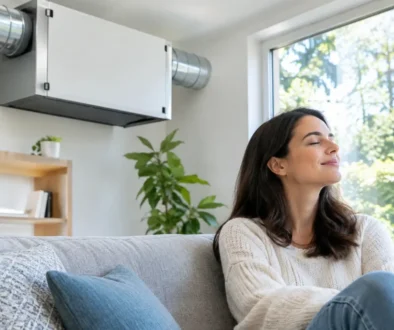
7. Use a ventilation system suited to the home
This is where the biggest long-term gains are often made. While portable air purifiers can help with particles in a single room, they do not manage moisture across the whole house and they do not bring in fresh air. For many homes with recurring condensation, stale air or mould, mechanical ventilation is the more effective solution.
The right system depends on the property. Some homes suit a centralised system, while others benefit from decentralised room-by-room ventilation. Positive pressure systems, heat recovery ventilation, energy recovery ventilation, subfloor ventilation and heat transfer systems each solve different problems.
A newer airtight build has different needs from an older weatherboard home with damp under the floor. That is why a home-specific assessment matters. A one-size-fits-all recommendation can easily miss the actual source of the problem.
Ways to improve indoor air quality in problem areas
Some rooms create more air quality issues than others, and they often need targeted treatment.
Bedrooms
Bedrooms can trap carbon dioxide, humidity and allergens overnight, particularly in winter when windows stay shut. If the room feels stuffy in the morning or condensation forms on the glass, the air exchange is likely inadequate.
Consistent background ventilation usually works better than trying to air the room out after the problem has built up. This is especially important for children, allergy sufferers and anyone spending long periods indoors.
Bathrooms and laundries
These spaces need fast moisture removal, not just occasional airflow. If steam is drifting into hallways or adjacent bedrooms, extraction is either insufficient or not running long enough.
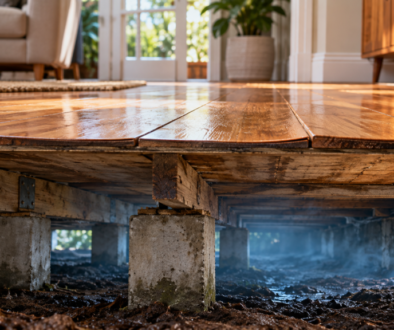
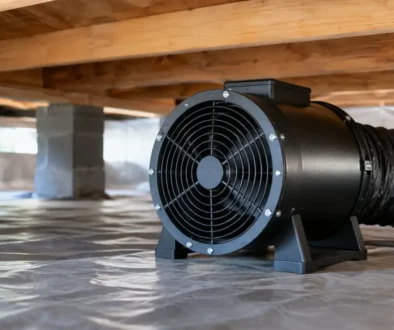
Subfloors
Subfloor dampness is easy to overlook because you do not see it every day. But moisture under the house can affect the air above it, contribute to musty smells and create conditions for mould and timber issues. In some homes, subfloor ventilation is a key part of improving the whole indoor environment.
8. Avoid drying clothes indoors without ventilation
Drying washing on racks inside can add litres of moisture to the air. In winter, when homes are closed up, that moisture often ends up on windows, walls and ceilings.
If you need to dry clothes indoors, ventilation becomes even more important. Open windows when conditions allow, use local extraction, or consider a whole-home system that can manage the added humidity load.
9. Do not ignore recurring mould
Mould is not simply a surface issue. If it keeps returning after cleaning, the underlying moisture and airflow problem is still there.
Bleach and mould sprays may remove visible growth for a while, but they rarely address why the area stays damp. If mould repeatedly appears in corners, wardrobes, behind furniture or around windows, the home likely needs a more permanent ventilation and moisture-control strategy.
10. Get expert advice when the problem is ongoing
There is a point where trial-and-error becomes expensive and frustrating. If you have already cleaned, opened windows, run fans and still have dampness or stale air, the next step should be a proper assessment.
A specialist can look at how the home is built, how air moves through it, where moisture is being generated and which system type fits the layout and lifestyle of the household. For Melbourne homes, local climate conditions matter as well. What works in one property may be the wrong solution in another.
For that reason, the best ways to improve indoor air quality are not always the flashiest or the most expensive. They are the ones that match the home properly, solve the actual source of the issue and keep delivering results through winter, summer and everything in between.
At Ecoflow Ventilation, that is the thinking behind a tailored ventilation approach. When fresh air, moisture control and energy efficiency are planned together, the home feels better to live in – and healthier too.
If your house feels damp, stale or difficult to keep comfortable, treat that as useful information. Indoor air problems rarely fix themselves, but with the right approach, they can be solved well.