
Condensation on bedroom windows, a musty smell in a wardrobe, mould returning to the same bathroom corner – these are often signs that a home is holding onto too much moisture and not exchanging enough air. Opening a window can help on a mild day, but it is rarely a reliable long-term answer for Melbourne homes dealing with cold mornings, wet winters, busy roads, pollen or security concerns. Effective home air quality improvement means understanding what is happening inside the building, then choosing a ventilation approach that suits the home and the people living in it.
Indoor air is affected by far more than outdoor pollution. Every shower, load of washing dried indoors, meal cooked on the stovetop and breath taken overnight adds moisture and particles to the home. Modern homes can be particularly prone to trapped humidity because they are built to be more airtight for energy efficiency. Older homes can have different issues, including cold surfaces, draughts in the wrong places and poorly ventilated subfloors.
What affects air quality inside a home?
Most indoor air concerns come down to a mix of moisture, pollutants and airflow. When those factors are out of balance, the results can be uncomfortable and, over time, damaging to both wellbeing and the building itself.
Humidity is a major factor. Warm indoor air carries moisture, and when it meets a cold window, wall or ceiling surface, condensation can form. Repeated condensation creates the conditions mould needs to grow. It can also affect paintwork, plaster, timber and furnishings. Simply wiping windows each morning removes the visible water, but not the moisture source or the underlying ventilation issue.
Pollutants are another consideration. Cooking can release fine particles and odours, while cleaning products, new furnishings, dust, pet dander and outdoor smoke can all influence the air you breathe. For households managing asthma, allergies or respiratory sensitivities, reducing the build-up of these irritants can make day-to-day living more comfortable.
Airflow matters because stale air needs a path out, while fresher air needs a controlled way in. A home may have plenty of windows yet still have poor ventilation if occupants keep them closed during cold weather, if rooms are shut for long periods, or if there is no effective airflow through wet areas and bedrooms.
Home air quality improvement starts with the right diagnosis
There is no single ventilation system that is right for every Victorian home. A townhouse with condensation in upstairs bedrooms needs a different assessment from a weatherboard home with a damp subfloor, or a new build where the owners want continuous filtered fresh air without losing unnecessary heat.
A useful assessment considers where moisture is being produced, where it is collecting, how the home is heated, which rooms are occupied most often, and the layout of roof spaces, wall cavities and duct routes. It should also account for the local environment. A home near a busy Melbourne road may benefit from filtered mechanical ventilation rather than relying heavily on open windows. A household in a high-pollen area may have similar priorities during certain seasons.
It is also worth separating ventilation problems from water-entry problems. A leaking roof, failed shower waterproofing, rising damp or plumbing leak must be repaired at the source. Mechanical ventilation can manage everyday moisture and stale air, but it cannot solve water penetrating through the building fabric.
Start with moisture at its source
Exhausting moist air close to where it is created is one of the most effective practical measures. Bathrooms, laundries and kitchens need extraction that is correctly sized, ducted and used for long enough after moisture-producing activities. A fan that is noisy, weak or vented into a roof space may do very little to protect the home.
Kitchen rangehoods deserve particular attention. They should remove cooking vapour and particles to the outside where possible, rather than simply recirculating them through a filter. This is especially relevant in open-plan homes, where cooking moisture and odours can travel directly into living and bedroom areas.
Daily habits still play a role. Use lids when cooking, run bathroom extraction during showers and after, and avoid drying large loads of washing indoors where practical. These steps reduce the moisture burden, but they work best alongside a whole-home strategy when condensation or mould is recurring.
Choosing a ventilation system for your home
Mechanical ventilation provides predictable airflow without relying on weather conditions or open windows. The best option depends on the home’s design, the specific problem and the desired level of comfort and energy efficiency.
Positive pressure ventilation
Positive pressure systems introduce filtered outdoor air into the home, creating gentle pressure that encourages stale indoor air to leave through existing gaps and pathways. They can be useful in some existing homes where ducting options are limited and the primary concern is stale air or condensation.
However, positive pressure is not automatically suitable for every building. Its performance depends on the home’s leakage pathways, outdoor air conditions and the way moisture moves through the structure. A professional assessment is particularly valuable where there are known dampness concerns, as the system needs to be designed carefully rather than treated as a universal mould solution.
Heat recovery and energy recovery ventilation
Heat recovery ventilation, often called HRV, extracts stale air from wet rooms while supplying fresh air to living areas and bedrooms. A heat exchanger transfers much of the warmth from outgoing air to incoming air without mixing the two air streams. This can make continuous ventilation more comfortable during Melbourne’s cooler months.
Energy recovery ventilation, or ERV, works on a similar principle but can also transfer some moisture. In the right conditions, this may assist with humidity balance as well as temperature management. Whether HRV or ERV is preferable depends on the home, the climate conditions and how the household uses heating and cooling.
These systems are often a strong option for new builds and major renovations, where duct routes can be planned early. They can also be installed in existing homes, though access, ceiling space and the extent of building work will influence the design and cost.
Decentralised ventilation
Decentralised units are fitted through external walls and ventilate individual rooms or zones. Some operate in paired configurations to supply and extract air while recovering heat. They can be a practical choice for apartments, heritage homes, renovations or properties where installing a central ducted system would be disruptive.
The trade-off is that room-by-room solutions need careful placement and planning. One unit in a living area will not necessarily solve condensation in bedrooms at the other end of the house. The system should match the way air moves through the home and the rooms that need attention most.
Subfloor ventilation and heat transfer
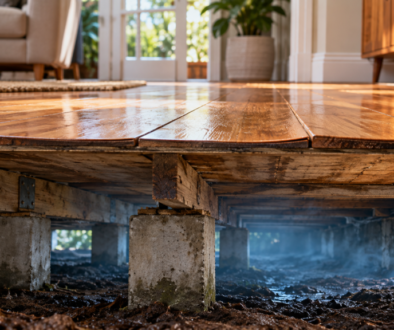
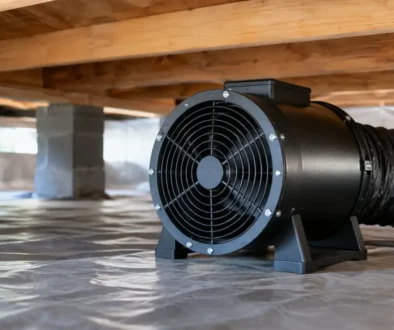
Damp, musty floors or persistent odours in older homes may point to inadequate subfloor ventilation. Improving airflow below the home can help reduce moisture accumulation and protect timber elements, but the cause of dampness still needs investigation. Poor drainage and groundwater issues require separate building or drainage works.
Heat transfer systems address a different comfort issue. They move warmth from a heated area, such as a living room, to cooler rooms. They can help reduce temperature differences across a home, but they do not replace purpose-designed fresh-air ventilation. A home can be evenly heated and still have excess humidity or stale air.
Design and installation make the difference
A ventilation system is more than a fan or a control panel. Airflow rates, intake and exhaust locations, duct sizing, acoustics, filtration, controls and commissioning all affect the result. Poorly located intakes can draw in unwanted outdoor pollutants. Undersized ducting can make a system noisy and restrict airflow. Oversimplified designs may ventilate one area well while leaving the original problem room untouched.
For centralised systems, discreet ductwork and appropriately selected grilles help the system work quietly in the background. For decentralised systems, placement should consider furniture, sleeping areas and external wall access. Filters need to be accessible, because maintenance is part of maintaining healthy air over the long term.
A well-designed system should be straightforward to live with. Homeowners need to know which controls to use, when filters should be checked and what normal operation sounds like. Continuous low-level ventilation is often more effective and quieter than switching a powerful fan on only after a room has become steamy or stale.
Healthier air is also about realistic expectations
Ventilation can reduce excess humidity, remove stale air and help dilute indoor pollutants, but it is one part of a healthy-home approach. Regular cleaning, suitable filtration, prompt repairs to leaks and sensible moisture management all contribute. Where mould is widespread or occupants have significant respiratory symptoms, professional medical advice and appropriate mould remediation may also be needed.
The practical goal is not to make a home feel draughty or clinical. It is to create a consistent background of fresher, drier air while retaining comfort and using energy wisely. For Melbourne homeowners, that often means moving beyond short-term fixes and choosing a ventilation design that responds to the home’s layout, construction and daily life. A tailored assessment from a residential ventilation specialist such as Ecoflow Ventilation can turn recurring condensation and stale-air concerns into a clearer plan for a healthier home.