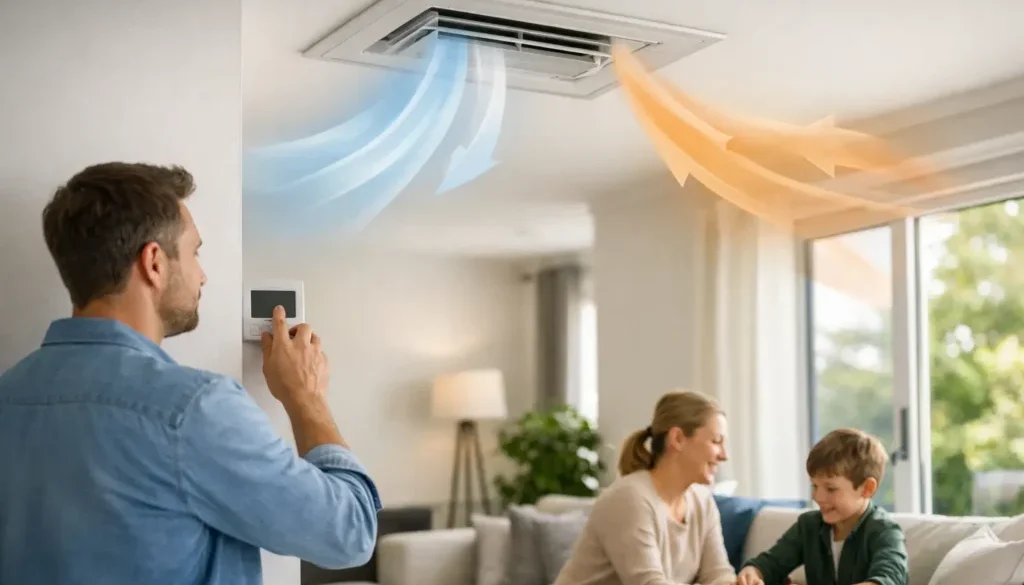
Condensation on bedroom windows, a musty smell after rain, or mould returning in the same corner are not problems to solve by simply opening a window for ten minutes. Knowing how to use a home ventilation system properly helps remove moist, stale air in a controlled way, while protecting comfort and reducing unnecessary heat loss.
For Melbourne homes, the right routine depends on the system installed, the home’s layout and how the household lives in it. A well-designed system is not meant to be fiddled with every day. Once it is commissioned correctly, most homes benefit from a steady, low-energy operating pattern and a small number of sensible adjustments when conditions change.
Start by knowing what your system is designed to do
Home ventilation is not one single technology. The controls and best operating approach differ between positive pressure, heat recovery, energy recovery, decentralised room units, subfloor ventilation and heat transfer systems.
A positive pressure system generally draws filtered air from outside or the roof space, depending on its design, and gently introduces it into the home. This creates a slight pressure difference that encourages damp indoor air to leave through natural gaps and exhaust points. These systems are often used in existing homes where condensation and stale air are the main concerns.
Heat recovery ventilation, often called HRV, mechanically extracts stale air from wet areas such as bathrooms, laundries and kitchens, while bringing filtered fresh air into living spaces and bedrooms. A heat exchanger transfers much of the warmth from outgoing air to incoming air without mixing the two air streams. Energy recovery ventilation, or ERV, works similarly but can also help transfer some moisture. The better option depends on the home, climate and indoor humidity levels.
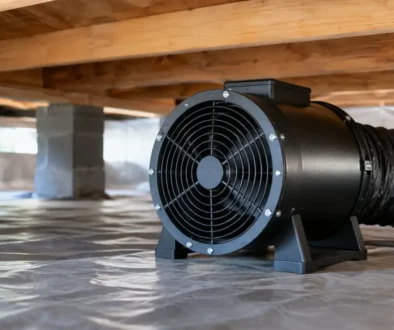
Decentralised ventilation units usually serve individual rooms or zones. They can be an effective choice for renovations, apartments, bedrooms or homes where installing a full ducted network is impractical. Subfloor systems have a more specific role: they improve airflow beneath the house to address dampness, musty odours and conditions that can contribute to timber and structural problems. Heat transfer systems move warmth from one part of the home to another, but they do not replace fresh-air ventilation.
Your installer should explain the purpose of your particular system, where air enters and exits, and which settings you can safely change. That information matters more than copying a neighbour’s routine.
How to use a home ventilation system day to day
For most mechanical ventilation systems, the best starting point is continuous operation at the normal or low setting. Moisture is produced every day through showers, cooking, drying clothes indoors and breathing while asleep. If the system only runs after a problem becomes obvious, it is already trying to catch up with moisture that has settled on cold surfaces or entered furnishings.
A continuous low setting is usually quieter, more consistent and more energy-efficient than regularly switching the system from off to maximum. It also supports better air quality overnight, when bedroom doors are closed and several people are breathing in the same spaces for hours.
Use a higher setting, often called boost or intensive mode, when moisture production rises sharply. Turn it on during and after showers, while cooking without lids, when a clothes dryer vents indoors, or when several guests are in the home. If your system has a humidity sensor, it may activate automatically. Allow the boost period to continue after the activity finishes, rather than turning it off as soon as the bathroom mirror clears.
The appropriate boost duration varies. A small ensuite with no opening window may need longer extraction than a large bathroom with good airflow. If your home still has persistent condensation or damp smells, the answer may be a setting adjustment, but it may also point to an undersized system, blocked airflow or another moisture source.
Keep internal airflow paths open
Ventilation works as a whole-home pathway. Fresh air needs a way to move from supply areas, commonly bedrooms and living rooms, towards extraction areas such as bathrooms, laundries and kitchens. Keep supply and extract grilles clear of curtains, furniture, storage boxes and dust build-up.
Avoid sealing every internal door gap if it prevents air from travelling through the home. Many systems rely on small clearances beneath doors or purpose-designed transfer grilles. If bedrooms feel stuffy when doors are shut, ask a ventilation specialist whether airflow pathways need to be improved.
Windows can still be opened when the weather is pleasant, but they should not be the only moisture-control strategy. In winter, opening windows widely may waste heating and is often avoided altogether. Mechanical ventilation provides a more dependable baseline when the home is closed up.
Use kitchen and bathroom extraction properly
A whole-home system complements, rather than excuses, good habits in wet areas. Use the rangehood while cooking, particularly when boiling water or frying, and use bathroom extraction during showers. If these are connected to the central system, use the designated boost control. If they are separate fans, operate them as intended.
Do not rely on a rangehood that simply recirculates air through a grease filter to remove steam from the home. Recirculating units can help with cooking odours and grease, but they do not vent moisture outdoors. Where cooking moisture is a recurring issue, the kitchen ventilation arrangement deserves a closer assessment.
Adjust settings with the season, not every change in weather
Melbourne’s weather can shift quickly, but ventilation controls should not be treated like a daily thermostat. Frequent changes make it difficult to tell whether the system is working and can create uneven conditions.
During colder months, keep the system running consistently. This is when condensation risk is usually highest because warm indoor air meets cold window glass, walls and roof surfaces. If condensation persists, check that vents are open and unobstructed, filters are clean, and boost mode is being used for showers and cooking. Do not simply turn the unit off to reduce noise or save power – that can allow humidity to build up again.
In warmer weather, ventilation may still be valuable for freshness, odours and pollutants, especially in well-sealed homes. Some systems have summer bypass functions that allow cooler outdoor air to enter without passing through heat recovery. If your controller offers this feature, ask your installer when it is appropriate for your system and home.
Positive pressure systems may have seasonal settings that account for incoming air temperature. The goal is to maintain healthy air movement without creating draughts or discomfort. Small, measured adjustments are preferable to large changes.
Look after filters, vents and controls
A ventilation system can only perform as designed when air can move freely. Filters capture dust, pollen and other particles before they enter the home or the unit. Over time, they become loaded and restrict airflow.
Check filters according to the manufacturer’s instructions and your local conditions. Homes near busy roads, construction sites, bushland or areas with high pollen may need more frequent checks. Some filters can be vacuumed carefully; others need replacement. Using the incorrect filter type or refitting a damaged filter can compromise both performance and indoor air quality.
Every few months, inspect visible supply and extract grilles for dust. Wipe them gently without pushing debris into the duct or unit. Never cover a vent to stop perceived draughts without first seeking advice. A covered grille can disrupt air balance elsewhere in the house.
Keep an eye on the controller or app if your system has one. Filter alerts, fault messages and unusual changes in noise should be acted on early. A low hum is normal for many systems. Rattling, whistling, vibration or a sudden increase in fan noise can indicate a loose grille, dirty filter, restricted duct or maintenance issue.
Avoid the common mistakes that limit results
The most common mistake is running a ventilation system only after mould or condensation appears. Ventilation is preventative. Consistent operation manages everyday moisture before it has time to settle into building materials.
Another is expecting ventilation to solve every indoor problem on its own. A leaking roof, rising damp, plumbing leak, unflued gas heater or clothesline-free laundry routine can create more moisture than any system should be asked to manage. Mould also requires safe cleaning and investigation of the cause, not just improved airflow.
It is also unwise to alter ducts, disconnect vents or change commissioning settings without professional guidance. Centralised HRV and ERV systems are balanced to supply and extract specified volumes of air. A seemingly minor change can reduce performance in a bedroom, bathroom or the entire home.
When to ask for a professional check
Contact a specialist if condensation continues after several weeks of correct use, mould returns, rooms feel noticeably stuffy, or the system is unusually noisy. The same applies if a controller shows repeated faults or if the home has been renovated, extended or made more airtight since the system was installed.
A professional review can check airflow rates, filter condition, ductwork, humidity patterns and whether the system settings still match the household’s needs. For older Melbourne homes, it may also reveal separate issues such as subfloor dampness or inadequate bathroom extraction. Ecoflow Ventilation takes this home-specific approach because effective ventilation is about how air, moisture and people move through a particular house.
A good ventilation system should quietly become part of the background of a healthy home: running steadily, clearing moisture before it becomes visible and helping every room feel fresher to live in.