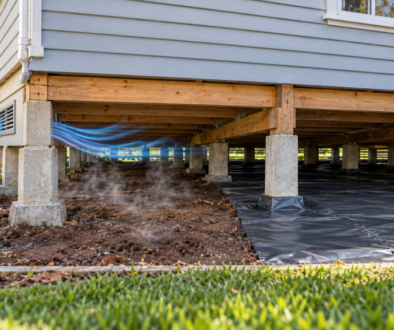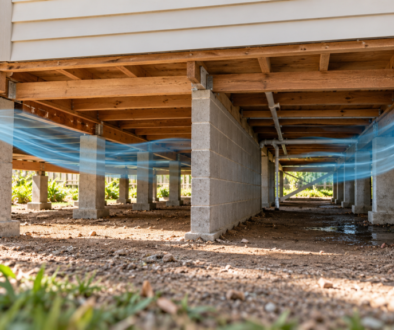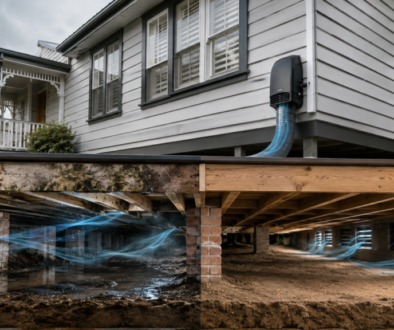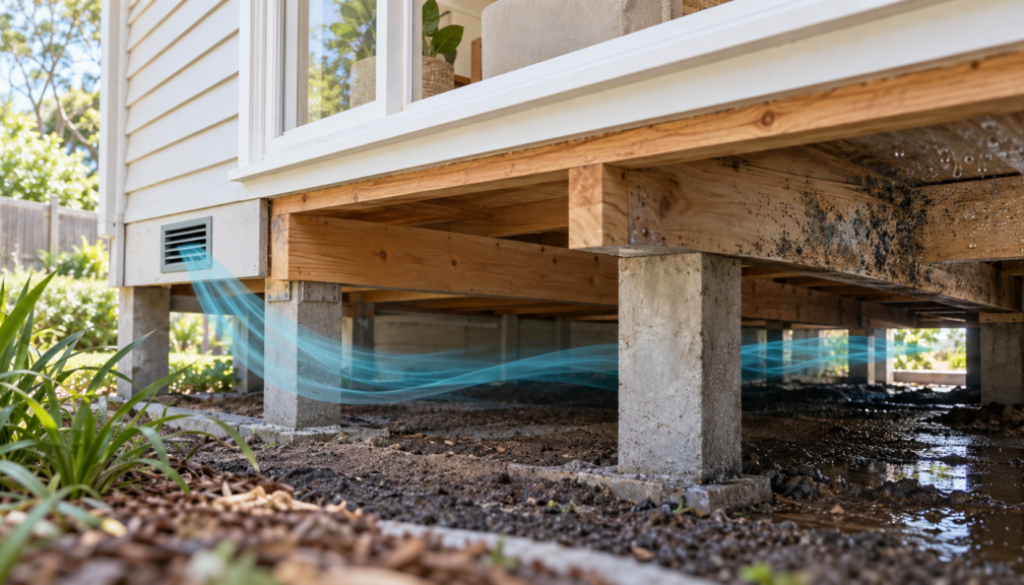
Subfloor ventilation may help reduce the risk of mould when poor airflow and excessive moisture beneath a house are contributing to damp conditions.
However, ventilation should not be presented as a guaranteed mould cure.
Mould is a moisture problem. If water continues entering beneath the home through leaking pipes, poor drainage or stormwater, installing a fan without addressing those issues may provide limited improvement.
The most successful approach is usually to identify the moisture source, repair active water problems and then provide enough ventilation for the area to dry.
Why Does Mould Grow Beneath a House?
Mould spores are naturally present in indoor and outdoor environments. Growth begins when spores settle on a suitable surface with enough moisture.
Beneath a house, mould may develop on:
- Timber bearers and joists
- Floorboards
- Stored cardboard or timber
- Insulation
- Dust and organic debris
- Masonry surfaces
- Other damp building materials
Victorian health guidance states that mould grows best in damp, poorly ventilated areas and that the way to control indoor mould growth is to control the moisture source.
The underfloor area can become damp because of ground evaporation, blocked vents, plumbing leaks, rainwater entry or inadequate drainage.
How Can Subfloor Mould Affect the Rooms Above?
A damp subfloor is physically connected to the rest of the building.
Air and odours may move through:
- Gaps between floorboards
- Plumbing penetrations
- Wall cavities
- Heating ducts
- Access hatches
- Openings around cables
- Gaps at floor and wall junctions
This means a moisture problem beneath the house may contribute to musty smells or elevated humidity indoors.
CSIRO explains that moist subfloor spaces beneath suspended timber floors can contribute to higher indoor humidity, especially where ventilation openings are blocked.
Mould appearing inside the house may still have another cause, such as bathroom humidity, window condensation, roof leaks or rising damp. A proper assessment should consider the whole property.
How Subfloor Ventilation May Help
- A correctly designed system may help by:
- Removing humid air from beneath the home
- Replacing stagnant air with outdoor air under suitable conditions
- Improving circulation around damp surfaces
- Helping materials dry after leaks are repaired
- Reducing condensation within the subfloor
- Limiting the conditions that allow mould to return
Australian Government indoor-air-quality guidance includes improving subfloor ventilation among the strategies that can help prevent mould. It also recommends repairing leaks and rising damp and reducing indoor humidity.
Ventilation is therefore one part of a broader moisture-control strategy.
Why Cleaning Mould May Not Be Enough
Cleaning removes visible growth, but it does not stop the surface from becoming damp again.
If the same moisture conditions remain, mould may return.
Before cleaning or replacing affected materials, the following should be checked:
- Is there an active plumbing leak?
- Does rainwater enter beneath the house?
- Are downpipes connected and working?
- Is the surrounding ground sloping toward the home?
- Are subfloor vents blocked?
- Is damp soil producing a high moisture load?
- Can air move between the different underfloor sections?
- Is there damaged or decaying timber?
Better Health Victoria advises identifying and controlling the source of moisture because mould is likely to recur if the source remains.
Will a Subfloor Fan Kill Existing Mould?
No. A ventilation fan does not directly kill mould or remove contaminated material.
Its role is to improve airflow and help control moisture.
Existing mould may require appropriate cleaning, removal or professional remediation, depending on:
- The extent of the growth
- The materials affected
- The source of contamination
- Whether materials are damaged
- The accessibility of the area
- The occupants’ circumstances
- Possible asbestos or other hazards
Heavily damaged structural timber should be inspected by an appropriately qualified building professional.
Why Fan Position Matters
Installing a fan does not guarantee that every section beneath the house will receive airflow.
If the fan is close to an open vent, air may travel directly between those two points and bypass the damp central areas.
An effective design may require:
- Ducting into enclosed sections
- Several extraction points
- Purpose-designed air inlets
- More than one fan
- Changes to existing vents
- Timers or humidity controls
The aim is to move air through the affected area, not simply around the external wall
Could Outdoor Humidity Make the Problem Worse?
Outdoor air is not always dry.
During humid weather, introducing a large amount of outdoor air may provide less drying benefit. This does not mean mechanical ventilation is ineffective, but it highlights the need for an appropriate operating strategy.
The design may consider:
- Extraction instead of forced supply
- Selected daytime operating periods
- Seasonal adjustments
- Humidity-responsive controls
- The moisture condition of the subfloor
- Local weather patterns
Ventilation is a controlled process. CSIRO identifies humidity and condensation control as important functions of building ventilation.
Other Work That May Be Needed
Subfloor ventilation may need to be combined with:
- Plumbing repairs
- Gutter and downpipe repairs
- Improved site drainage
- Stormwater management
- Clearing blocked vents
- A ground moisture barrier
- Removal of damp stored materials
- Timber repairs
- Indoor bathroom and laundry extraction
- Mould remediation
Australian Government maintenance guidance recommends checking vents, repairing leaking pipes and diverting stormwater when managing underfloor moisture.
Signs That Subfloor Mould May Be Present
Warning signs can include:
- A persistent musty odour
- Visible growth beneath floorboards
- Mould on lower walls or skirting boards
- Damp timber
- Condensation on underfloor surfaces
- Floorboards that swell or cup
- Odours that worsen after rain
- Rusting metal components
- Damp or damaged insulation
- High humidity beneath the home
These signs justify further investigation but do not confirm the full cause of the problem.
Preventing Mould From Returning
A long-term mould-prevention strategy should:
- Stop active water entry.
- Reduce evaporation from persistently damp soil where appropriate.
- Provide an effective underfloor airflow path.
- Remove or treat damaged materials safely.
- Control moisture generated inside the home.
- Monitor the area for recurring dampness.
No single piece of equipment can compensate for an unresolved water leak or serious building defect.
Subfloor Ventilation and Mould Assessments in Melbourne
Ecoflow Ventilation assesses underfloor airflow and moisture conditions before recommending a system.
Where mechanical ventilation is appropriate, we design it around the layout of the home and the location of the affected areas.
Contact Ecoflow Ventilation to arrange a subfloor ventilation assessment for damp, musty or mould-affected Melbourne homes.