Why Are My Timber Floorboards Cupping or Swelling?
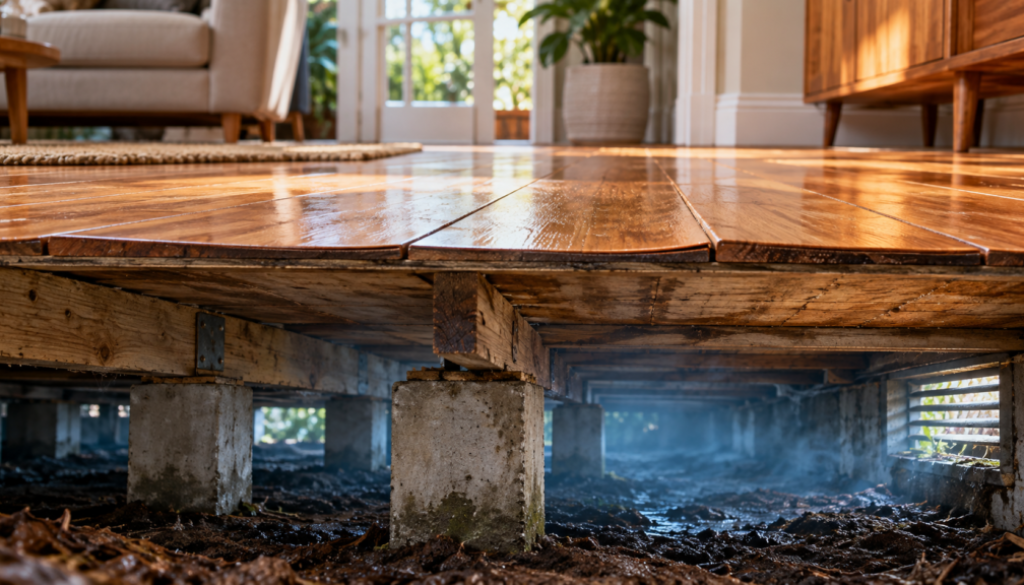
Timber floorboards expand as they absorb moisture and contract as they dry. If the underside of a floor is exposed to damp conditions for a prolonged period, boards may swell, move or develop a cupped shape.
If your floorboards are changing, the space beneath the house is worth checking. Subfloor moisture is one possible cause, but a flooring problem should not automatically be blamed on poor ventilation.
What does floorboard cupping look like?
A cupped floorboard has edges that sit higher than its centre. You may also notice boards pressing against each other, uneven areas, changes in the gaps between boards, discolouration or a damp smell.
These signs call for an investigation of the flooring and its surroundings. The visible shape alone does not identify where the moisture is coming from.
Where can moisture beneath the floor come from?
Possible sources include wet soil, poor drainage, leaking plumbing, stormwater entering beneath the house and high underfloor humidity. Blocked vents or renovations that restrict airflow may allow damp conditions to persist.
If water continues to enter and the area cannot dry effectively, timber beneath the floor may remain exposed to moisture for long periods.
Why might existing subfloor vents be insufficient?
Visible vents around the outside of a house do not guarantee airflow beneath every room. Internal brick walls and footings can divide the subfloor into separate sections. An extension may also cover original vents or interrupt a former airflow path.
Air may move freely near the perimeter while the section beneath affected floorboards remains stagnant. An assessment should look at where air actually enters, travels and leaves.
Can mechanical subfloor ventilation help?
If excessive underfloor humidity is contributing to the problem, a mechanical system may help improve airflow and drying conditions. Fans and ductwork can be positioned to reach enclosed areas and remove humid air from beneath the house.
Ventilation will not reverse existing damage to floorboards. Significantly deformed flooring or deteriorating structural timber should also be assessed by a suitable flooring or building professional.
Check for water entry before installing fans
Fans are unlikely to resolve the issue while water continues to run or pool beneath the house. Plumbing, downpipes, stormwater drainage and surface drainage may need repairs. Damp exposed soil or blocked vents may require attention as well.
The right solution may involve several measures, depending on the moisture source.
Why does fan placement matter?
A fan mounted in an external wall might move air near that wall without reaching the timber beneath an affected room. A useful design directs airflow through the problem area. In some homes, that requires ductwork or extraction points placed deeper into the subfloor.
The goal is effective airflow beneath the affected flooring, rather than simply installing a larger fan.
Subfloor moisture assessments in Melbourne
If your timber floorboards are cupping, swelling or moving unexpectedly, checking conditions beneath the home can be an important part of finding the cause.
Ecoflow Ventilation assesses subfloor moisture and airflow in Melbourne homes before recommending a ventilation system. Contact Ecoflow Ventilation to find out whether poor underfloor airflow may be contributing to your flooring problem.