Condensation streaming down bedroom windows, a lingering damp smell, or mould returning after every clean are rarely just housekeeping problems. They are often signs that moist, stale air is staying trapped inside the home. The best fresh air retrofit options address the cause by bringing in controlled fresh air, removing humidity and improving circulation without relying on open windows alone.
For Melbourne and Victorian homeowners, the right answer depends on the home’s construction, the location of the moisture, household habits and how airtight the building is. A ventilation system should be designed around the problem, not selected because it is the most familiar option.
Why a retrofit needs more than an exhaust fan
Many homes were built at a time when natural gaps around windows, doors and flooring provided incidental ventilation. Renovations, draught sealing, new windows and insulation can make a house more energy efficient, but they can also reduce the pathways for moisture and indoor pollutants to escape.
Bathrooms and kitchens need effective local extraction, but a single exhaust fan will not necessarily improve air quality in closed bedrooms, living areas or a damp subfloor. It may also be switched off before humidity has cleared. Whole-home ventilation takes a more deliberate approach: it moves air through the right parts of the home, at a measured rate, over a sustained period.
The objective is not to make a home cold or draughty. It is to reduce excess moisture, carbon dioxide, odours and airborne contaminants while maintaining comfortable indoor temperatures as efficiently as practical.
Best fresh air retrofit options compared
Decentralised heat recovery ventilation
Decentralised heat recovery ventilation, often called dHRV, uses individual wall-mounted units to ventilate specific rooms. These units alternate between extracting stale air and supplying fresh air through a heat storage core. As the air direction changes, much of the heat is retained and transferred to the incoming air.
This is often an excellent retrofit option for older homes, apartments and renovations where installing a large duct network would be disruptive. Units can be placed in bedrooms, living rooms or other areas where people spend extended periods, helping provide a continuous supply of filtered fresh air.
The main advantage is targeted ventilation with relatively modest building work. It can be particularly useful where condensation occurs in bedrooms overnight, or where a home needs better air exchange but has limited roof or ceiling-cavity access. The trade-off is that several units may be needed to serve a larger home properly, and placement, balancing and acoustic performance need careful consideration.
Centralised HRV or ERV systems
A centralised heat recovery ventilation system uses ductwork to extract stale air from wet areas such as bathrooms, laundries and kitchens, while supplying fresh filtered air to bedrooms and living spaces. Heat recovery ventilation, or HRV, transfers heat from outgoing air to incoming air. Energy recovery ventilation, or ERV, can also transfer some moisture, which may suit certain homes and climate conditions.
For major renovations and homes with accessible roof space, centralised systems offer the most comprehensive whole-home solution. They can provide consistent, quiet ventilation across multiple rooms and are well suited to households managing persistent condensation, mould risk, allergies or stale air throughout the property.
However, centralised ventilation is not automatically the best choice for every existing house. Duct routes, ceiling space, roof access and the ability to conceal grilles all affect feasibility and cost. A good design also accounts for kitchen rangehoods, bathroom fans and fireplaces so that airflow remains safe and effective.
Positive pressure ventilation
Positive pressure systems introduce filtered air, usually from the roof space or an external intake, to create gentle pressure inside the home. This encourages stale indoor air to move out through natural leakage points and purpose-provided openings.
For some older, naturally leaky homes, positive pressure ventilation can improve the feeling of freshness and reduce condensation on cold windows. It is generally less invasive than a fully ducted heat recovery system and can be a practical entry point where roof-space access is available.
Its suitability depends heavily on the house. A positive pressure system does not actively extract moisture from bathrooms or laundries in the same controlled way as balanced ventilation. It also needs a clean, appropriate air source and should not be treated as a substitute for fixing roof leaks, plumbing leaks or drainage problems. In a more airtight home, professional assessment is especially valuable to ensure the system will perform as intended.
Mechanical exhaust with make-up air
Where moisture is concentrated in bathrooms, laundries or kitchens, upgraded mechanical extraction can be the most direct solution. Quiet, correctly sized fans with run-on timers or humidity sensors continue operating after a shower, removing humid air when it matters most.
This approach works best when there is a planned pathway for replacement air to enter. Without make-up air, an exhaust fan may struggle to move sufficient air, particularly in a tightly sealed home. Door undercuts, transfer grilles or a broader supply-air strategy can make the difference between a fan that sounds busy and one that actually clears moisture.
Local extraction is often part of a wider ventilation plan rather than the complete answer. If windows sweat in several rooms, bedrooms feel stuffy or mould appears on external walls, the home may need continuous fresh-air ventilation as well.
Subfloor ventilation
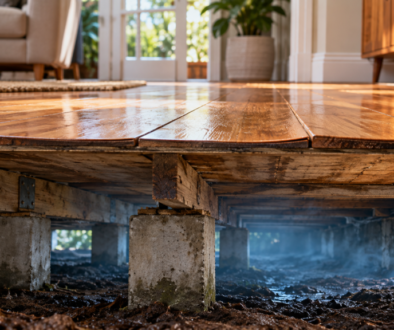
A musty odour under the house, damp soil, wet framing or cold timber floors point to a different but equally important issue: poor subfloor airflow. Moisture below a suspended timber floor can contribute to mould, timber movement, decay and persistent odours that travel into living areas.
Subfloor ventilation uses carefully positioned fans and vents to replace damp underfloor air with drier outside air. The correct arrangement depends on the subfloor layout, available openings, drainage, ground moisture and obstructions such as internal brick walls. Simply adding one fan at an access point may not ventilate isolated sections.
Subfloor systems protect the building fabric, but they do not replace living-area ventilation. If there is also window condensation or stale indoor air, the home may require separate measures above the floor.
Heat transfer systems
Heat transfer systems move warm air from a heated room, often one with a fireplace or heater, to cooler rooms through insulated ducts. They can improve temperature balance and make better use of existing heat.
They are valuable for comfort, but they are not fresh-air ventilation systems. They generally recirculate air within the home rather than remove moisture or provide controlled outdoor air. A heat transfer system can complement a ventilation strategy, but it should not be selected to solve recurring mould or humidity on its own.
How to choose the right system for your home
Start by identifying where and when the issue occurs. Condensation mainly on bedroom windows in winter suggests a different airflow pattern from mould in a wardrobe, wet subfloor timbers or steam that lingers after showers. A home inspection should consider room use, occupancy, insulation, window type, existing fans, roof and subfloor access, and any signs of water ingress.
It is also worth separating moisture generated inside the home from moisture entering through the building. Cooking, showers, drying clothes indoors and sleeping all add water vapour to the air. Roof leaks, rising damp, overflowing gutters and poor drainage require building repairs first. Ventilation manages normal indoor moisture loads, but it cannot permanently overcome an active water leak.
Energy use matters too. Opening windows may provide effective fresh air on a mild day, but it is less reliable during Melbourne’s cold, wet winter weather, when homes are shut tight and condensation is most likely. Heat recovery systems can make continuous ventilation more comfortable by reducing heat loss, while decentralised options may avoid the cost and disruption of extensive ductwork.
A tailored design delivers better results
The best system is the one that suits the home’s actual airflow needs. Oversized equipment can create unnecessary noise and energy use. Undersized equipment may leave moisture and pollutants behind. Poorly located supply or extract points can cause draughts in one room while another remains stale.
A professional consultation should lead to a clear recommendation: what the system is designed to improve, which rooms it will serve, how it will be controlled and what maintenance it needs. Filters need periodic cleaning or replacement, and fans, grilles and ducting should remain accessible for servicing.
For homeowners dealing with condensation, recurrent mould, poor air quality or subfloor dampness, Ecoflow Ventilation can assess the home as a whole and recommend a practical path forward. Fresh air is most effective when it is planned, filtered and delivered where your family needs it most.