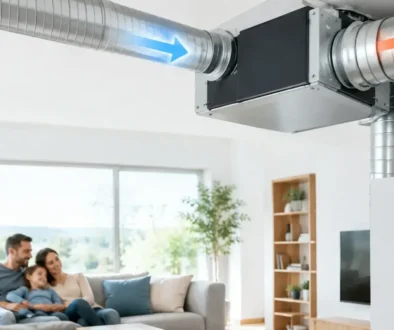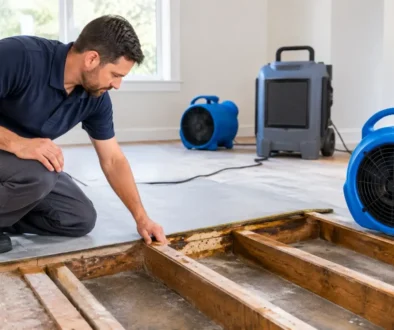

Condensation running down bedroom windows on cold mornings is not simply a glass problem. A musty smell that returns after cleaning, mould around ceiling corners, or air that feels heavy by the end of the day can all point to moisture and stale air being trapped inside. A whole house ventilator addresses the air movement across the home, rather than treating one room or one visible patch of mould.
For many Victorian homes, this can make a meaningful difference to comfort, indoor air quality and moisture control. But “whole house” does not mean every home needs the same unit, airflow rate or installation method. The best result comes from understanding where moisture is generated, how the building is constructed, and where fresh air can enter and stale air can leave.
What is a whole house ventilator?
A whole house ventilator is a mechanical system designed to replace stale indoor air with fresher outdoor air in a controlled way. Depending on the system, it may introduce filtered air, extract moist air from wet areas, recover heat from outgoing air, or combine these functions.
Unlike opening a window when the weather allows, mechanical ventilation can operate consistently. It can continue moving air while the house is closed overnight, when occupants are away, or during colder and wetter Melbourne weather when opening windows may be impractical.
The goal is not to make a home draughty. Good ventilation design balances air exchange with comfort. It aims to reduce the build-up of humidity, carbon dioxide, odours and everyday indoor pollutants without wasting more energy than necessary.
Why homes develop stale air and moisture problems
Modern living creates moisture every day. Showers, cooking, drying clothes indoors, dishwashers, breathing and even houseplants all add water vapour to the air. In a home with limited airflow, that moisture eventually settles on the coldest available surface: often windows, external walls, ceilings or poorly insulated corners.
Older homes may have gaps in some areas yet still ventilate poorly where it matters. Bedrooms can be closed overnight, bathrooms may have underperforming exhaust fans, and damp subfloors can introduce moisture from below. Newer homes are often more airtight, which improves energy performance but increases the need for deliberate ventilation.
Mould needs moisture to grow. Cleaning visible mould is necessary, but it rarely solves the underlying issue if indoor humidity remains high or condensation keeps forming. A ventilation system is most effective when it is part of a broader assessment that also considers leaks, drainage, insulation, bathroom extraction and subfloor conditions.
Whole house ventilation systems are not all the same
“Whole house ventilator” is a useful search term, but it describes an outcome rather than one single technology. The right approach depends on the home and the problem being solved.
Positive pressure ventilation
A positive pressure system supplies filtered air into the home, creating gentle pressure that encourages stale indoor air to escape through existing leakage paths and purpose-designed outlets. It can be a practical option for some existing homes, particularly where condensation and stale air are the main concerns.
Its performance depends on outdoor air quality, the home’s layout and how air can move between rooms. It also needs thoughtful design in colder conditions, as introducing untempered outside air may affect comfort if the system is poorly selected or operated.
Balanced ventilation with heat or energy recovery
Balanced systems bring fresh air in and extract stale air out at matched rates. Heat recovery ventilation, often called HRV, transfers heat from outgoing indoor air to incoming fresh air. Energy recovery ventilation, or ERV, can also transfer some moisture, which may be useful in certain climates and home types.
These systems are particularly suited to well-sealed new builds and major renovations, where controlled airflow can be designed into the building from the start. They offer excellent comfort and energy benefits when specified correctly, but duct routes, ceiling space, commissioning and maintenance all need careful consideration.
Decentralised ventilation
Decentralised units are installed through external walls, often serving individual rooms or paired spaces. They can provide heat recovery without extensive ductwork, making them a strong option where a centralised system is not practical.
For an existing home with persistent condensation in bedrooms or a difficult renovation layout, decentralised ventilation may deliver targeted improvement with less disruption. The trade-off is that a room-by-room solution must still be planned as a system, not added randomly to isolated areas.
Extraction and subfloor ventilation
In some houses, the priority is removing moisture at its source. High-performing bathroom and laundry extraction can prevent wet air from spreading through the home. Subfloor ventilation helps remove damp air beneath suspended timber floors, protecting floor structures and helping reduce musty odours and cold, damp conditions indoors.
These systems can be essential, but they are not automatically a substitute for whole-home ventilation. A wet subfloor, for example, may also require investigation of drainage, plumbing leaks, poor ground moisture control or inadequate external ventilation.
How a professionally designed system changes the result
The fan is only one part of a ventilation solution. Air needs a planned path. Fresh air might be supplied to bedrooms and living areas, while stale and humid air is extracted from bathrooms, laundries and kitchens. Internal door clearances, transfer grilles, duct sizing and outlet placement all influence whether the system actually performs as intended.
This is why a one-size-fits-all package can disappoint. An oversized fan may create noise and discomfort. An undersized system may run constantly without adequately reducing humidity. Poorly routed ducting can restrict airflow, while poorly positioned outlets can leave problem rooms untouched.
A home-specific assessment should consider the number of occupants, floor plan, construction type, window condensation patterns, heating arrangement, roof cavity access and whether the home has a subfloor. For Melbourne homeowners, local weather patterns matter too. Cool, damp winters place different demands on ventilation than a dry climate with windows open most of the year.
Ecoflow Ventilation takes this consultative approach because the system needs to suit the building as well as the people living in it.
What to expect after installation
A well-designed whole house ventilation system should feel largely unobtrusive. You may notice fresher bedrooms in the morning, fewer damp smells, less window condensation and a more even feeling of air throughout the home. Where moisture is the driver of mould, reducing humidity can also lower the conditions that allow mould to return.
Results are not always immediate in every situation. Materials such as carpet, plasterboard, timber and insulation can hold moisture, so a damp home may need time to dry out. Existing mould still needs safe removal, and building defects need their own repairs. Ventilation supports a healthier indoor environment, but it cannot fix a leaking roof or rising damp on its own.
Noise is another realistic consideration. Quality systems are selected and installed to keep sound levels low, but every fan produces some sound. Correct sizing, duct design and commissioning are what separate quiet background operation from a system occupants feel compelled to switch off.
Maintenance keeps ventilation working properly
Mechanical ventilation is low-maintenance, not no-maintenance. Filters need checking and replacement at intervals appropriate to the system and local conditions. External grilles should remain clear of leaves, dust and insect build-up, while fans and ducts may need periodic servicing.
This maintenance protects airflow and filtration performance. It also provides an opportunity to confirm that controls, sensors and extract points are still working as they should. A system that cannot move enough air will not control moisture effectively, even if it appears to be running.
When should you seek advice?
It is worth arranging an assessment if mould repeatedly returns, windows sweat most mornings, rooms smell stale when closed, family members are affected by allergies, or the home has persistent dampness under timber floors. Homeowners planning a renovation or new build should consider ventilation early, before ceiling and wall spaces become harder to access.
The most useful question is not “Which ventilator is best?” It is “What is causing the air and moisture problem in this home?” Once that is clear, a suitable system can be designed around healthier air, lower condensation risk and comfortable day-to-day living.
A home should feel dry, fresh and comfortable with the doors and windows closed, not only on the rare day when the weather is perfect. The right ventilation design helps make that standard achievable.