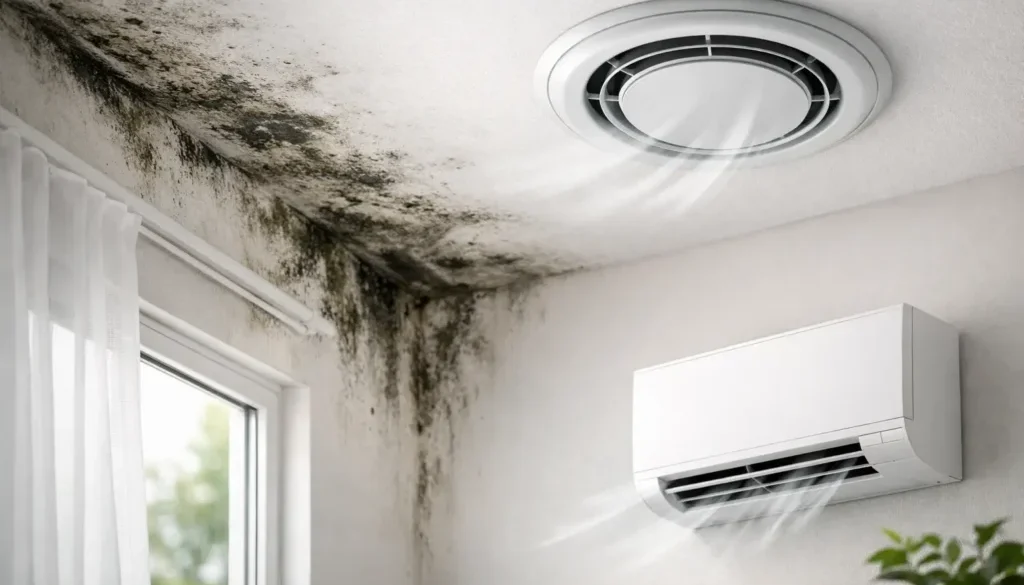
Mould on a bedroom ceiling, water running down windows on cold mornings and a persistent musty smell are not separate problems. They are usually signs that moist indoor air is not leaving the home fast enough. The best ventilation for mouldy homes is therefore not simply the strongest fan or the cheapest unit. It is a system designed around where moisture is being created, where it is becoming trapped and how the house is constructed.
For Melbourne and Victorian homeowners, that distinction matters. A draughty older weatherboard home, a tightly built new townhouse and a home with a damp subfloor can all develop mould, but they need very different solutions. Effective ventilation lowers the moisture load, replaces stale air with fresher air and helps surfaces stay dry enough to discourage mould growth.
Why mould returns after cleaning
Cleaning visible mould is necessary, but it does not correct the conditions that allowed it to grow. Mould spores are naturally present in indoor and outdoor air. Given a damp surface, limited airflow and time, they can grow on paint, plaster, timber, fabrics and furnishings.
Daily life adds more water vapour than many households expect. Showers, cooking, drying washing indoors and even breathing while sleeping all release moisture. In winter, warm humid air meets cold glass, external walls or poorly insulated ceiling corners. That moisture condenses, and repeated condensation creates the damp conditions mould needs.
A ventilation solution should be considered alongside other causes of moisture. Roof leaks, plumbing leaks, rising damp, poor drainage and building defects need repair first. No mechanical system can responsibly be expected to dry a home continuously affected by a leak. Once those issues are addressed, properly planned ventilation can make a meaningful, lasting difference to humidity, condensation and air quality.
The best ventilation for mouldy homes depends on the moisture source
There is no single system that suits every home. The right approach depends on the layout, airtightness, number of occupants, heating habits, insulation levels and whether moisture is concentrated in wet rooms, living areas or under the floor.
Whole-home heat recovery ventilation
For homes with recurring condensation and mould across several rooms, a balanced whole-home ventilation system is often the most comprehensive option. It extracts stale, humid air from bathrooms, kitchens and laundries while supplying filtered fresh air to bedrooms and living spaces.
Heat recovery ventilation, often called HRV, transfers much of the heat from outgoing air to incoming fresh air without mixing the two air streams. Energy recovery ventilation, or ERV, can also transfer some moisture, which may be useful where humidity management is a priority. Both systems can deliver consistent, low-level ventilation without relying on occupants to open windows during cold or wet weather.
The trade-off is that centralised systems require careful design and duct space. They are particularly well suited to new builds, major renovations and homes where ceiling access allows ductwork to be installed neatly. A poorly sized or poorly balanced system will not perform as intended, so room-by-room airflow design is critical.
Decentralised ventilation for existing rooms
Decentralised units are often an excellent answer where mould is concentrated in one or two bedrooms, a living room or a renovated extension. Rather than using a central duct network, compact wall-mounted units ventilate individual rooms or work in paired arrangements to balance supply and extract air.
This can make them practical for existing homes where installing extensive ductwork would be disruptive. High-quality decentralised heat recovery units can retain warmth while providing a steady exchange of air. They are not a substitute for proper bathroom and kitchen extraction, however. A mouldy bedroom may need fresh-air supply, while the nearby bathroom still needs to remove shower steam at its source.
Purpose-designed bathroom, laundry and kitchen extraction
Local extraction is essential where moisture is produced. A bathroom fan should move humid air outdoors, not into the roof space. It should also be sized for the room and used for long enough after a shower to clear lingering moisture. Timers and humidity sensors are useful because they keep the fan running when the room is still damp, even after someone has left.
Rangehoods should be ducted outdoors where possible. Recirculating rangehoods can reduce cooking odours and capture some grease, but they do not remove water vapour from the home. Similarly, a laundry with an indoor drying rack can add substantial humidity unless it has dependable extraction or adequate whole-home ventilation.
These systems can be highly effective for targeted moisture control, but they do not necessarily solve stale air or condensation in bedrooms. In many homes, local extraction forms one part of a broader ventilation plan.
Positive pressure ventilation
Positive pressure systems introduce filtered air into the home, creating gentle pressure that encourages indoor air to move out through natural leakage points and designated exhaust paths. They can improve the feeling of freshness in some older, leakier houses and may assist with reducing condensation in the right circumstances.
However, positive pressure is not automatically the best answer for every mould problem. Its performance depends heavily on the home’s construction, where air enters the system and whether there are suitable paths for humid air to leave. Introducing roof-space air without appropriate filtration, temperature consideration and assessment can be problematic. This approach should be selected only after understanding the building and the moisture source.
Subfloor ventilation for damp floors and musty odours
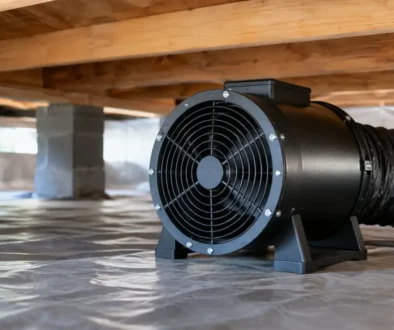
If the smell is strongest near timber floors, cupboards or floor vents, the issue may be below the home. A damp subfloor can contribute to musty indoor air, timber movement, decay risk and cold floors. In these cases, underfloor ventilation may be needed to replace trapped, humid air beneath the house with drier outside air.
Subfloor systems are not designed to fix bathroom condensation upstairs, and bathroom exhaust fans cannot dry a wet crawl space. The area must first be assessed for poor external drainage, plumbing leaks, inadequate ground moisture barriers and blocked vents. Once the moisture source is controlled, correctly located subfloor fans and vents can improve airflow through the entire underfloor area.
What good ventilation design looks like
A successful mould-control system is quiet enough to run consistently, energy-conscious and matched to the way your household lives. It should not leave bedrooms stuffy, create uncomfortable draughts or move moisture from one problem area into another.
Before recommending equipment, a ventilation specialist should consider the home as a connected system. This includes identifying mould locations, checking window condensation patterns, reviewing wet-room extraction, looking at roof and subfloor conditions, and understanding occupancy. A family of five drying clothes indoors will have a very different moisture load from a couple in the same floorplan.
Controls also matter. Humidity sensors, boost switches and programmable operation can make ventilation more reliable than systems that depend on someone remembering to turn them on. Filters require routine maintenance, particularly in homes near busy roads, bushland or building works. Ducted systems should be accessible for servicing, and all external outlets need to be positioned so moist air is discharged appropriately.
Practical habits that support mechanical ventilation
Ventilation performs best when everyday moisture is managed sensibly. Use bathroom extraction during showers and leave it running afterwards. Keep lids on pots where practical, use a ducted rangehood while cooking and avoid drying washing inside without adequate extraction. If condensation forms, wipe it away rather than allowing it to sit on sills and frames.
Heating can also help because warmer internal surfaces are less likely to attract condensation, but heating alone does not remove moisture. Opening windows may provide useful relief on dry days, yet it is not a dependable year-round strategy during Melbourne’s colder, wetter periods or when security, traffic noise and pollen are concerns.
Where mould is extensive, repeatedly returns, or affects vulnerable household members with asthma or allergies, seek professional advice before disturbing it. Large areas and hidden mould may require specialist remediation as well as a plan to control the underlying moisture.
A dry, healthy home is not achieved by forcing more air through every room. It comes from moving the right amount of fresh air through the right places, extracting moisture where it begins and treating the house as a whole. A tailored assessment from Ecoflow Ventilation can help turn recurring mould from a frustrating cleaning job into a solvable home-performance issue.