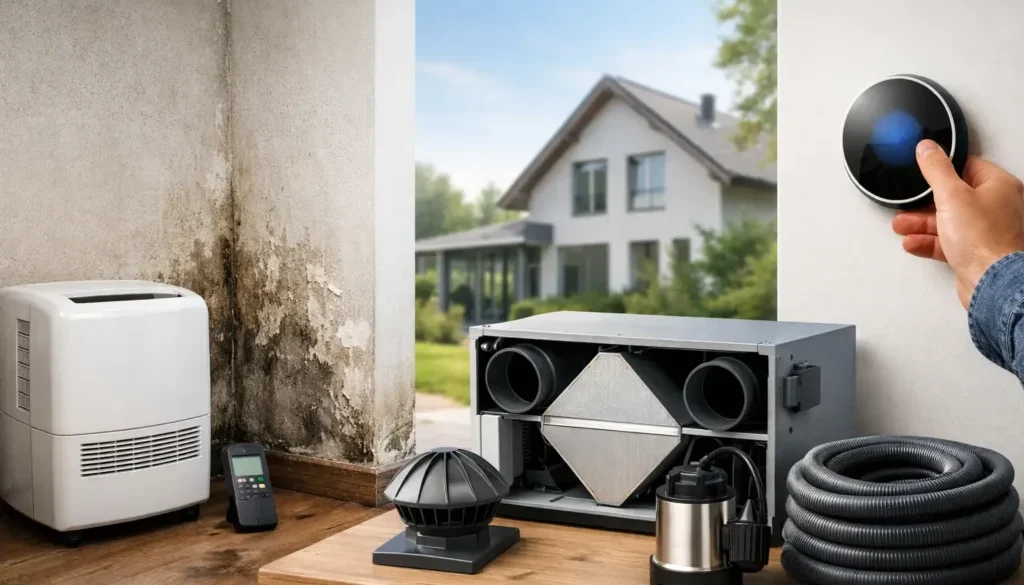
A damp house rarely has just one obvious cause. Condensation on bedroom windows, mould behind furniture, a musty smell under timber floors and peeling paint can all point to different moisture pathways. The top systems for damp houses work best when they address where that moisture is coming from, rather than simply moving air around or masking the smell.
For Melbourne and Victorian homes, the right approach may involve ventilating a wet subfloor, extracting moisture at its source, replacing stale indoor air, or recovering heat while doing it. The best system depends on the home’s construction, how it is occupied and whether the issue is primarily under the house, inside living areas, or both.
Start by identifying the type of damp
Before choosing ventilation, rule out water ingress. A leaking roof, failed flashing, damaged plumbing, overflowing gutters, poor site drainage or rising moisture through masonry requires building repairs first. Mechanical ventilation cannot dry a wall that is continually being soaked by a leak.
Once those issues are addressed, many persistent damp problems come down to moisture-laden indoor air and insufficient air exchange. Everyday activities release surprising amounts of water vapour: showers, cooking, clothes drying, breathing and even indoor plants. When warm moist air meets cold glass, external walls or poorly insulated surfaces, it condenses. That moisture can feed mould and leave rooms feeling cold, stale and clammy.
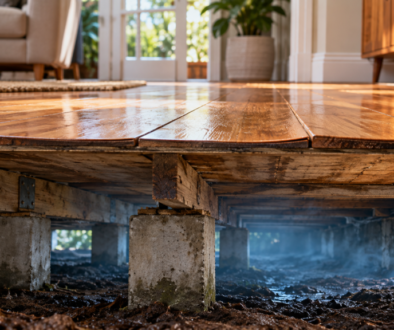
Older homes can also have a separate issue below the floor. Damp soil, limited cross-ventilation and enclosed subfloor spaces can create high humidity under the house. Over time, this may contribute to musty odours, cold floors, timber movement and deterioration of floor structures.
Top systems for damp houses: the practical options
Subfloor ventilation for moisture under the house
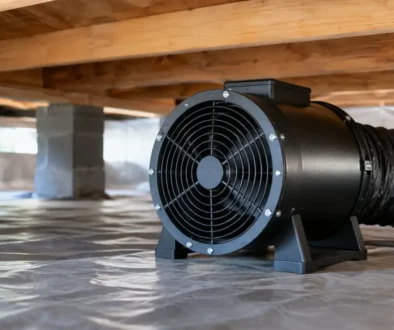
Subfloor ventilation is usually the most targeted option when the damp smell is strongest beneath the house, floors feel cold, or inspections reveal humid air and moisture under a suspended timber floor. The system draws stale, damp air out of the subfloor and introduces replacement air to keep that void moving and drier.
A well-designed system considers the subfloor layout, obstructions, vents, soil moisture and where air can safely enter and exit. Simply adding a fan at one vent is not always enough, especially in large or divided subfloor areas. Air needs a clear path across the space, otherwise humid pockets can remain.
Subfloor ventilation is not a cure for flooding, leaking pipes or drainage failures. It is also not designed to solve condensation in upstairs bedrooms. Its value is in protecting the underfloor environment and helping reduce the damp, musty conditions that can affect the rest of the home.
Positive pressure ventilation for stale, humid homes
Positive pressure systems bring filtered air into the home, creating gentle pressure that encourages stale indoor air to leave through existing gaps and purpose-designed exhaust paths. They can be effective in homes that feel stuffy, have widespread condensation, or lack consistent natural ventilation.
This approach can improve air freshness and reduce the build-up of indoor humidity, particularly when the system is selected and commissioned for the home rather than treated as a plug-in fix. Filtration can also be beneficial for households concerned about dust, pollen and outdoor particulates.
The trade-off is that positive pressure does not remove moisture directly from bathrooms and kitchens. It works best alongside good local extraction and sensible habits, such as using rangehoods while cooking and avoiding unvented clothes drying indoors. In a very draughty home, the effect can also be less predictable because air may escape before it reaches problem rooms.
Centralised heat recovery ventilation for whole-home control
Heat recovery ventilation, often called HRV, is a strong option for homes where dampness, condensation and poor air quality affect several rooms. A centralised system extracts humid, stale air from wet areas such as bathrooms, laundries and kitchens, while supplying filtered fresh air to bedrooms and living spaces. The two air streams pass through a heat exchanger, allowing much of the heat from outgoing air to be retained without mixing the air itself.
For families, allergy sufferers and owners of well-sealed new builds, this can provide controlled whole-home ventilation with less heat loss than opening windows through winter. It is particularly useful where regular ventilation is needed but security, traffic noise, bushfire smoke or cold weather make open windows impractical.
Centralised HRV does require space for ductwork and careful design. It is often easiest to include in a new build or major renovation, though some existing homes can accommodate it through roof spaces, bulkheads or other concealed routes. The system must be balanced correctly so supply and extract airflow suit the house.
Energy recovery ventilation for humid conditions
Energy recovery ventilation, or ERV, performs a similar role to HRV but transfers some moisture as well as heat through the exchanger. This can be useful where managing indoor humidity year-round is a priority. In simple terms, an ERV can reduce the humidity burden entering the home in humid conditions while retaining a more comfortable level of moisture when air is dry.
Whether HRV or ERV is the better choice is not universal. Melbourne’s variable climate, the home’s airtightness, household occupancy and the source of damp all matter. A professional assessment should consider moisture control alongside temperature, filtration and the way the home is actually used.
Decentralised ventilation for targeted rooms and renovations
Decentralised ventilation systems use individual, compact units installed through external walls. They are often suited to existing homes, apartments, heritage properties or renovations where full ducting is difficult or disruptive. Depending on the system, paired units can alternate airflow to provide balanced fresh-air supply and stale-air extraction with heat recovery.
These systems are especially useful when condensation and mould are concentrated in particular bedrooms, a study, a living room or an enclosed extension. They can improve ventilation without needing to open up ceilings or run ducts through the whole house.
Their limitation is coverage. One or two units may transform a problem area but will not necessarily manage moisture generated in distant bathrooms, kitchens or a damp subfloor. Placement, room size and airflow paths matter as much as the unit itself.
Bathroom and kitchen extraction for moisture at the source
Local extraction is one of the most effective foundations for damp control. Bathroom exhaust fans should remove steam outdoors, not into a roof cavity. Kitchen rangehoods should ideally vent outside, particularly where cooking produces substantial moisture.
For homes with recurring mould in bathrooms or condensation after showers, a quiet, appropriately sized exhaust system with run-on controls or humidity sensing can make a meaningful difference. It removes moisture before it travels into colder bedrooms and living areas.
Extraction alone is rarely the complete answer in a tightly sealed home with widespread stale air. But without effective wet-area extraction, even a high-quality whole-home system has to work harder than it should.
Where heat transfer systems fit
Heat transfer systems move warmth from one part of the home to another, commonly from a living area with a heater into cooler bedrooms or hallways. They can improve comfort and help reduce cold surfaces where condensation forms, but they do not remove moisture from the home.
That distinction matters. A heat transfer system may support a broader damp-control strategy by improving temperature balance, yet it should not be selected as the primary treatment for mould, window condensation or excess humidity. Ventilation is still needed to remove moist air.
Choosing a system that suits your house
The best recommendation starts with a home-specific assessment. Look at where mould appears, when windows sweat, whether doors are kept closed, how often bathrooms are used, whether clothes are dried inside, the age of the home and the type of floor construction. A family of five in a sealed new build has very different ventilation needs from a couple in a weatherboard home with a damp subfloor.
It is also worth considering running costs, noise, filter maintenance and installation access. A cheaper system that is too noisy to run, difficult to maintain or poorly matched to the home may not deliver the improvement you expect. Quality design is about getting reliable airflow where it is needed, at a level that supports everyday living.
For homeowners dealing with recurring moisture concerns, Ecoflow Ventilation can assess whether the home needs subfloor ventilation, targeted extraction, decentralised units or a whole-home heat or energy recovery solution. The aim is not simply drier walls. It is cleaner air, better comfort and a home environment that supports the people living in it.
If mould returns after cleaning or the house still smells damp after windows are opened, treat it as a clue rather than a cosmetic nuisance. Finding the moisture pathway is the first step towards a solution that lasts.