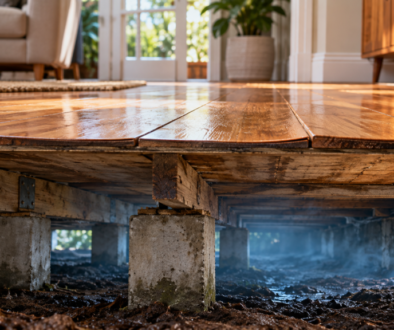
A musty smell that returns after every wet spell often starts below the floorboards. Drying damp crawl spaces is not simply about making the area feel less clammy. It is about stopping moisture from affecting timber, flooring, indoor air quality and the long-term condition of your home.
For many Melbourne homes, particularly older weatherboard and elevated brick homes, the crawl space is really a subfloor void. It can be difficult to inspect and easy to ignore, yet air and moisture from this area can move upward through gaps around pipes, floorboards and wall cavities. If it stays damp, the effects can become noticeable inside the home long before anyone looks underneath it.
Why drying damp crawl spaces needs more than a fan
A fan can be part of the answer, but it is rarely the whole answer. Moisture in a crawl space usually comes from one or more clear sources: rainwater entering from outside, poor drainage, leaking plumbing, moisture rising from bare soil, or humid outdoor air condensing on cooler surfaces.
The right solution depends on which source is active. Installing powerful fans before addressing water entry may move air around without drying the area properly. In some conditions, particularly during humid weather, drawing moist outside air into a cool subfloor can even add to condensation.
That is why the first step is diagnosis. A proper assessment considers the ground condition, drainage around the home, vents and obstructions, plumbing services, timber condition and moisture levels. The aim is not to treat a smell. It is to establish why the void is staying wet and how moisture is travelling through the building.
What a damp subfloor can affect
Persistent subfloor moisture creates conditions that mould and decay fungi prefer. Timber bearers, joists and floorboards may absorb moisture over time, increasing the risk of deterioration and movement. Timber floors above can cup, gap or feel unusually cold underfoot as seasonal moisture changes become more extreme.
There is also an indoor air quality concern. Air from below the house can carry musty odours, mould spores and other contaminants into living spaces. This does not mean every damp crawl space will cause illness, but it is a sensible issue to address, especially where household members have asthma, allergies or sensitivities to mould.
A dry, well-managed subfloor also supports the comfort of the rooms above it. Homes can feel less stale, and odours are less likely to linger in wardrobes, carpets and soft furnishings. The benefit is both structural and practical.
Start by keeping bulk water away
No ventilation system should be expected to overcome standing water or regular rainwater entry. Before planning mechanical drying, look outside and around the perimeter of the home. Gutters, downpipes and surface drainage need to direct water away from the building rather than discharge it beside the foundations.
The finished ground level should also be considered. Soil, garden beds or paving that sit too high against the home can obstruct existing subfloor vents and encourage water to pool where it should drain away. On sloping blocks, stormwater may naturally run towards the house, requiring drainage improvements designed for the site.
Leaks are another common culprit. Slow drips from water pipes, waste lines or heating and cooling condensate drains can keep a small section of the subfloor damp for months. A plumbing repair may be the most effective drying measure in that situation.
Control moisture rising from the ground
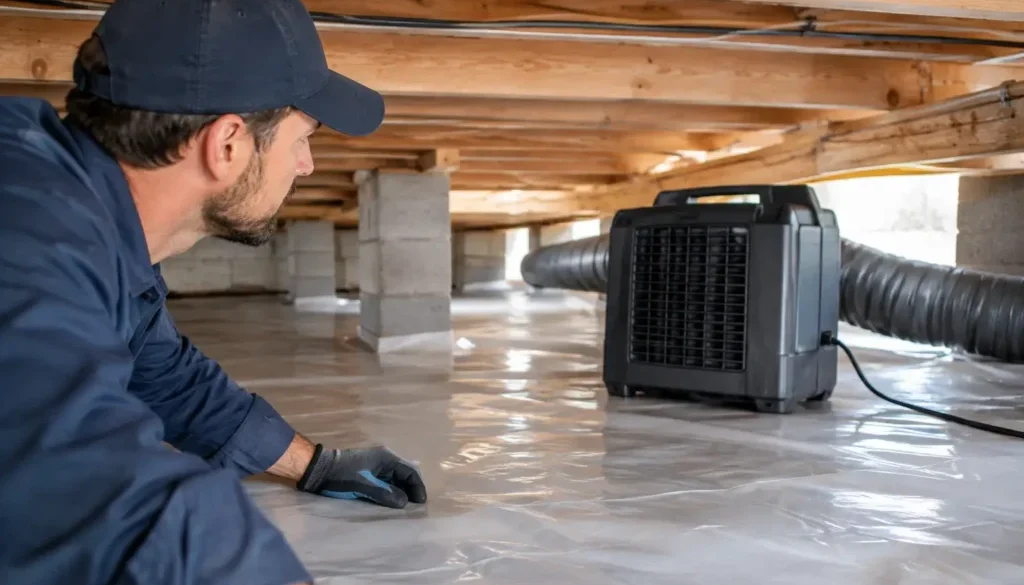
Bare earth releases moisture continuously, even when it does not look wet. In a confined crawl space, that moisture can build up and raise humidity around timber framing. A correctly installed ground vapour barrier can significantly reduce this source of moisture.
This is not as simple as laying a sheet of plastic over the soil. The material needs to suit the application, cover the area effectively and be installed without creating drainage problems or blocking essential access. The edges, overlaps and penetrations around stumps and services all matter.
A vapour barrier does not replace drainage where rainwater is entering, and it does not repair a plumbing leak. It works best as part of a broader moisture-control plan once those problems have been resolved or brought under control.
Use ventilation to manage the remaining humidity
Once the main sources of moisture have been addressed, subfloor ventilation can help remove humid air and support ongoing drying. Passive vents rely on wind and temperature differences, which can be inconsistent. They may also be covered by landscaping, blocked by debris or poorly positioned for effective crossflow.
Mechanical subfloor ventilation provides a more controlled approach. Carefully selected fans can extract damp air or introduce drier air, depending on the design and local conditions. The system should account for the size and shape of the crawl space, internal walls and footings, access restrictions, the number of air pathways, and the moisture load being managed.
The direction of airflow matters. An extraction-based design may be appropriate where it can draw moisture-laden air from difficult areas and discharge it safely outside. In other homes, a balanced approach or different ventilation strategy may suit the building better. There is no reliable one-size-fits-all fan layout.
For Melbourne and Victorian homes, seasonal weather patterns are worth considering as well. Cool, wet periods can slow drying, while hot humid days can make uncontrolled outdoor-air ventilation less effective. A professionally designed system responds to the home rather than relying on a generic rule about adding more vents.
Know when drying needs professional help
A mild musty odour and slightly humid soil may be manageable with early drainage and ventilation improvements. However, visible mould growth, wet timber, pooling water, sagging floors, fungal growth, pest activity or a strong odour throughout the home warrant a more thorough inspection.
Take care when entering a crawl space. Low clearance, poor lighting, exposed wiring, asbestos-containing materials in older homes and mould contamination can create real hazards. Disturbing mould without suitable protection may spread spores further through the area. If there is extensive damage or uncertainty about the cause, specialist advice is the safer path.
A good assessment should explain the findings in plain language: where the water is coming from, which repairs should happen first, whether a vapour barrier is suitable, and what ventilation system can realistically achieve. It should also set expectations. Timber that has been wet for a long time will not dry overnight, and some odours may take time to clear once the moisture source is removed.
Protect the whole home, not just the void
Subfloor work is most effective when considered alongside the home’s overall ventilation. Bathroom, laundry and kitchen moisture can affect indoor humidity, while poor airflow in living areas can make a home feel stale even after the crawl space has improved. In some properties, a broader ventilation plan gives better results than treating each symptom separately.
Ecoflow Ventilation designs subfloor and whole-home ventilation solutions around the way each property is built and used. That approach helps avoid common mistakes, such as undersized fans, ineffective vent placement or trying to ventilate away a drainage problem.
The most useful next step is usually an inspection while the problem is active. A crawl space that smells damp after rain is giving you valuable information. Find the source, stop unnecessary moisture entering, then use the right ventilation strategy to keep the space dry enough for the home above it to feel healthier and more comfortable.