Condensation on the windows each morning is rarely just a winter annoyance. In many Melbourne homes, it is a sign that stale, moisture-laden air is getting trapped indoors – and that is usually when people start asking what the best whole house ventilation system actually is.
The honest answer is that there is no single system that suits every home. The right solution depends on how your home is built, how airtight it is, whether you are managing mould or allergens, and whether you are trying to improve one problem area or the entire house. A newer build in a tightly sealed estate home has very different ventilation needs from a period weatherboard with a damp subfloor.
What makes the best whole house ventilation system?
For most homeowners, the best system is the one that solves the real cause of poor indoor air quality rather than just masking symptoms. That means it should move stale air out, bring fresher air in, manage humidity effectively and do it without making the home uncomfortable or expensive to run.
A good whole house system should also suit the layout of the property. Some homes have enough roof space and access for a centralised setup. Others are better served by decentralised room-by-room units. If the design does not match the house, even a premium product can underperform.
This is where ventilation gets more nuanced than many people expect. Two households can both have condensation, yet one may need heat recovery ventilation while the other may benefit more from positive pressure or subfloor ventilation as part of a broader solution.
The main types of whole house ventilation systems
Heat recovery ventilation
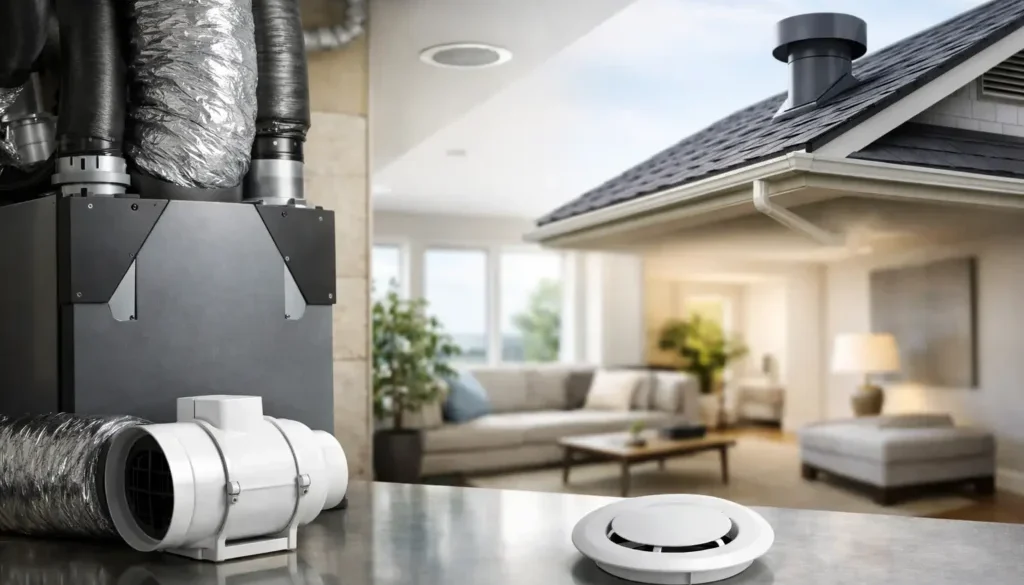
Heat recovery ventilation, or HRV, is one of the strongest options for homes that need continuous fresh air without throwing away indoor warmth in winter. These systems extract stale air from wet areas such as bathrooms and laundries and bring filtered fresh air into living areas and bedrooms. As the two air streams pass through the unit, heat is transferred from the outgoing air to the incoming air.
For Melbourne homeowners, that usually means better air quality and moisture control with less of the cold draught effect that people worry about. HRV is particularly well suited to newer homes, renovated homes and properties that are relatively airtight.
The trade-off is that HRV systems need proper design. Duct runs, airflow balancing and ceiling space all matter. In a leaky older home, the benefit can be reduced unless the building envelope is improved at the same time.
Energy recovery ventilation
Energy recovery ventilation, or ERV, works in a similar way to HRV but also transfers moisture as well as heat. That can make it useful in homes where humidity balance matters across different seasons.
In cooler southern climates, ERV can be a smart choice in some applications, though it is not automatically better than HRV. It depends on how much humidity is being generated inside the home, how airtight the building is, and what comfort outcome you are chasing. For many Melbourne homes dealing with winter condensation, HRV is often the more straightforward fit, but there are cases where ERV deserves a close look.
Positive pressure ventilation
Positive pressure systems introduce filtered air into the home, usually from the roof space or from outside depending on the design, creating slight pressure that pushes stale moist air out through natural leakage points.
These systems can be effective in certain homes, especially older properties with enough leakage for the air to move through. They are often considered where condensation and stale air are the main concerns and where a full heat recovery setup is not practical.
That said, positive pressure is not a cure-all. If the roof space is not an appropriate air source, or if the home is highly sealed, results can vary. It is also less suitable where controlled extraction and balanced airflow are needed.
Decentralised ventilation systems
Decentralised systems use individual ventilation units in specific rooms or zones rather than a single ducted system serving the whole house. These are especially useful in renovations, apartments, heritage homes, or houses where roof space and access are limited.
They can be an excellent answer when you want whole-home improvement without major ductwork. Premium decentralised systems can provide heat recovery and continuous fresh air with a relatively discreet installation.
The limitation is that system planning still matters. Room placement, occupancy patterns and moisture sources need to be considered carefully. Done well, decentralised ventilation can feel very effective and low impact. Done poorly, it can leave dead spots in the home.
Subfloor and heat transfer support systems
Sometimes the best whole house ventilation system is not one product but a combination. If subfloor dampness is feeding moisture into the home, or if warm air is pooling in one part of the house while bedrooms remain cold, support systems may be needed.
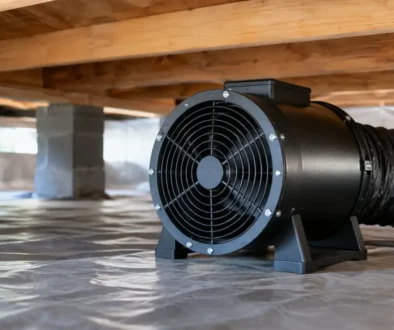
Subfloor ventilation can reduce damp build-up under the home, which helps protect flooring, improves indoor comfort and reduces musty odours. Heat transfer systems can also help move excess warm air from one part of the house to another. These are not substitutes for proper fresh-air ventilation, but in the right home they can play an important supporting role.
How to choose the best whole house ventilation system for your home
The first question is not which brand or model is best. It is what problem you are trying to solve.
If your main issue is recurring condensation, you need to understand where the moisture is coming from and whether it is being trapped by poor airflow. If family members are dealing with allergies or asthma, filtration and continuous fresh air may be just as important as humidity control. If you are building or renovating, this is the ideal time to think long term and choose a system that suits the home from day one.
A few practical factors usually shape the decision:
- How airtight the home is
- Whether there is accessible roof or wall space
- The number of wet areas and bedrooms
- Whether mould, odours or allergens are a key concern
- How energy efficiency ranks against upfront budget
These details change the recommendation significantly. A compact townhouse, a slab-on-ground new build and an older home with a damp subfloor should not be treated the same way.
Best whole house ventilation system for Melbourne conditions
Melbourne homes often face a mix of cool winters, condensation-prone mornings, variable temperatures and increasing airtightness in modern construction. That combination tends to favour professionally designed mechanical ventilation rather than relying on opening windows alone.
For newer or renovated homes, balanced systems such as HRV are often among the best options because they provide controlled air exchange with strong comfort benefits. For existing homes where ducting is difficult, decentralised heat recovery units can be a very practical alternative. In some older homes, positive pressure may still work well, especially when matched to the building correctly.
What matters most is not choosing the trendiest system. It is choosing one that matches the building fabric, the occupants and the local climate. That is why a consultative assessment is so important. A tailored recommendation will nearly always outperform a one-size-fits-all installation.
Why professional design matters
Ventilation is one of those services that looks simple until you see the difference between a generic install and a well-designed system. Airflow rates need to be calculated properly. Supply and extract points need to suit how the home is actually used. Noise, filter access and running costs also need to be considered.
This is particularly true if you are investing in premium systems from manufacturers such as LUNOS, Zehnder or STIEBEL ELTRON. High-quality products perform best when the design behind them is equally thoughtful.
For homeowners, that usually means less guesswork and better long-term value. You are not just buying equipment. You are creating a healthier indoor environment that should feel drier, fresher and more comfortable every day.
If you are trying to choose the best whole house ventilation system, the smartest next step is to stop thinking in terms of a universal best and start thinking in terms of the best fit for your home. That is where good ventilation starts to make a real difference.