Why Your Existing Subfloor Vents May Not Be Working
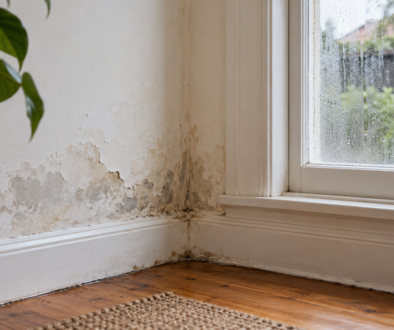
Many older Melbourne homes have vents in their external walls, yet the space beneath the floor can still feel damp or smell musty. A vent only helps if air can enter, travel through the areas that need ventilation and leave through another opening.
If that airflow path is blocked or takes a shortcut, the vents may be visible but the damp area may receive very little fresh air.
Your subfloor vents may be blocked
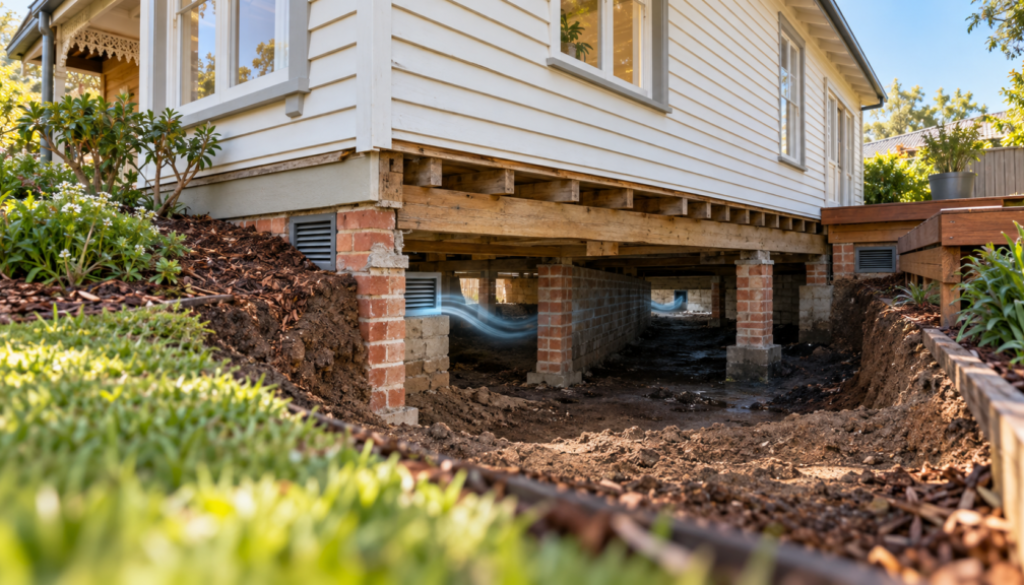
Garden beds, soil, mulch, concrete paths, decks, extensions, stored items and debris can partly or completely cover vents. Even when a grille remains visible, much of its opening may be obstructed.
Checking and clearing vents is a sensible first step, provided the work can be done safely and without altering parts of the building that require professional assessment.
Air may be taking a shortcut
Air tends to follow the easiest available route. If two vents are close together, air may move between them without reaching a damp section farther beneath the house.
This means some parts of the subfloor can receive airflow while others remain stagnant. The position of the openings matters as much as their number.
Internal walls may prevent cross-flow
The outside of a house does not always reveal its underfloor layout. Brick foundation walls, footings and later additions can divide the subfloor into separate sections.
A vent on one side of the house may have no clear path to an enclosed area on the other side. Each section needs to be considered when assessing airflow.
Renovations can change the original airflow path
A rear extension, deck, new room, concrete path or landscaping may cover vents that were once open. New footings can also separate older and newer parts of the subfloor.
The remaining vents may still look adequate from outside, even though air no longer moves through the space as originally intended.
Outdoor conditions also affect passive vents
Passive ventilation relies partly on natural air movement. Nearby buildings, fences and a sheltered site can reduce wind exposure around the home. Airflow may therefore vary with the weather and between different sides of the building.
When can mechanical ventilation help?
If clear passive vents cannot provide useful airflow through the damp areas, a mechanical system may be considered. Depending on the layout, this could include extraction fans, ductwork, additional air inlets or more than one extraction point.
Ecoflow Ventilation often considers negative pressure extraction where appropriate. It removes subfloor air outdoors while replacement air enters through selected openings.
Why not simply fit a fan into an existing vent?
A fan placed in one vent may draw fresh air through the nearest opening and immediately discharge it. The fan will be running, but the damp area beneath the centre of the house may receive little benefit.
The system should be planned so replacement air passes through the affected area before reaching the extraction point. Ductwork may be needed to reach isolated sections.
Could the existing vents still be enough?
Yes. Mechanical ventilation is not needed in every home. Clearing blocked vents, improving passive openings or restoring airflow between sections may help. Plumbing leaks, drainage faults and damp ground may also need attention.
The first step is to identify why the current vents are not delivering useful airflow.
Subfloor ventilation assessments in Melbourne
If your home has vents but still develops musty smells or damp conditions beneath the floor, Ecoflow Ventilation can assess the underfloor layout, existing openings and moisture sources.
Contact Ecoflow Ventilation to find out why your existing subfloor vents may not be working effectively and which improvements suit your home.