A bathroom fan may clear steam for a few minutes, but it does not solve the broader problem of stale air, window condensation or mould returning in a bedroom. When comparing ERV vs HRV systems, the key difference is how each system handles moisture while bringing fresh, filtered air into your home.
Both technologies can make a substantial difference to indoor air quality and comfort. The better choice depends on your home’s construction, how airtight it is, the number of occupants, where moisture is building up and how the home behaves through Melbourne’s changing seasons.
ERV vs HRV systems: the core difference
ERV and HRV systems are both balanced mechanical ventilation systems. They continuously extract stale air from moisture-producing areas such as bathrooms, laundries and kitchens, while supplying fresh outdoor air to living rooms and bedrooms. Rather than simply throwing conditioned indoor air outside, they recover energy from the outgoing air through a heat exchanger.
An HRV, or heat recovery ventilator, transfers heat. In winter, warmth from the stale exhaust air is passed to the incoming fresh air without the two air streams mixing. In summer, the process works in reverse, helping reduce the temperature load of incoming air when the home is cooled.
An ERV, or energy recovery ventilator, transfers heat and a portion of moisture. Along with sensible heat, it can exchange latent energy, which relates to water vapour in the air. This gives an ERV a different role in homes where maintaining a more even indoor humidity level is valuable.
Neither system recirculates stale air between rooms, and neither should be viewed as a replacement for a properly sized kitchen rangehood or a bathroom exhaust function where rapid moisture removal is needed. They are designed to provide consistent whole-home air exchange, not just an occasional burst of ventilation.
How an HRV manages moisture
An HRV removes humid indoor air and replaces it with outdoor air while recovering heat. Because its heat exchanger does not deliberately transfer moisture, much of the water vapour generated indoors is exhausted outside.
That can be particularly helpful in a Melbourne home with winter condensation. Showering, cooking, drying clothes indoors and everyday breathing all add moisture to the air. If that moisture cannot escape, it settles on cold windows, walls and other surfaces. Repeated condensation creates the conditions mould needs to grow and can affect furnishings, paintwork and timber elements over time.
In cool weather, outdoor air generally holds less total moisture than heated indoor air, even when it feels damp outside. Once that fresh air is brought in and warmed, its relative humidity drops. An HRV uses this principle while reducing the heating energy usually lost through open windows or basic exhaust fans.
The trade-off is that an HRV can contribute to drier indoor air during a long cold spell, particularly in a very airtight home with a high ventilation rate. For many households this is not a concern, and drier air may be welcome where condensation is persistent. It does, however, show why ventilation needs to be designed around the specific house rather than chosen from a brochure.
When an ERV can be the better fit
An ERV moderates moisture transfer between the outgoing and incoming air. During humid weather, it can reduce some of the moisture carried in with outdoor air. During dry conditions, it can retain a portion of the home’s indoor moisture rather than exhausting all of it.
This can suit homes with year-round heating and cooling, households that find their indoor air becomes uncomfortably dry, or buildings where the aim is to avoid large swings in humidity. It may also be a sensible option for well-sealed new builds, where controlled ventilation is needed but preserving indoor comfort is equally important.
An ERV is not a dehumidifier. It cannot remove unlimited amounts of moisture from a home with a major moisture source, such as a leaking shower, unvented gas appliance, wet subfloor or clothes regularly dried inside without adequate extraction. It also cannot correct rainwater ingress or rising damp. Those issues need to be identified and addressed alongside the ventilation design.
For homes in Melbourne and Victoria, an ERV can be valuable, but it is not automatically the premium choice. Winter condensation is a common concern, and in some properties an HRV’s tendency to exhaust indoor moisture more directly is the more practical response. Local climate matters, but so do occupancy, insulation, glazing, airtightness and the way a family uses the home.
Comparing ERV and HRV performance at home
The most useful way to compare the two systems is not to ask which one is universally better. Ask what problem the home needs to solve.
If windows are sweating each morning, corners of bedrooms are developing mould and bathrooms stay damp, the priority is usually controlled fresh-air supply and reliable extraction of humid air. An HRV may suit this profile well, especially where the house is heated in winter and heat loss has made homeowners reluctant to open windows.
If indoor humidity varies sharply, cooling is used extensively, or occupants experience overly dry air in winter, an ERV may provide a more balanced result. Its moisture exchange can reduce the extremes without sacrificing the benefits of filtered, continuous ventilation.
Both system types can improve the air available to allergy and asthma sufferers by reducing reliance on open windows and incorporating suitable filtration. However, filter grade, system layout, maintenance and outdoor air quality all affect the outcome. A high-performance unit cannot compensate for poorly positioned supply grilles, undersized ductwork or blocked filters.
Heat recovery does not mean free heating
Heat and energy recovery reduce the energy required to condition incoming fresh air. They do not generate heat or cooling on their own. Your existing heater, reverse-cycle system or other conditioning equipment still has work to do, particularly on very cold or hot days.
Efficiency also depends on commissioning. Airflows must be balanced so that stale air is extracted effectively and fresh air reaches occupied rooms. Excessive airflow can increase running costs and drafts, while insufficient airflow may leave condensation and stale-air problems unresolved.
Ducted and decentralised options
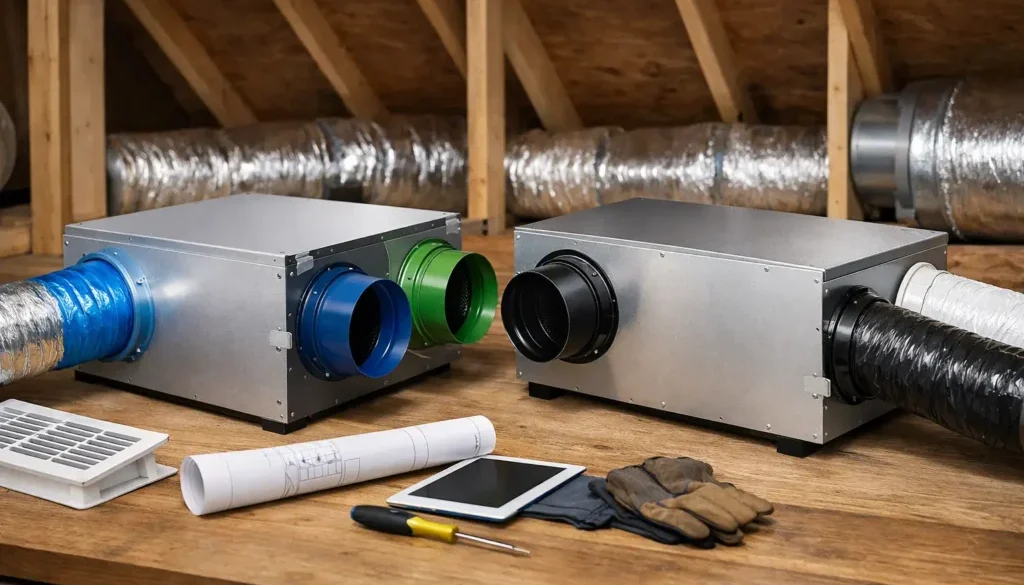
ERV and HRV technology can be delivered through centralised ducted systems or decentralised units. A centralised system can ventilate multiple rooms from one unit and is often well suited to new homes or major renovations where duct routes can be planned early.
Decentralised heat or energy recovery units can be a practical alternative for existing homes, targeted problem areas or staged upgrades. They require less ductwork but still need careful placement and an assessment of how air will move through the rest of the home. The right format is driven by the building, not simply the available ceiling space.
What to assess before choosing a system
A useful recommendation starts with the cause of the problem. Condensation on single-glazed windows may indicate high indoor humidity, cold glass, limited air movement or a combination of all three. A musty smell under the floor points to a different ventilation zone and may require subfloor ventilation rather than, or in addition to, whole-home heat recovery.
Before selecting ERV or HRV equipment, assess the home’s moisture sources, existing exhaust fans, insulation and glazing, room layout, number of residents and any signs of water ingress. Consider whether the home is a new build, a renovation or an older property with limited access for ducts. It is also worth discussing expected maintenance, including filter changes and periodic servicing.
A tailored design may combine solutions. For example, a home might need an HRV or ERV for living areas, dedicated extraction in wet rooms and separate subfloor ventilation to protect timber floors and floor joists. Treating every damp smell as a whole-house ventilation issue can leave the real source untouched.
Frequently asked questions about ERV and HRV
Is an ERV better than an HRV for Melbourne?
Not always. An ERV can help moderate humidity fluctuations, while an HRV can be particularly effective where winter moisture and condensation are the main concerns. The home’s moisture profile and design should guide the decision.
Will either system stop mould completely?
Ventilation can greatly reduce the conditions that support mould, but it cannot fix leaks, rising damp, inadequate drainage or existing water damage. Mould affected materials may also need appropriate cleaning or remediation.
Are ERV and HRV systems noisy?
A correctly selected and installed system should operate quietly in the background. Noise is more likely when equipment is oversized, ductwork is poorly designed, grilles are restrictive or airflow settings have not been balanced.
The best system is the one that addresses how your home actually holds heat, moisture and stale air. A professional assessment gives you a clearer answer than choosing ERV or HRV based on a single feature, and helps turn better ventilation into a healthier, drier home you can feel comfortable living in.