If your windows are dripping in winter, rooms feel stuffy even after cleaning, or mould keeps returning around wardrobes and bathrooms, the issue is often not the surface you can see – it is the air movement you cannot. That is usually where people start asking, how does ventilation work in a house, and whether opening a few windows is really enough.
The short answer is that ventilation works by removing stale, moist, polluted indoor air and replacing it with fresher air in a controlled way. The more useful answer is that good ventilation is not just about air coming in and out. It is about where that air moves, how consistently it moves, and whether it helps solve real household problems like condensation, mould, odours, allergens and uneven comfort.
How does ventilation work in a house in practical terms?
Every home produces moisture and airborne pollutants every day. Cooking releases steam and fine particles. Bathrooms create humidity. People breathing, drying clothes indoors, cleaning products, pets and even furniture all affect indoor air quality. Without enough air exchange, that moisture and those contaminants build up.
Ventilation creates that air exchange. In a basic sense, air leaves the home from one area and fresh air enters through another. When it works well, the system reduces humidity, dilutes indoor pollutants and helps prevent stale air from lingering.
In older homes, this often happened accidentally through gaps around doors, windows, floorboards and roof spaces. That sort of leakage can create some airflow, but it is unpredictable. On a windy day it might feel draughty. On a cold, still morning, moisture can sit indoors for hours. Newer homes are typically more airtight, which improves energy performance but also means they rely more on deliberate ventilation rather than incidental gaps.
That is why many Melbourne homeowners find that insulation and double glazing improve comfort, but condensation still worsens if ventilation has not been properly addressed.
Natural ventilation versus mechanical ventilation
Natural ventilation is the simplest form. It relies on open windows, doors, vents and the pressure differences created by wind and temperature. Warm air rises, cooler air enters, and air moves through the home if there is a clear path.
This can work well in mild conditions or when a home has a layout that allows cross-flow. If you can open windows on opposite sides of the house and get a breeze through, you are ventilating naturally. The drawback is that it depends on the weather, the season, outdoor air quality, security concerns and whether people are actually home to open things up.
Mechanical ventilation uses fans and designed air pathways to move air more reliably. Instead of hoping air goes where it should, the system directs it. That makes a major difference in homes with recurring condensation, limited window use, shaded rooms, internal bathrooms or subfloor dampness.
For many households, the question is not whether natural ventilation works at all. It is whether it works enough, often enough, to deal with the actual moisture load and occupancy of the home.
What air is actually moving through the house?
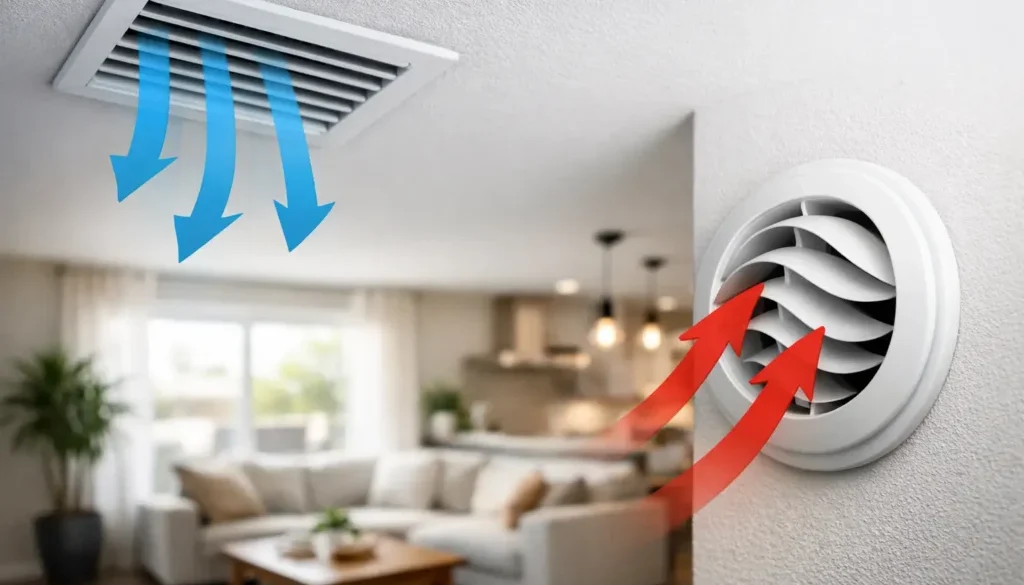
A well-ventilated house usually has two separate but connected actions taking place. Air is extracted from wetter or more polluted rooms such as bathrooms, laundries and kitchens. Fresh air is then introduced into living areas and bedrooms, either passively or mechanically.
That airflow pattern matters. If fresh air enters the bedrooms and living spaces, then travels towards wet areas where stale air is removed, the whole home benefits. If air is simply recirculated without moisture removal or fresh air supply, the problem is only being shifted around.
This is also where system choice matters. Some systems focus mainly on extracting humid air. Others supply filtered air into the home. More advanced systems do both while also recovering heat energy, which helps improve comfort and energy efficiency.
Why ventilation matters more in Melbourne homes
Melbourne conditions can be hard on houses. Cold mornings, wet weather, rapid temperature swings and long periods with windows closed all increase the chance of indoor moisture build-up. Homes with good heating but poor ventilation often trap warm, moist air inside, where it condenses on colder surfaces such as glass, uninsulated walls and ceilings.
That is why ventilation is not only a comfort issue. It is a home health issue and a building durability issue. Ongoing condensation can feed mould, damage paint and plaster, affect timber and create that persistent damp smell many people notice before they see visible growth.
Families with asthma, allergies or sensitivity to indoor air pollutants can be especially affected. Better ventilation will not fix every indoor air quality issue on its own, but it is a core part of reducing humidity, airborne particles and stale air.
Common types of home ventilation systems
Not every house needs the same setup. The right solution depends on the building design, insulation level, occupancy, moisture sources and where the problem is most noticeable.
Exhaust ventilation is the most familiar approach. It removes air from high-moisture areas such as bathrooms and laundries. This is useful, but by itself it may not provide balanced whole-home airflow.
Positive pressure ventilation introduces filtered air into the home, usually from a roof space or outdoor source depending on the system design. The incoming air creates gentle pressure that pushes stale air out through leakage points or designated exits. In the right home, this can help with condensation and stale air, but results vary depending on ceiling space conditions, airtightness and the home layout.
Heat recovery ventilation, often called HRV, supplies fresh air and extracts stale air at the same time. As those air streams pass through the unit, heat from the outgoing air is transferred to the incoming air without mixing the two. This helps reduce heat loss while still ventilating the home.
Energy recovery ventilation, or ERV, works in a similar way but can also transfer some moisture as well as heat, depending on the unit. In some climates and household conditions, that can improve comfort and efficiency.
Decentralised systems are installed in individual rooms or zones rather than relying on one central ducted network. These can suit renovations, existing homes or areas where running full ductwork is difficult. Centralised systems, by contrast, serve multiple rooms from one main unit and are often chosen for new builds or larger upgrades.
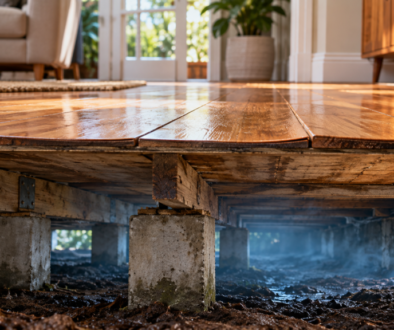
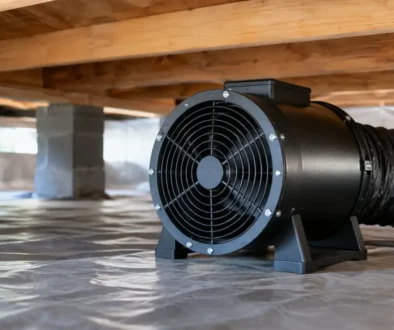
There are also heat transfer systems, which move warm air from one part of the home to another, and subfloor ventilation systems, which target damp air trapped beneath suspended floors. These do not do the same job as whole-home fresh air ventilation, but in the right setting they solve very specific moisture and comfort issues.
How do you know if your house is under-ventilated?
The signs are usually familiar. Windows fogging up in the morning, mould on ceilings or around window frames, musty smells, damp wardrobes, lingering cooking odours and rooms that feel stale even when clean are all common indicators.
Sometimes the signs are less obvious. People may notice headaches, restless sleep, worsening allergies or a sense that the house never quite feels dry. Others assume the problem is just poor heating, when the bigger issue is that moist air is being warmed but not removed.
A good assessment looks beyond one symptom. It considers where moisture is generated, how the home is constructed, how airtight it is, and how people actually live in it. That is why ventilation should be designed around the home, not picked from a shelf as a one-size-fits-all fix.
Does more ventilation always mean better results?
Not necessarily. Ventilation needs to be effective, not excessive. Too little airflow leaves moisture behind. Too much uncontrolled airflow can create draughts, waste energy and make winter comfort harder to maintain.
The best systems balance fresh air, extraction, energy use and occupant comfort. In some homes, a simple targeted upgrade is enough. In others, especially where mould and condensation are persistent, a more integrated mechanical solution is the smarter long-term option.
This is where tailored advice matters. A well-designed system should match the building and the problem it is solving, whether that is a damp subfloor, an airtight new build, a family home with heavy winter condensation, or a renovation where room-by-room control makes more sense than full ducting.
For homeowners across Melbourne and greater Victoria, that practical, home-specific approach is what turns ventilation from a vague idea into a measurable improvement in comfort, dryness and air quality.
A healthier house rarely starts with a bigger heater or another coat of anti-mould paint. More often, it starts with understanding where the air is going, where the moisture is staying, and what kind of ventilation will actually change that.