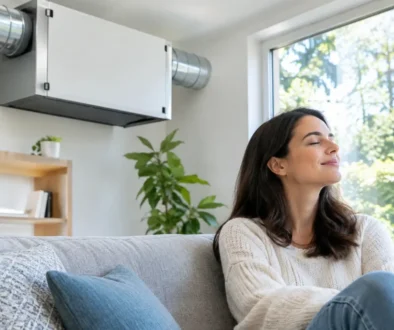

If your windows are streaming with condensation on winter mornings, your wardrobes smell musty, or certain rooms always feel stale, the problem is rarely just the weather. In many Australian homes, poor airflow quietly drives moisture, mould risk and uneven comfort. That is why the home ventilation systems that Australian homeowners install need to do more than move air around – they need to suit the house, the climate and the way the family actually lives.
In Melbourne and across Victoria, that matters even more. We deal with cold snaps, damp mornings, hot days and tightly sealed newer homes alongside older properties that were never designed for modern expectations of comfort. Open a few windows and you might get a quick burst of fresh air, but that is not the same as controlled, reliable ventilation. A properly designed system helps remove excess moisture, improve indoor air quality and support a healthier living environment all year.
Why many Australian homes need better ventilation
Most homeowners do not start by searching for ventilation. They start with symptoms. Black spots returning around window frames, a bathroom that never fully dries, bedrooms that feel stuffy overnight, or allergy flare-ups that seem worse at home.
Moisture is often the main issue. Everyday living adds a surprising amount of water vapour into the air through showers, cooking, drying clothes and even breathing. If that moisture cannot escape, it settles on colder surfaces and creates the conditions mould needs to grow. In older homes, this can happen because airflow is poor. In newer homes, it can happen because the building envelope is much tighter, which is great for energy efficiency but not so great if stale, humid air gets trapped inside.
Ventilation also affects comfort in less obvious ways. A home can be heated or cooled, but if the air feels heavy, damp or stale, it still will not feel right. Good ventilation improves freshness and air movement while helping regulate indoor humidity. For families with asthma, allergies or sensitivity to mould, those improvements can be more than just a comfort upgrade.
Home ventilation systems Australia homeowners commonly consider
Not every system solves the same problem, and this is where many households get conflicting advice. The right answer depends on whether the main issue is condensation, stale air, heat imbalance, subfloor dampness or whole-home air exchange.
Positive pressure systems
Positive pressure systems draw in filtered air, usually from the roof space or outside depending on the system design, and gently introduce it into the home. That fresh air pushes out stale indoor air through gaps and leakage points.
These systems can work well in homes struggling with condensation and stale air, especially where natural ventilation is inconsistent. They are often a practical option for existing houses and can be less complex to install than some other solutions. The trade-off is that performance depends heavily on the property itself. In some homes, especially where humidity control needs to be more precise, another system type may be better suited.
Heat recovery and energy recovery ventilation
Heat recovery ventilation, or HRV, and energy recovery ventilation, or ERV, are among the most effective mechanical ventilation options for well-sealed homes. They bring in fresh air and expel stale air at the same time, while transferring heat between the two air streams. ERV systems also help moderate moisture levels as part of that exchange.
For homeowners building new or renovating substantially, these systems are often worth serious consideration. They offer controlled ventilation without throwing away as much heated or cooled air, which supports energy efficiency and comfort. They do, however, require good planning, the right duct layout and a system sized correctly for the home.
Centralised and decentralised systems
A centralised system uses one main unit connected to multiple rooms, usually through ducting. This can provide consistent whole-home ventilation and is often a strong fit for new builds or major renovations where access for installation is easier.
A decentralised system uses smaller individual units in specific rooms or zones. This approach can be excellent for existing homes where running ductwork would be difficult or disruptive. It also suits households wanting targeted improvement in problem areas such as bedrooms, bathrooms or living zones. The decision between centralised and decentralised is not about which is better overall. It is about what works best with the home’s layout, access and goals.
Heat transfer systems
Some homes have one room that stays warm while others remain cold, particularly where a fireplace or heater serves only part of the house. Heat transfer systems move excess warm air from one area to another, helping distribute heat more evenly.
They do not replace fresh air ventilation, so they are not the answer to every air quality problem. But in the right home, they can improve comfort and make heating more efficient.
Subfloor ventilation
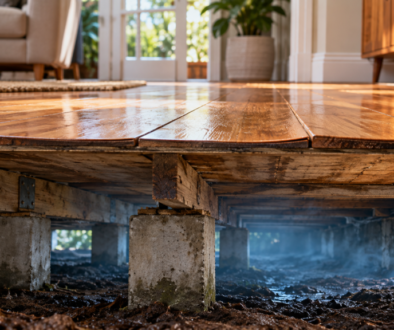
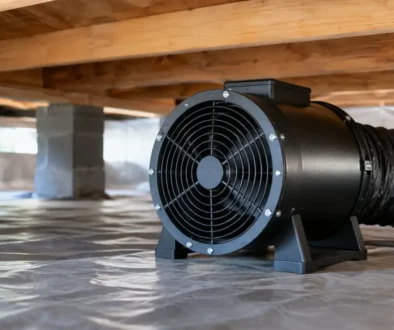
In older homes and houses with suspended floors, damp air beneath the home can contribute to musty smells, timber issues and poor indoor conditions above. Subfloor ventilation helps remove that trapped moisture and improve airflow under the house.
This is a very specific solution, but for homes with subfloor dampness it can make a major difference. It is often overlooked because the symptoms show up inside, while the source sits below the floor.
How to choose the right home ventilation system
The best starting point is not the product. It is the problem.
If condensation forms mainly in bedrooms and on windows, the solution may involve whole-home air exchange. If mould keeps returning in one bathroom, local extraction and moisture management may be the priority. If the house feels stale throughout but is otherwise fairly dry, balanced ventilation could be a better fit than a simpler supply-only option.
Climate and location matter too. A ventilation system that performs well in one part of Australia may need a different approach in Victoria, where seasonal swings can be sharp and winter moisture becomes a real issue. Home size, insulation levels, ceiling space, building tightness and the number of occupants all affect what will work well.
That is why a one-size-fits-all recommendation usually falls short. A system should be designed around the home, not just sold into it.
What good ventilation design looks like
A well-designed system should feel almost invisible in daily life. The house feels fresher, drier and easier to heat or cool, without constant fiddling or obvious drafts.
That usually comes down to a few fundamentals. Air needs to move through the home in a controlled way, not simply be dumped into one area. Wet rooms and sleeping areas need proper consideration. The unit should be sized correctly, because oversized systems can be noisy or inefficient, while undersized ones struggle to keep up. Filters, controls and access for maintenance also matter more than many people realise.
Premium systems from established brands can offer quieter operation, better efficiency and more consistent performance, but the product is only part of the picture. Even a high-quality unit will disappoint if the design and installation are poor.
Common mistakes homeowners make
The most common mistake is assuming any fan-based product counts as ventilation. Exhaust fans have their place, but they do not always solve broader indoor air quality or moisture problems.
Another is choosing based on price alone. A cheaper system that does not address the real issue often ends up costing more in ongoing discomfort, mould treatment or retrofit work later. There is also a tendency to overestimate how much opening windows can achieve. Natural ventilation is useful when conditions allow, but it is not reliable enough to manage indoor moisture day after day.
Homeowners also sometimes compare systems without comparing outcomes. Two options may both be called ventilation systems, yet one is designed for condensation control while the other is focused on heat recovery in airtight homes. The labels can sound similar, but the results can be quite different.
When is the right time to install?
The easiest time is during a new build or renovation, when access is better and system design can be integrated early. But many of the homes that benefit most are existing properties already showing signs of moisture, mould or stale air.
If your home regularly has condensation, lingering odours, damp rooms or poor airflow, it is usually worth acting before visible damage spreads. Ventilation is not just a comfort feature. It supports the health of the home as well as the people living in it.
For Melbourne homeowners, a consultative approach usually delivers the best result. Rather than forcing a standard package into every house, the better path is to assess the layout, identify the source of the problem and match the system accordingly. That is the approach specialists such as Ecoflow Ventilation bring to the process, particularly where homeowners want a long-term solution rather than a quick patch.
A healthier home often starts with air you do not have to think about – fresh, dry and moving exactly where it should.