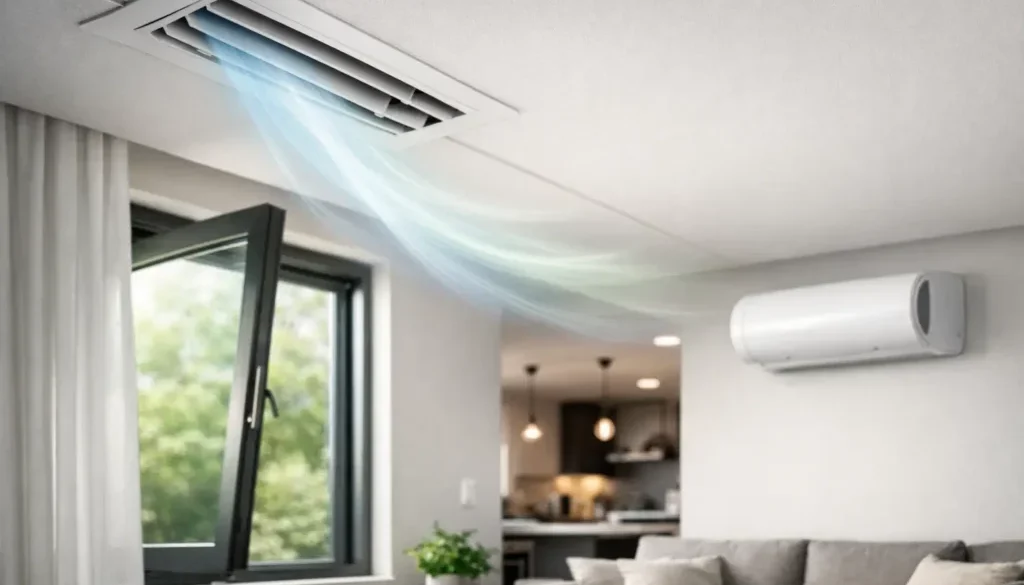
A home can look spotless yet still feel damp, stuffy or oddly difficult to heat. You might notice water running down the bedroom windows on cold mornings, a lingering cooking smell, or mould returning to the same ceiling corner after every clean. Ventilating a sealed home addresses the cause of these problems: indoor air, moisture and pollutants have nowhere reliable to go.
Modern homes are built or renovated to reduce draughts and improve energy efficiency. That is generally a good thing. But when uncontrolled gaps are removed, the home also loses much of the accidental ventilation older houses once had. Fresh air must then be introduced deliberately, in the right amounts and in the right places.
Why a sealed home needs planned ventilation
Everyday living adds surprising amounts of moisture to indoor air. Showers, cooking, drying clothes, breathing and even some unflued gas appliances all contribute. In a leaky older home, some of that moisture may escape through cracks around windows, doors and floorboards. That is inefficient and uncomfortable, but it can mask an underlying ventilation need.
A well-sealed home retains heated or cooled air far more effectively. Without a planned path for stale, humid air to leave, humidity can build up indoors. When warm moist air meets a colder surface, such as glazing, external walls or roof spaces, it can condense. Persistent condensation creates the conditions mould needs to grow and can eventually affect paintwork, plaster, timber and furnishings.
Air quality matters just as much as moisture. Carbon dioxide rises while people sleep in closed bedrooms. Cooking particles, cleaning-product fumes, dust, pet allergens and volatile organic compounds from furniture or finishes can remain indoors longer. Opening windows can help, but it is not always practical during Melbourne winters, on hot or smoky days, near traffic, or when the house is empty.
The aim is not to make a home draughty again. It is to replace random air leakage with controlled ventilation that supports health, comfort and energy performance.
Ventilating a sealed home is not simply opening windows
Window ventilation is useful when outdoor conditions are favourable. A cross-breeze after cooking or a few open windows on a mild day can quickly clear stale air. However, it depends on someone being home, remembering to do it and feeling comfortable leaving windows open.
It also cannot provide consistent ventilation across every room. Bathrooms, laundries, internal bedrooms and subfloors may have little natural airflow. In winter, opening windows for long periods can waste expensive heating. In summer, it can bring in heat and humidity, particularly during warm overnight conditions.
Mechanical ventilation provides a more predictable alternative. It works at low, controlled airflow rates to remove stale air and introduce outdoor air according to the home’s layout and the occupants’ needs. The right system should be quiet enough for daily use, energy conscious and designed around the building rather than selected as a generic fix.
Which ventilation approach suits your home?
There is no single best system for every sealed home. The most suitable option depends on the age of the building, where moisture is forming, the floor plan, existing heating, the level of airtightness and whether the property is being built, renovated or lived in now.
Extract ventilation for wet areas
Continuous or demand-controlled extraction removes humid air at its source, usually from bathrooms, laundries and kitchens. This is often an effective starting point where condensation follows showers or clothes drying. A properly designed system needs make-up air to replace the extracted air, otherwise airflow can be weak or drawn from unsuitable areas such as a damp subfloor.
Kitchen rangehoods and bathroom fans are helpful, but they are not automatically a whole-home ventilation strategy. Many operate only briefly, are noisy enough that occupants avoid using them, or do not move sufficient air after the room has filled with moisture.
Positive pressure systems
Positive pressure ventilation gently introduces filtered air, usually from the roof space or outdoors, creating a slight pressure difference that encourages stale indoor air to leave through planned or natural exit points. It can assist some existing homes where window condensation and stale air are the primary concerns.
The detail matters. Roof spaces can become very hot in summer and very cold in winter, so system design, filtration and supply-air source need careful consideration. Positive pressure is not a universal answer for severe moisture sources, homes with poor external weatherproofing or properties with subfloor dampness. Those issues should be diagnosed rather than pressurised away.
Heat recovery and energy recovery ventilation
Heat recovery ventilation, often called HRV, transfers heat between outgoing stale air and incoming fresh air. In a cold Melbourne winter, it can pre-warm incoming outdoor air using heat that would otherwise be exhausted. This enables continuous fresh-air ventilation with less heat loss than simply opening windows.
Energy recovery ventilation, or ERV, also transfers some moisture between air streams. It may be particularly valuable where humidity management and year-round comfort need closer attention. The best choice between HRV and ERV depends on the local climate, occupancy, moisture load and how the home is heated and cooled.
Centralised systems use ductwork to serve multiple rooms and are often well suited to new builds or major renovations, where pathways can be planned before linings go in. Decentralised units ventilate individual rooms or paired spaces through external walls. They can be an excellent option where adding ducts is impractical, such as an established brick home or a targeted bedroom-and-living-area upgrade.
Subfloor ventilation where the problem starts below
A musty smell, cold timber floors, cupping boards or recurring damp around the lower parts of walls may point to a wet subfloor rather than only an indoor-air issue. Moisture can enter beneath a home through poor drainage, inadequate ground moisture control, plumbing leaks or limited underfloor airflow.
Subfloor ventilation is designed to move damp air out from beneath the floor structure. It can protect joists and flooring, but fans alone cannot solve standing water, drainage failures or plumbing leaks. A useful assessment considers the whole moisture pathway, including external ground levels, drainage, vents, access and any barriers preventing airflow.
Signs your ventilation needs a closer look
Condensation on windows is the most visible warning sign, but it is not the only one. Pay attention if the home smells stale when closed up, bathrooms stay fogged long after showers, mould returns after cleaning, or bedrooms feel heavy by morning. Allergy or asthma symptoms that seem worse at home can also justify a closer look at moisture, dust and air exchange.
New homes are not exempt. Fresh plaster, concrete and timber can release construction moisture for months, while efficient windows and tight building wraps reduce incidental ventilation. Conversely, older homes may need a different approach because leaks, chimneys, wall cavities and damp subfloors affect how air moves through the building.
Getting the design right before installing equipment
Ventilation works best when it is based on evidence, not assumptions. A home-specific review should consider room use, occupant numbers, visible condensation, mould history, window performance, heating type, roof space conditions and subfloor moisture. It should also identify obvious contributors such as unvented dryers, bathroom fans discharging into roof spaces or indoor clothes drying.
Airflow balance is crucial. Supplying fresh air without a clear extraction path can leave wet rooms humid. Extracting air without planned replacement air can create uncomfortable draughts or pull air from garages, fireplaces or damp cavities. Duct routes, grilles, filters, noise levels and access for maintenance all influence whether a system performs well after installation.
For Melbourne and Victorian homes, seasonal changes deserve attention too. A system that feels acceptable through a dry spell may be inadequate during a cold, wet winter when windows stay closed and indoor moisture production increases. Energy-efficient ventilation should be chosen for dependable year-round operation, not just the conditions on the day it is installed.
Everyday habits still make a difference
Mechanical ventilation reduces reliance on perfect household habits, but it does not remove the need for sensible moisture control. Use the rangehood while cooking, keep bathroom doors closed during showers and run extraction long enough afterwards. Where possible, dry clothes outside or use a vented dryer rather than adding litres of water vapour to the house.
Keep supply and extract grilles clear, clean or replace filters as specified, and do not switch a continuous system off simply because it is quiet. Low-speed, ongoing ventilation is often what prevents moisture and pollutants from accumulating in the first place.
A sealed home should feel calm, fresh and comfortable, not airless. If condensation, mould or stale air is becoming part of daily life, a tailored assessment from a specialist such as Ecoflow Ventilation can identify where the air and moisture are actually moving, then match the solution to your home rather than asking your home to fit a standard system.