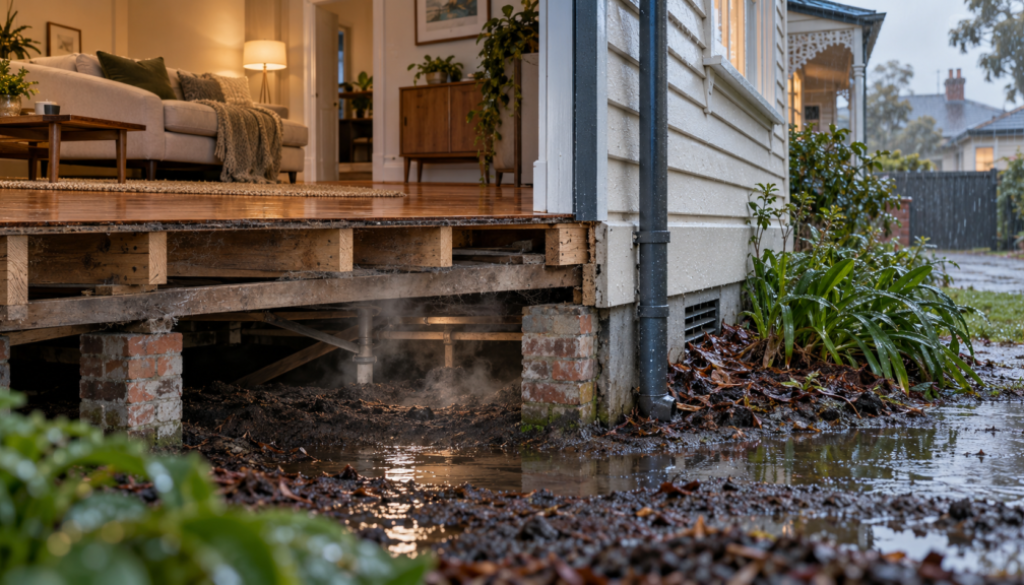
Why Does My House Smell Musty After Rain?
If your house smells musty after rain, moisture may be collecting beneath the floor, inside a wall or elsewhere in the building. The smell may be earthy, mouldy or similar to wet timber. It can fade during dry weather and return after several days of rain.
Opening windows may clear the smell temporarily, but finding the moisture source is the key to stopping it from returning.
Why does the smell appear after rain?
Rain makes the soil around and beneath a home wetter. In houses with suspended timber floors, moisture can evaporate from exposed ground into the subfloor air. If that air cannot move outdoors effectively, humidity and musty odours can build up beneath the house.
Air from the subfloor may then enter living areas through gaps around floorboards, pipes, cables, skirting boards, old heating ducts or access hatches. The smell can be especially noticeable after the house has been closed overnight.
Common causes of a musty smell after rain
Wet ground beneath the house
Soil may become damp during wet weather, but pooling water, mud or water flowing beneath the home deserves closer investigation. Poor surface drainage or ground that slopes toward the house can direct rainwater into the subfloor.
Blocked subfloor vents
Soil, garden beds, mulch, stored items or building additions can obstruct existing vents. When airflow is restricted, damp subfloor areas may take longer to dry.
Leaking gutters and downpipes
A damaged gutter or disconnected downpipe can release rainwater beside the foundations. That water may soak into the surrounding soil or travel beneath the house.
Plumbing or drainage leaks
Rain is not always the direct cause. A leaking pipe or drain may be easier to notice when the subfloor is already humid. Signs of an active leak should be investigated and repaired.
Poor airflow beneath an extension
Renovations can cover original vents or divide the subfloor with new footings. One section may then receive very little airflow, allowing damp air and odours to collect.
Damp building materials or mould
Timber, insulation, cardboard and stored belongings can develop musty odours when they remain damp. Cleaning visible mould may help, but the moisture source also needs to be addressed.
Can subfloor ventilation remove the smell?
Subfloor ventilation may help when humid, stagnant air beneath the home is contributing to the odour. A well-designed system moves air through the affected areas and discharges damp air outdoors. It can also support drying once leaks and drainage problems have been repaired.
Ventilation cannot fix every cause of a musty smell. A fan will not repair a leaking downpipe, stop stormwater flowing beneath the house or dry materials that continue to get wet.
What should you check?
- Gutters and downpipes after rain
- Plumbing and drainage for leaks
- Water pooling beneath or beside the house
- Blocked or covered subfloor vents
- Damp or damaged timber and stored materials
- Airflow beneath extensions and between subfloor sections
- Possible moisture sources in the roof, walls or rooms above
A musty smell can have more than one source, so an inspection should look beyond the subfloor if the cause is unclear.
How can you stop the smell from returning?
The solution depends on where the moisture is coming from. It may involve repairing gutters, drains or plumbing; directing surface water away from the building; clearing blocked vents; removing damp stored materials; or improving subfloor airflow. Where exposed soil is a significant moisture source, a suitable ground moisture barrier may also be considered.
The aim is to reduce the amount of moisture entering the space and give damp air an effective route out.
Subfloor ventilation for Melbourne homes
Ecoflow Ventilation assesses the layout beneath Melbourne homes, the condition of existing vents and the areas where damp air may be collecting. If your house smells musty after rain, contact Ecoflow Ventilation to discuss a subfloor assessment and the options suited to your property.