
A Victorian-era home can feel beautifully solid while quietly holding onto moisture in places you cannot see: beneath timber floors, inside wall cavities, around fireplaces and in cold back rooms. Effective Victorian home moisture management is not about sealing every draught or simply wiping condensation from windows. It is about understanding how water, humid air and an older building’s original design interact.
For many Melbourne and Victorian homeowners, the warning signs begin with a musty smell, black spotting in a corner, cold timber floors or windows that sweat on winter mornings. These are not merely cosmetic problems. Persistent moisture can affect indoor air quality, encourage mould growth and, over time, place timber framing, floor joists and finishes under unnecessary stress.
Why Victorian homes handle moisture differently
Victorian homes were generally built to breathe, although not always in a controlled or comfortable way. High ceilings, open fireplaces, air vents, timber floors and chimney flues allowed a degree of natural air movement. In their original form, these features could help disperse moisture generated by cooking, bathing and everyday living.
The challenge comes when an older home is altered without considering airflow as a whole. A renovated kitchen may be more airtight, fireplaces may be blocked, original vents may be covered, and new insulation or windows may reduce uncontrolled draughts. These upgrades can improve comfort and energy efficiency, but they can also leave humid indoor air with fewer paths to escape.
This does not mean heritage homes should be left draughty. It means ventilation needs to become deliberate. The right approach preserves comfort while managing humidity in the spaces where it is created and where it tends to settle.
Condensation is often an air problem, not a leak
Condensation develops when warm, moisture-laden indoor air meets a colder surface. In winter, single-glazed windows, uninsulated walls and poorly ventilated rooms are common condensation points. Water on glass is easy to see, but the same process may be occurring behind wardrobes, within roof spaces or near external corners where air circulation is poor.
A roof leak or plumbing leak needs a different response, so identifying the source matters. If dampness worsens after rain in one defined location, investigate the building envelope, gutters, flashing, drainage and pipes. If it appears most strongly after showers, cooking, drying clothes indoors or overnight occupancy, excess indoor humidity and inadequate extraction are more likely contributors.
Subfloor moisture can travel upwards
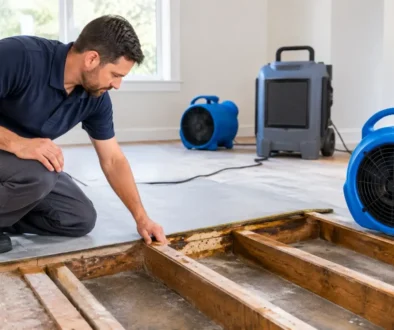
Many Victorian homes have suspended timber floors and accessible subfloors. These spaces can become damp when outside air is restricted, ground moisture evaporates into the cavity, drainage directs water towards the home, or vents have been blocked during landscaping and renovations.
A damp subfloor may create a musty odour indoors, colder floors and elevated moisture around timber bearers and joists. It can also make the whole house feel harder to heat. The solution is not automatically more fans. Before selecting subfloor ventilation, assess standing water, site drainage, ground conditions, vent locations and the condition of the existing structure. Mechanical ventilation can be highly effective when it is matched to the actual cause rather than used to mask it.
Victorian home moisture management starts with diagnosis
Cleaning mould, running a portable dehumidifier or opening a window can offer temporary relief. However, recurring mould is a signal to look at the moisture cycle: where moisture enters, how it moves through the house and whether it has a reliable route out.
Start with a practical inspection of the rooms and times when symptoms occur. Note window condensation in the morning, mould behind furniture, bathroom mirror fogging that lingers, damp smells after wet weather, and whether the problem is confined to one room or occurs across the home. A pattern helps distinguish a local building defect from a whole-home ventilation issue.
It is also worth considering how the home is now used. A Victorian terrace occupied by a larger family, with longer showers, frequent laundry loads and closed-up rooms, produces far more moisture than it may have when built. Modern living creates a stronger case for controlled extraction and continuous background ventilation.
Control water first, then control humid air
Moisture management works best in layers. Direct water entry must be addressed before ventilation can do its job properly. Repair leaking pipes, roof defects and overflowing gutters, check that paving and soil fall away from the house, and ensure subfloor vents are not buried by garden beds or stored items.
Once direct moisture sources are under control, focus on humid air. Bathroom and laundry exhaust should vent outdoors, not into a roof space. Kitchen extraction should remove steam and cooking pollutants at the source. Where rooms remain damp despite good local extraction, whole-home or room-based mechanical ventilation may be appropriate.
There is a trade-off here. Simply increasing exhaust can remove humid air, but it can also pull in cold outside air through gaps in winter. A carefully designed system considers replacement air, operating hours, noise, energy use and the home’s layout. The aim is not maximum airflow at all times. It is enough controlled airflow to keep indoor humidity and pollutants at healthier levels.
Choosing a ventilation approach for an older home
There is no single system for every Victorian property. Access, heritage features, renovation scope, room layout and the location of the moisture problem all influence the best design.
Localised extraction for wet areas
A correctly sized, ducted bathroom or laundry fan is often the first practical improvement. It should extract moisture effectively and continue operating long enough after use to clear humid air. Quiet operation matters, because a fan that is too noisy is less likely to be used consistently.
Local extraction is particularly useful when condensation and mould are concentrated around bathrooms, laundries or kitchens. It may not resolve stale bedrooms, damp subfloors or widespread winter condensation on its own.
Decentralised ventilation for targeted rooms
Decentralised systems can suit existing homes where duct runs are difficult or disruptive. Installed through external walls, they can provide controlled fresh air and, in some configurations, recover heat from outgoing air. This can be a valuable option for bedrooms, studies and rooms prone to mould, especially where preserving ceilings and original details is a priority.
Their limitation is coverage. One unit may improve one room very well, but a home with multiple affected areas needs a planned arrangement rather than isolated additions.
Centralised heat or energy recovery ventilation
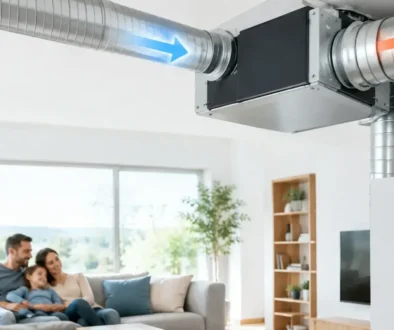
For major renovations or homes with suitable roof-space access, centralised heat recovery ventilation or energy recovery ventilation can provide balanced, whole-home airflow. These systems extract stale, humid air from wet areas and supply filtered air to living spaces and bedrooms, while recovering some energy from the outgoing air.
This approach can support a more consistent indoor environment, but design quality is critical. Duct routes, grille placement, system sizing and commissioning all affect results. It is not a generic appliance purchase. In a complex older home, a tailored design prevents one room being over-ventilated while another remains stagnant.
Positive pressure and subfloor systems
Positive pressure ventilation can assist in particular houses by introducing filtered air and encouraging stale air to leave through existing leakage paths. It needs careful assessment in older homes, especially where external air quality, roof-space conditions and building leakage vary.
For underfloor dampness, subfloor ventilation may help move moist air from beneath the building. It should be considered alongside drainage, ground moisture and access. If water is physically entering the subfloor, fans alone are not a substitute for fixing that water source.
Everyday habits still make a difference
A ventilation system is most effective when household moisture is managed sensibly. Use lids when cooking, run extraction during and after showers, avoid drying washing indoors where possible, and leave a small gap between large furniture and cold external walls. Do not permanently close existing wall or subfloor vents without professional advice.
Portable dehumidifiers can be helpful during a particularly damp period or in a problem room, but they collect moisture after it has entered the air. They are rarely a complete answer for a home with ongoing condensation, mould or underfloor dampness. Think of them as a support measure, not the foundation of a moisture strategy.
When to seek professional advice
If mould returns after cleaning, windows are regularly wet, floors feel unusually cold or springy, or a damp smell persists beneath the house, it is worth arranging a proper assessment. This is especially true before a renovation that will make an older home tighter and more insulated.
A home-specific ventilation assessment looks beyond the visible mould patch. It considers moisture sources, the building fabric, airflow pathways, occupancy and how the home is used. Ecoflow Ventilation applies this tailored approach to help Melbourne and Victorian homeowners select a system that suits the property rather than forcing the property to suit a product.
A dry, fresh-feeling Victorian home should not require living with open windows through winter or repeatedly scrubbing the same mould marks. Address the cause, give humid air a controlled way out, and your home can retain its character while becoming healthier and more comfortable to live in.