What Is a Whole Home Ventilation System?
If your windows are dripping in the morning, certain rooms always feel stuffy, or mould keeps returning no matter how often you clean it, the issue is often not housekeeping – it is airflow. That is usually where people start asking, what is whole home ventilation system, and whether it can actually make a noticeable difference in a real home.
A whole home ventilation system is a mechanical system designed to move fresh air through the entire house while removing stale, moisture-laden indoor air. Unlike opening a window now and then, it provides controlled, consistent ventilation across multiple rooms. The goal is simple: healthier air, better moisture management, and a more comfortable home.
For many Melbourne and Victorian homes, that matters more than people realise. Modern homes are often built tighter for energy efficiency, while older homes can have patchy airflow, damp subfloors, and cold spots. In both cases, trapped indoor air can lead to condensation, lingering odours, allergens, and mould risk.
What does a whole home ventilation system actually do?
At its core, a whole home ventilation system manages air exchange throughout the home. It brings in fresh air, moves air between spaces where needed, and exhausts stale air from areas such as bathrooms, laundries, kitchens, and sometimes bedrooms or living zones.
That fresh air movement helps reduce indoor humidity, which is one of the main drivers of condensation and mould. It also dilutes airborne pollutants that build up indoors, including dust, cooking fumes, volatile organic compounds from furnishings and cleaning products, and everyday odours that tend to linger when a home does not breathe properly.
A well-designed system does not just push air around randomly. It is planned around the layout of the house, where moisture is generated, how people use the space, and how airtight the building is. That is why one home might suit a centralised heat recovery system, while another might perform better with decentralised units or a positive pressure approach.
How a whole home ventilation system works
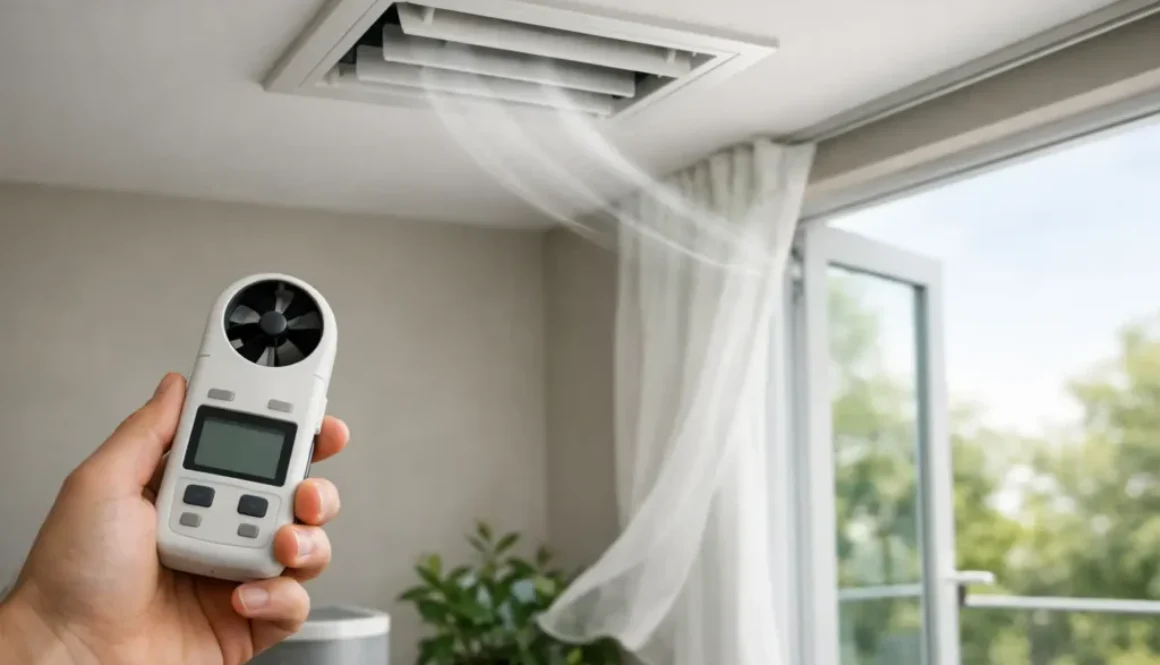
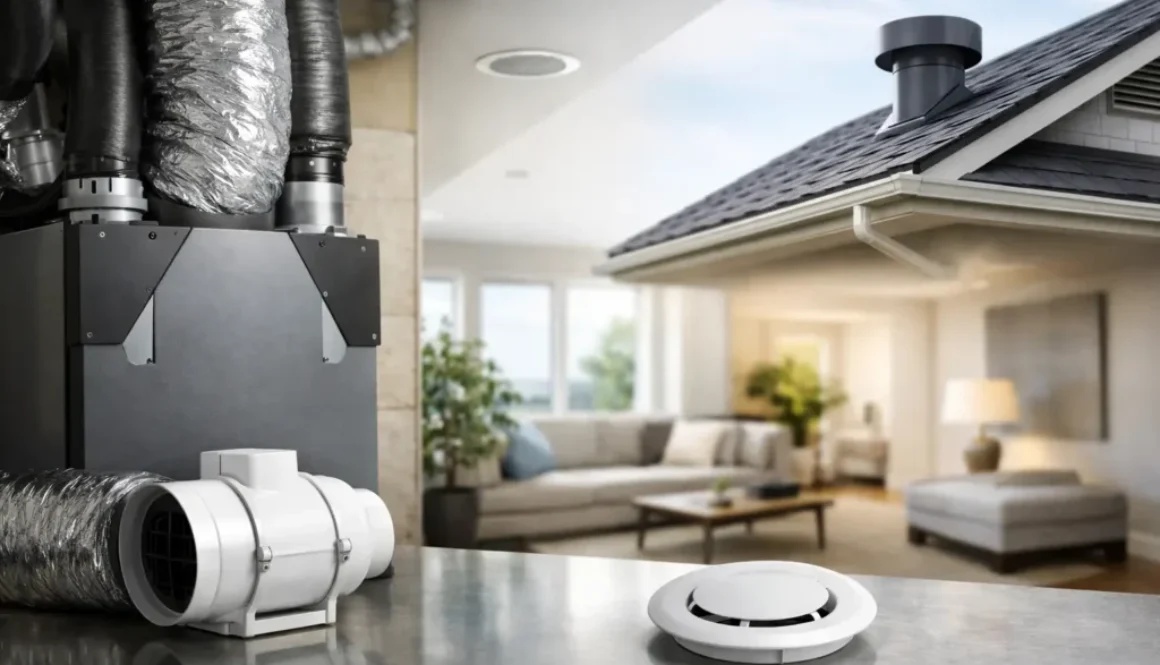
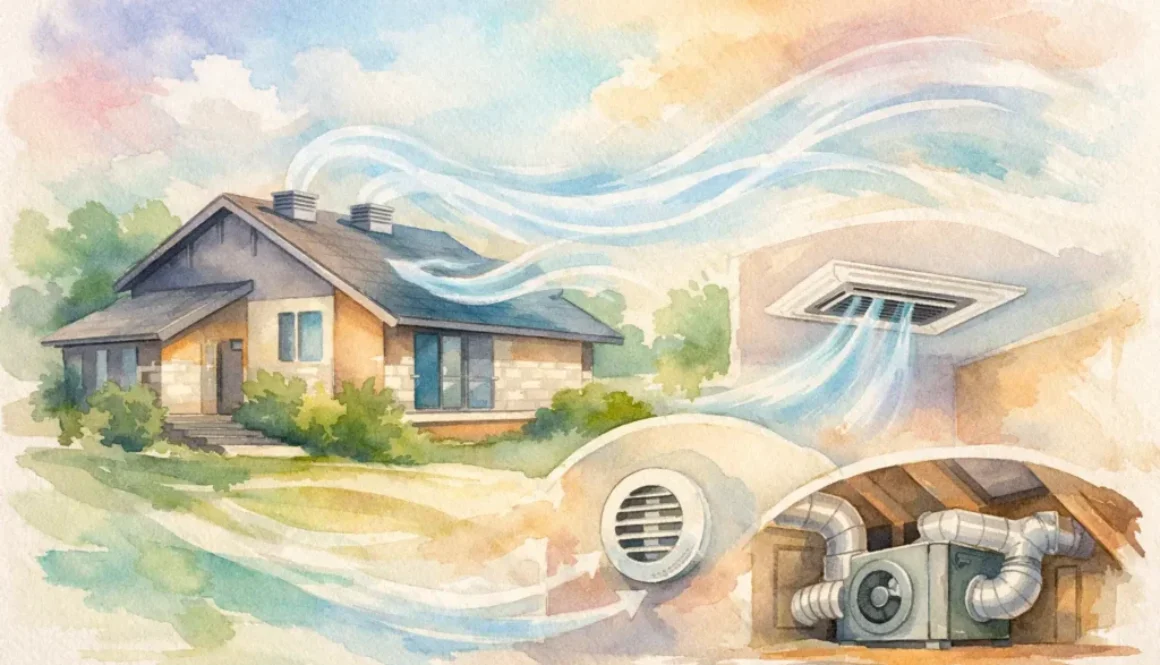
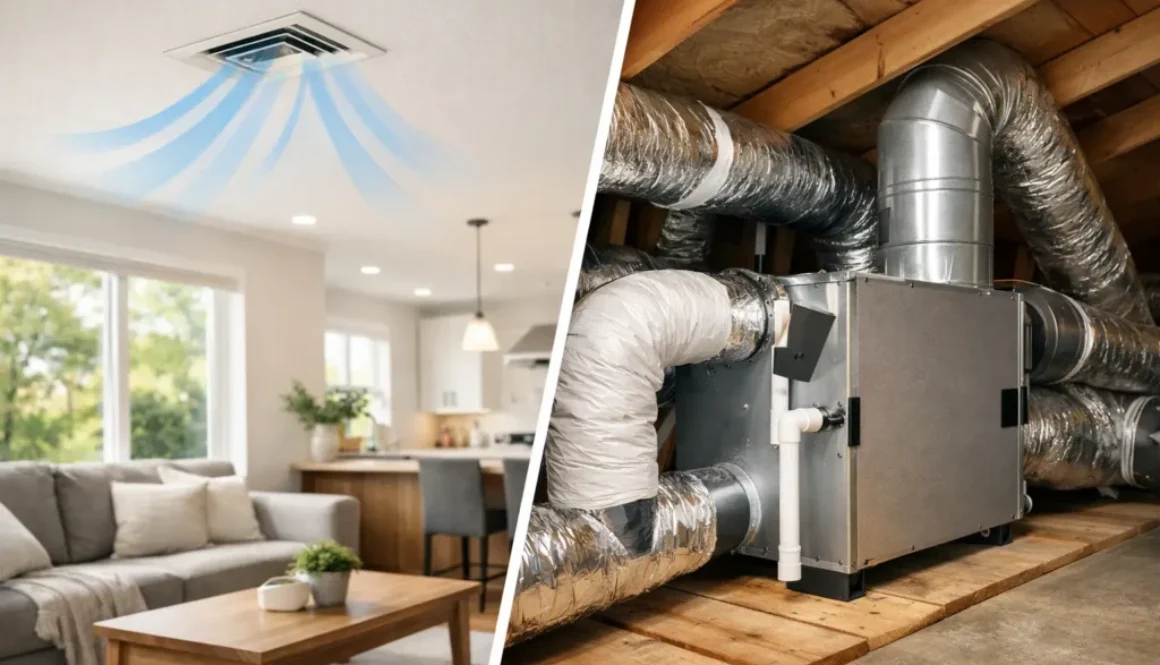
Most systems work by mechanically moving air with fans and ducts or room-based units. The exact setup depends on the system type, but the principle is the same: stale indoor air is removed and fresh outside air is introduced in a controlled way.
In a basic extract system, moisture and stale air are drawn out from wet areas. In a supply-based system, filtered fresh air is introduced into living spaces and bedrooms, creating gentle pressure that helps push stale air out through natural leakage points. In balanced systems, the home receives and expels air at the same time, which gives more control and usually a more even result.
Some systems also recover heat from the outgoing air before it leaves the home. This is where heat recovery ventilation and energy recovery ventilation become especially valuable. They improve air quality without the same heat loss you would expect from simply opening windows all winter.
Types of whole home ventilation systems
Positive pressure systems
Positive pressure systems draw in filtered air, usually from the roof space or outside depending on the design, and deliver it into the home. This creates a slight positive pressure that encourages stale air and moisture to escape.
They can be effective in some homes, especially where condensation is caused by trapped indoor air and the building has enough leakage paths for stale air to exit. The trade-off is that performance depends heavily on the home itself. In a very airtight home, or one with significant moisture generation, this approach may not be the best long-term fit on its own.
Heat recovery ventilation systems
Heat recovery ventilation, or HRV, is a balanced system that extracts stale air and brings in fresh air while transferring heat from the outgoing air to the incoming air. This helps maintain indoor comfort and reduces unnecessary heat loss.
For Melbourne homes, HRV can be particularly useful in winter when households want fresh air without making the house feel cold. It is often well suited to newer homes, renovations, and properties where energy efficiency is a priority.
Energy recovery ventilation systems
Energy recovery ventilation, or ERV, works similarly to HRV but can also help transfer moisture as well as heat, depending on the unit. This can make it useful in homes where both humidity control and thermal comfort matter.
Whether ERV is the right option depends on the building, occupancy, and local conditions. It is not automatically better than HRV. The right choice comes down to how the home performs now and what problem needs solving.
Decentralised ventilation systems
Decentralised systems use individual room-based units rather than one central ducted network. These can be a smart option for existing homes, apartments, or staged renovations where installing full ducting would be difficult or unnecessarily invasive.
They offer flexibility and can target problem rooms effectively. The trade-off is that coverage and coordination across the whole home need to be planned carefully.
Centralised systems
Centralised systems use ducting to serve multiple rooms from a central unit. They often provide a more integrated whole-of-home result and can be ideal for new builds or major renovations where access is easier.
They are not automatically the right answer for every property. Installation complexity, roof space, floor plan, and budget all need to be considered.
Why homeowners install them
Most homeowners do not start looking into ventilation because they love technical equipment. They do it because something in the home is not working as it should.
Condensation is one of the most common triggers. If windows are wet each morning, that moisture is not just sitting on glass. It is a sign that indoor humidity is too high, and over time that can support mould growth on walls, ceilings, window frames, and soft furnishings.
Others notice stale bedrooms, lingering cooking smells, damp wardrobes, or rooms that feel heavy and uncomfortable even when they are clean. Families with asthma or allergies often want better filtration and cleaner indoor air. In older homes, subfloor dampness and inconsistent airflow can add another layer of complexity.
A properly selected whole home ventilation system can help address these problems, but only if the system matches the home. Ventilation is not one-size-fits-all.
What is whole home ventilation system sizing based on?
When people ask what is whole home ventilation system sizing based on, the answer is not just square metreage. Size matters, but so do room use, ceiling heights, occupancy, insulation levels, moisture load, and how airtight the building envelope is.
For example, a family of five in a relatively airtight new build may need a very different solution from a couple in an older weatherboard home with localised condensation in two bedrooms. A house with frequent indoor clothes drying, lots of shower use, or poor bathroom extraction will also place different demands on the system.
That is why home-specific design matters. Choosing purely on price or brand name can leave you with a system that is too weak, too aggressive, or simply not suited to the moisture and airflow patterns in the property.
Can it replace opening windows?
Not entirely, and it should not be thought of that way. Opening windows can still be useful when weather and outdoor air quality allow. The advantage of mechanical ventilation is that it does not rely on people remembering to do it, being home at the right time, or wanting to open the house when it is cold, wet, noisy, or pollen-heavy outside.
In practical terms, a whole home system gives you more consistent results. It keeps air moving in the background rather than leaving ventilation to chance.
Is a whole home ventilation system worth it?
If the home has ongoing moisture, condensation, mould risk, stale air, or poor comfort, it often is. The value is not just in fresher air. It is in protecting the home, supporting health, and making indoor spaces easier to live in every day.
That said, ventilation is not a cure for every problem. If there are building leaks, rising damp, or major insulation issues, those may also need to be addressed. Good ventilation works best as part of an overall approach to home performance.
For homeowners across Melbourne and greater Victoria, the best starting point is usually not a product brochure. It is a proper assessment of how the home behaves, where moisture is coming from, and what kind of air movement will genuinely improve the space. That is the approach Ecoflow Ventilation takes, because the right system should do more than move air – it should help the home feel cleaner, drier, and easier to live in all year round.
If your home keeps telling you something is off, stale air and condensation are rarely random. They are usually signs that the house needs a better way to breathe.