Damp Smell Under Floorboards? Causes & Solutions Melbourne
A damp smell inside your home can be hard to trace. You might clean the carpets, wash fabrics and open the windows, only for the odour to return.
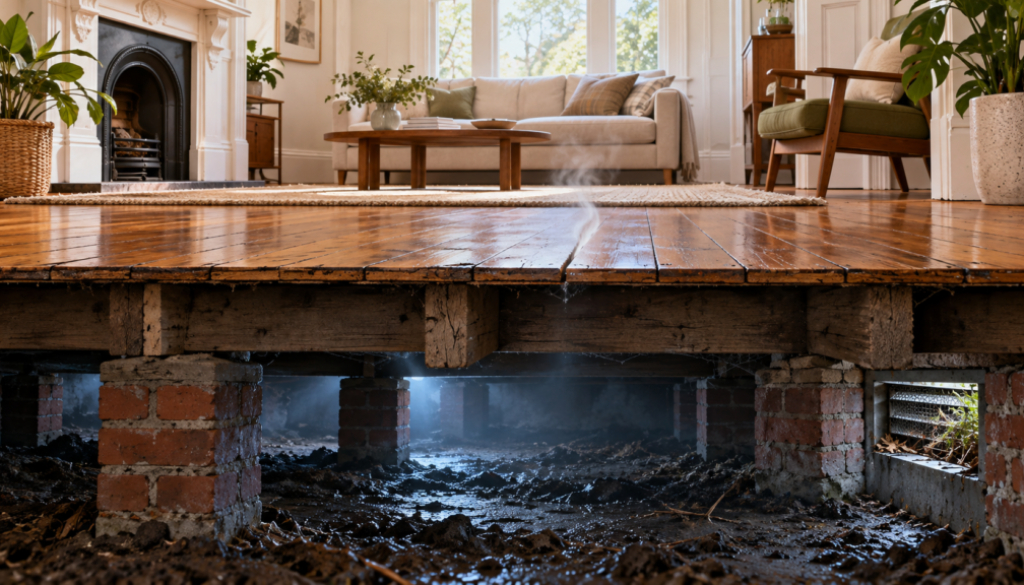
In a home with suspended timber floors, the space beneath the house is one possible source. If moisture and stale air collect in the subfloor, that air may move through openings in the floor and become noticeable in the rooms above.
How can a smell beneath the house get indoors?
The floor between the subfloor and living areas is not always airtight, particularly in older homes. Air may move through gaps between boards, openings around pipes and cables, old heating ducts, access hatches or gaps near walls and skirting boards.
A musty smell may be more noticeable when the home has been closed overnight or during periods of wet weather. The timing can offer a clue, but an inspection is needed to identify the source.
What causes a damp subfloor?
Poor natural airflow
Many Melbourne homes rely on vents in their external walls. If the vents are too limited for the layout, or internal walls prevent air moving across the space, sections beneath the house may remain stagnant.
Blocked vents
Soil, garden beds, mulch, concrete paths, decking, extensions and stored items can partly or completely obstruct vents. A house may have several visible openings but still lack useful airflow beneath the affected rooms.
Wet exposed soil
Moisture can evaporate from exposed soil into the subfloor air. When the ground remains damp for long periods, it can add to the humidity beneath the house.
Water entering beneath the house
Leaking pipes, damaged drains, overflowing gutters, faulty downpipes and poor stormwater drainage may keep the subfloor wet. These issues need to be investigated and repaired; ventilation alone cannot stop new water entering.
Can subfloor ventilation help with the smell?
Ventilation may help when humid, stagnant subfloor air is contributing to the odour. A mechanical system can draw damp air from beneath the home and discharge it outdoors while replacement air enters through suitable openings.
The airflow must pass through the affected area. A fan fitted beside another open vent may draw air in and immediately exhaust it, leaving the deeper, damp section largely unchanged. Ductwork or carefully positioned extraction points may be needed.
What other signs should you look for?
- Damp or muddy soil beneath the house
- Visible mould or fungal growth
- Rusting metal components
- Swollen or cupped floorboards
- Damp timber or a stale smell beneath the house
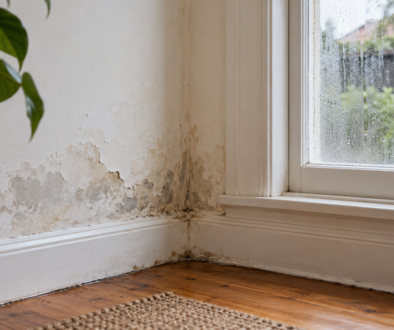
- Odours that become stronger after rain
These signs do not automatically mean you need fans. They indicate that the moisture source, building materials and airflow should be assessed.
Find the source of the damp smell
Ecoflow Ventilation assesses existing vents, subfloor layout and moisture conditions in Melbourne homes before recommending a solution. Depending on the property, that may mean improving passive airflow, installing mechanical ventilation, addressing damp ground or repairing a water entry problem.
If a persistent musty smell seems to be coming from beneath your floorboards, contact Ecoflow Ventilation to arrange a subfloor assessment.