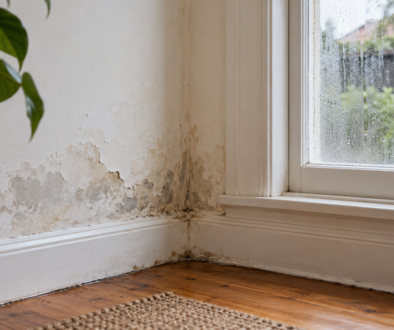

Condensation on bedroom windows, a lingering musty smell and mould that returns after cleaning are rarely just cleaning problems. They are often signs that moist, stale indoor air has nowhere reliable to go. This guide to balanced ventilation explains how a properly designed system replaces that air without relying on open windows, draughts or guesswork.
What balanced ventilation actually does
Balanced ventilation uses mechanical fans to bring fresh outdoor air into the home while removing a similar amount of stale air. Supply air is usually delivered to living rooms and bedrooms, while extraction occurs in moisture-producing areas such as bathrooms, laundries and kitchens. The aim is controlled airflow through the whole home, rather than simply moving air around one room.
The word “balanced” does not mean every fan moves exactly the same volume every second. A well-designed system is adjusted to maintain the intended pressure and airflow pathways for the house. This helps prevent excessive negative pressure, which can pull cold, damp or dusty air through gaps in the building, and excessive positive pressure, which can force humid indoor air into wall and roof cavities.
For many Melbourne homes, this matters most in winter. Windows stay shut, showers and cooking add moisture, and colder glass and external walls create surfaces where water vapour can condense. If that moisture is not removed at its source, it can contribute to mould growth, damaged finishes and uncomfortable indoor air.
How a balanced ventilation system works
A central balanced system generally has a fan unit, ductwork, supply grilles and extract grilles. It continuously removes air from wet areas and introduces filtered fresh air to the rooms where people spend time. Air then travels through the home via door undercuts, transfer grilles or carefully planned pathways.
In some homes, decentralised units are a better fit. These compact wall-mounted units work in pairs or small groups, alternately extracting stale air and supplying fresh air. They can be particularly useful in renovations, apartments or existing homes where extensive ductwork is impractical.
Neither approach is automatically better. The right choice depends on the building layout, access to ceiling or roof spaces, the moisture problem, noise expectations, renovation plans and the level of whole-home control required.
Heat recovery changes the energy equation
A heat recovery ventilation system, often called HRV, transfers heat from outgoing stale air to incoming fresh air through a heat exchanger. The air streams remain separate, but much of the warmth that would otherwise be lost can be retained. In cooler Victorian weather, this can make continuous ventilation more comfortable and economical than opening windows for long periods.
An energy recovery ventilation system, or ERV, also transfers some moisture as well as heat. This can be useful where humidity management and seasonal comfort need careful consideration. However, system selection should never be based on an acronym alone. A home with heavy bathroom condensation, poor kitchen extraction or a wet subfloor may need a different combination of measures than a dry, airtight new build.
Why natural ventilation is not always enough
Opening windows is valuable when outdoor conditions are suitable, and it can quickly clear odours or steam. But it is not a dependable ventilation strategy for every household. During cold, wet weather, many people understandably keep windows closed. Security, traffic noise, bushfire smoke, pollen and a lack of cross-breezes can also make open windows an unreliable option.
Older homes can be draughty without being well ventilated. Random gaps may bring in outside air, yet they do not necessarily remove moisture from bathrooms or improve air quality in bedrooms. A house can feel cold and still have stale, humid pockets where mould thrives.
Balanced ventilation replaces that randomness with known airflow. It provides fresh air where it is needed and extracts moisture and pollutants where they are generated. The result is not a house that feels breezy or cold. It is a home with more consistent, quieter air movement in the background.
The health and home benefits
People often first seek ventilation advice because of visible mould, but the benefits reach further. Effective ventilation can reduce lingering odours, lower indoor humidity and dilute everyday airborne pollutants from cooking, cleaning products, furnishings and occupied rooms. For families managing allergies or asthma, improved filtration and fresher bedroom air may be particularly worthwhile.
The building also benefits. Persistent condensation can affect paintwork, plaster, timber joinery and window surrounds. Underfloor moisture can contribute to damp smells, timber movement and deterioration of structural timbers. Ventilation will not repair existing damage, but it can be an important part of stopping the conditions that allow problems to continue.
There is a practical comfort benefit too. When fresh air enters in a controlled way, rooms are less dependent on opening a window during a cold Melbourne morning or running an exhaust fan only after the mirror has already steamed up.
Balanced ventilation versus other ventilation options
Positive pressure systems introduce filtered roof-space or outdoor air to create a slight pressure difference within the home. They can suit particular existing houses and may improve air movement in some situations. However, they need careful assessment, especially where roof-space air quality, building leakage and condensation risks are concerns.
Extract-only systems use fans to remove air from bathrooms, laundries and kitchens. Strong, correctly ducted extraction is essential in almost every home, but extract-only ventilation relies on uncontrolled replacement air entering elsewhere. That can be a sensible solution for targeted moisture problems, though it does not provide the same level of filtered, planned supply air as a balanced system.
Heat transfer systems move warm air from one part of a home to another. They can help even out temperatures, but they do not replace fresh-air ventilation or moisture extraction. Similarly, subfloor ventilation addresses dampness beneath a suspended floor, not stale air in living areas. A home may need one system or a combination of solutions.
A good design starts with the cause, not the product
A ventilation system should be selected after understanding what is happening in the home. Is condensation concentrated in bedrooms? Does the mould return on external walls? Is there a musty odour under the floor? Are bathroom fans venting outside, or merely into the roof space? Has a renovation made the home more airtight?
Water leaks, rising damp, roof defects and plumbing issues must be identified separately. Mechanical ventilation cannot solve a leaking shower recess or water entering through damaged flashing. Likewise, mould should be safely cleaned or remediated while the moisture source is addressed. Treating only the visible mould usually leads to a frustrating repeat cycle.
A professional assessment considers room volumes, household occupancy, appliance use, existing insulation, building orientation, access for ducting and the condition of the home. It should also account for where outdoor air is drawn from. Fresh-air intakes need to be positioned away from likely contaminants such as exhaust outlets, busy driveways or wood-smoke sources where possible.
Installation details that affect performance
The difference between a system that performs quietly for years and one that disappoints often comes down to design and commissioning. Duct routes should be practical and insulated where required. Fans need to be sized for the actual resistance of the ductwork, not just the advertised airflow on the box. Supply and extract points must support airflow through the home rather than short-circuiting air between nearby grilles.
Noise also deserves attention. A ventilation system should be quiet enough to run when it is needed, including overnight. The best airflow rate on paper is of little value if occupants switch the system off because it is intrusive.
After installation, airflow should be tested and adjusted. Filters, grilles and accessible components should be explained to the homeowner, along with how controls, boost modes and maintenance intervals work. Most systems need periodic filter checks and cleaning, with the exact schedule depending on the equipment, outdoor conditions and household use.
When balanced ventilation is worth considering
Balanced ventilation is particularly worth investigating when a home has recurring condensation, persistent mould without an obvious leak, stale bedrooms, a major renovation or a high-performance new-build design. It can also make sense where household members want better control over fresh air without relying on open windows.
It is not always the first or only answer. A single poorly vented bathroom may need improved local extraction. A damp subfloor may require dedicated underfloor ventilation and drainage checks. For a whole-home pattern of moisture and stale air, however, a balanced approach offers a level of control that ad hoc fans and window opening cannot reliably provide.
A home should not have to choose between being closed up for comfort and fresh enough for healthy living. The right ventilation design gives it a more reliable way to have both.