Negative Pressure Subfloor Ventilation Melbourne
When a subfloor is damp or musty, the direction of airflow matters. A ventilation system can push outdoor air beneath the house, extract air from the subfloor, or combine both methods.
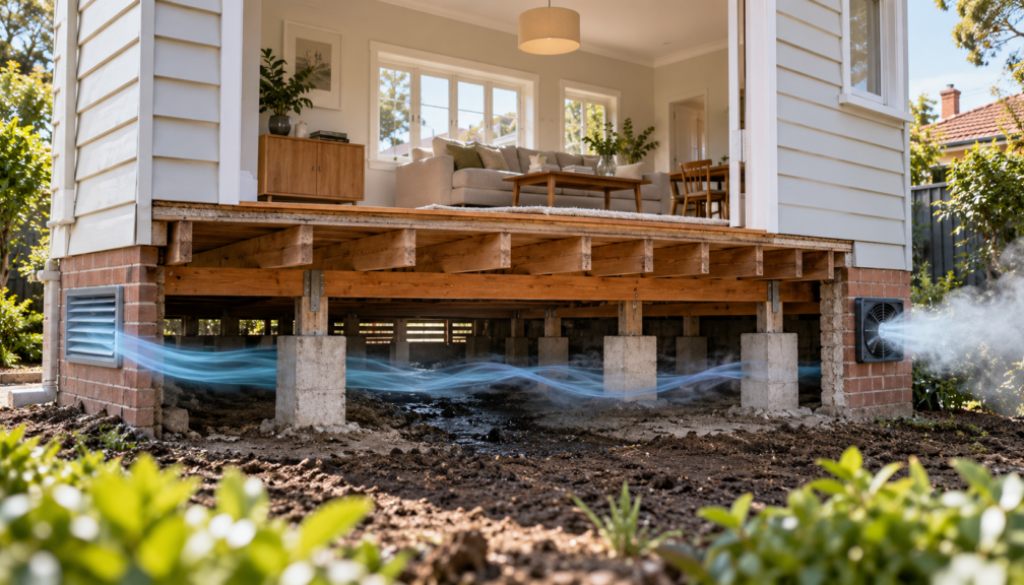
At Ecoflow Ventilation, we often recommend negative pressure subfloor ventilation for Melbourne homes. This approach uses fans to draw damp air from beneath the house and discharge it outdoors. Fresh replacement air enters through selected vents, creating a planned route through the areas that need ventilation.
How does negative pressure subfloor ventilation work?
One or more extraction fans remove air from the subfloor. As air leaves, replacement air is drawn in through existing vents or purpose-designed openings.
The intended airflow path is simple: outdoor air enters through an inlet, travels through the damp section of the subfloor, and leaves through an extraction duct and fan.
The aim is to ventilate the problem area, rather than let fresh air enter through a nearby vent and immediately leave again.
Why do we often prefer extraction?
A supply fan pushes air into the subfloor. If that air does not have a clear route to external outlets, some may move through gaps around floorboards, pipes, access hatches or other openings in the building.
An extraction system is designed to move air in the opposite direction: toward the subfloor extraction points and then outdoors. Where the building and system allow it, this can also help reduce the tendency for musty subfloor air to move into rooms above.
That does not mean supply ventilation is unsuitable for every home. The right method depends on the building layout, available vents and moisture conditions.
Think of a bathroom exhaust fan
A bathroom exhaust fan removes humid air and discharges it outside. Replacement air enters from elsewhere. Subfloor extraction follows a similar principle, although directing air through the spaces beneath a house requires more careful planning.
Fan placement matters as much as fan size
Imagine an extraction fan installed in an external vent, with another open vent just one metre away. The fan may draw air through that nearby vent and immediately exhaust it. The damp area several metres beneath the centre of the house could receive little airflow.
We assess where air can enter, which sections need ventilation and where extraction points should be placed. Ductwork can extend extraction into stagnant or difficult-to-reach areas instead of drawing air only from the perimeter.
Depending on the property, one fan may serve several extraction points, or separate areas may need more than one fan.
Negative pressure does not mean maximum suction
A good system is designed for controlled airflow. Installing the largest available fan can create unnecessary noise and may affect pressure elsewhere in the building if there is insufficient replacement air.
Before choosing equipment, we consider the subfloor layout, internal foundation walls, existing vents, duct routes, fan capacity, air leakage and suitable outdoor discharge points.
What if the home has an open-flued gas heater?
Pressure conditions need particular care in homes with open-flued gas appliances. Extraction fans can contribute to negative pressure inside a home, potentially affecting how an open-flued heater exhausts combustion gases if there is inadequate replacement air.
A subfloor system should therefore be considered as part of the whole building. If an open-flued appliance is present, a qualified gasfitter should assess the relevant ventilation and appliance safety requirements. Energy Safe Victoria explains the risks associated with open-flued gas heaters and negative pressure.
Ventilation cannot repair a water leak
Extraction can help manage humid air beneath a home, but it cannot fix the source of liquid water. Leaking pipes, broken drains, overflowing gutters, poor stormwater drainage or persistently wet ground may need attention before or alongside ventilation.
Blocked subfloor vents should also be checked. A ventilation system works best when the moisture source and airflow path are both understood.
Is negative pressure right for your home?
If you notice musty odours, damp soil, mould beneath floorboards or poor airflow under your Melbourne home, a subfloor assessment can help identify the cause and the appropriate response.
Ecoflow Ventilation assesses existing vents, moisture conditions, subfloor layout and possible duct routes before recommending a system. Contact Ecoflow Ventilation to discuss a negative pressure subfloor ventilation design tailored to your home.