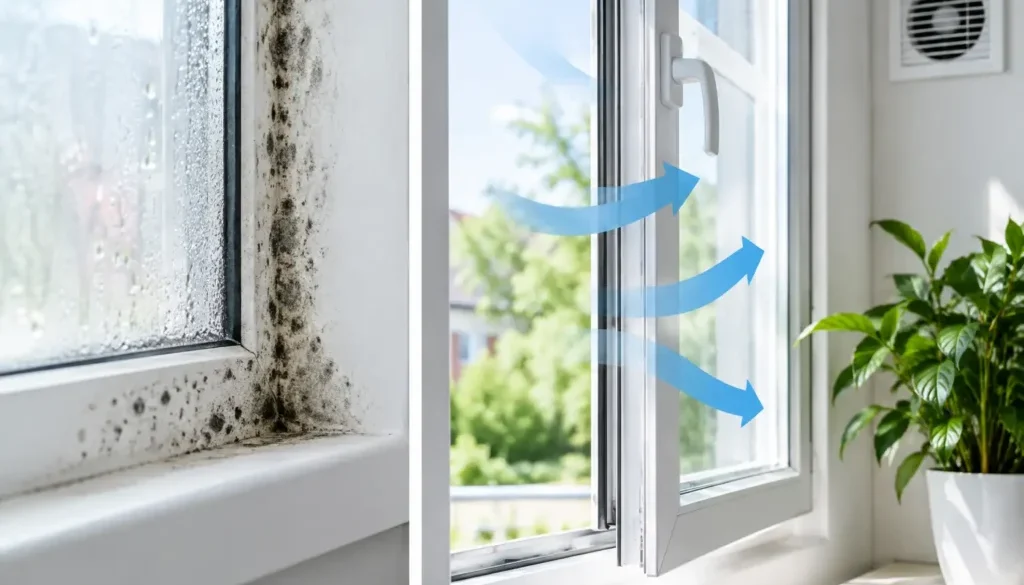
A window that is wet each winter morning is doing more than spoiling the view. Persistent condensation can feed mould around frames, seals, sills and nearby plaster, while signalling that too much moisture is remaining inside the home. So, can ventilation prevent window mould? In many homes, yes – well-designed ventilation can greatly reduce the conditions that allow it to grow. But it must suit the source of moisture, the home’s construction and the way the household lives.
Can ventilation prevent window mould?
Ventilation can prevent or substantially reduce window mould by removing moisture-laden indoor air and replacing it with fresher, drier air when conditions allow. It is particularly helpful where mould is driven by everyday moisture from showers, cooking, drying clothes indoors and breathing overnight.
Mould needs moisture, a surface it can settle on and suitable temperatures to establish itself. Windows are common problem areas because their glass and frames are often colder than the surrounding room. When warm indoor air touches a cold window, the air cools and releases water as condensation. If that water keeps returning, dust and residue around the frame can become a food source for mould.
Ventilation does not sterilise a home or make cold glass warm on its own. What it does is lower the amount of water vapour hanging in the air, so it is less likely to reach the dew point on the window surface. That small shift can make a major difference during Melbourne’s cool, damp months.
Why window mould returns after cleaning
Wiping mould away is worthwhile, but it does not correct the reason the area became damp. If the window is still wet most mornings, spores can return quickly. This is why homeowners often feel as though they are cleaning the same black spots repeatedly, particularly in bedrooms, bathrooms and rooms with poor air movement.
Bedrooms are a frequent example. Two people sleeping with the door and windows closed add a surprising amount of moisture to the room overnight through normal breathing and perspiration. In a well-sealed home, that moisture has limited places to go. By morning, it can collect on the coldest surface – often the glass, aluminium frame or window reveal.
Bathrooms and laundries add sharper bursts of moisture. An exhaust fan that is underpowered, noisy, rarely used or not vented effectively outside may leave humid air drifting through the home. Cooking without using the rangehood, unflued gas appliances and clothes drying racks indoors can have a similar effect.
How ventilation reduces condensation risk
Effective ventilation creates a controlled pathway for stale, humid air to leave and replacement air to enter. The aim is not a draughty house. It is steady air exchange that removes moisture before it settles on cold surfaces.
Opening windows can help on a dry day, and it remains a practical habit after showering or cooking. However, it depends on the weather, security, noise, pollen, bushfire smoke and whether anyone is home to manage it. In winter, households also tend to keep windows shut to retain warmth, exactly when indoor humidity can build up.
Mechanical ventilation offers a more reliable response because it can operate quietly and consistently without relying on open windows. Depending on the home, a system may extract moist air from wet areas, supply filtered outdoor air to living spaces, or balance both processes. The right approach is determined by how the house handles moisture, not simply by the size of the home.
Air movement matters as much as air exchange
A room can have an exhaust fan and still experience mould if humid air never reaches it. Closed doors, crowded furniture, heavy curtains covering vents and cold corners can all create pockets of still air. Window mould often appears first where air circulation is weakest.
A good ventilation design considers where moisture is produced, where it travels and where it can safely leave. In an older Melbourne home, that may mean improving extraction in bathrooms and laundries. In a newer, more airtight build, it may involve whole-home ventilation that provides consistent fresh-air exchange across bedrooms and living areas.
When ventilation alone will not solve window mould
Ventilation is highly effective for condensation-related mould, but not every damp window is caused by high indoor humidity. If water appears after rain, is concentrated around one section of a frame, or is accompanied by staining, peeling paint or soft plaster, investigate a possible leak, failed seal, flashing issue or drainage problem.
Cold window surfaces are another factor. Single glazing, poorly insulated frames and thermal bridges can allow condensation even when indoor humidity is reasonable. Upgrading glazing, improving seals or addressing insulation may be part of the answer. Ventilation and better thermal performance work best together: one reduces the moisture in the air, while the other keeps internal surfaces warmer.
Outdoor humidity also matters. During very humid weather, simply bringing in more untreated outside air may not lower indoor moisture as much as expected. This is one reason a professional assessment is useful. A ventilation strategy should account for local climate, the home’s orientation, insulation, existing exhaust paths and how occupants use each room.
Choosing the right ventilation approach
There is no single system that suits every mould problem. A targeted bathroom fan may be enough for a small, otherwise dry home. A property with recurring bedroom condensation, stale air and mould across several rooms may need a more comprehensive solution.
Decentralised ventilation units can be useful where homeowners want to improve individual rooms without major ductwork. They can provide controlled fresh-air exchange in problem bedrooms or living spaces, which is particularly valuable during renovation work or in existing homes with limited access.
Centralised mechanical ventilation can provide a coordinated whole-home approach, drawing stale air from moisture-producing areas and distributing fresh air where people spend time. Heat recovery or energy recovery ventilation may suit homes where energy efficiency and consistent comfort are priorities, as these systems can transfer energy between outgoing and incoming air while maintaining controlled ventilation.
Positive pressure systems may also be appropriate in certain homes, especially where a tailored design can introduce filtered air and encourage internal air movement. However, they are not a universal mould cure. The roof space, ceiling condition, external air quality and building layout all need consideration before selecting this approach.
The best system is the one that tackles the actual moisture pathway. For example, subfloor dampness needs its own assessment. Ventilating living areas will not correct a persistently wet subfloor, and a subfloor system will not remove steam generated by showers upstairs.
Practical steps while you assess the problem
Start by observing when and where condensation forms. Is it mainly on bedroom windows in the morning, on bathroom glass after showers, or around one window after rain? These patterns help distinguish everyday humidity from a building defect.
Use bathroom and kitchen extraction every time moisture is produced, and leave it running long enough to clear residual humidity. Keep internal doors open where practical after showering, unless the bathroom is being actively extracted to the outside. Avoid drying washing indoors where possible, or use a properly vented dryer and ensure the area has adequate ventilation.
It also helps to keep air moving around windows. Do not press beds, wardrobes or heavy curtains tightly against cold external walls. Wipe visible condensation from frames and sills rather than allowing water to sit, and clean existing mould carefully using an appropriate method for the surface. If the affected area is extensive, keeps spreading or is linked with strong musty odours, seek professional advice.
A small indoor humidity monitor can provide useful evidence. Many homes aim to stay within a moderate humidity range, but the ideal level varies with indoor temperature and building conditions. The real indicator is whether windows remain dry, the air feels fresh and mould stops returning.
A healthier response than opening a window and hoping
Recurring window mould is not a housekeeping failure. It is often a sign that the home is holding more moisture than it can safely manage. A tailored ventilation assessment can identify whether the priority is extraction, fresh-air supply, heat recovery, subfloor ventilation or repairs to the building itself.
For homeowners across Melbourne and Victoria, Ecoflow Ventilation can help turn that recurring morning condensation into a clear, practical plan for healthier air and a drier home.