Windows dripping on cold Melbourne mornings are more than an annoyance. When condensation appears repeatedly, it is often a sign that everyday moisture from showers, cooking, clothes drying and breathing is staying inside the home. Reducing indoor humidity mechanically gives that moisture a controlled path out, helping protect your health, comfort and property.
Opening a window can help on a mild, dry day, but it is not a dependable moisture-control strategy. It is harder to maintain during winter, when outdoor air is cold, wet or polluted, and it can waste heated air. A properly designed mechanical ventilation system removes damp air consistently, rather than relying on household habits or changing weather.
Why high indoor humidity needs attention
Humidity is simply water vapour in the air. The concern is not that a home contains any humidity at all, but that levels stay high enough for moisture to settle on cold surfaces. Glass, external walls, ceiling corners and poorly insulated sections of a home are common condensation points.
That surface moisture can feed mould, create musty smells and damage paint, plaster and furnishings. In older homes, persistent dampness may also affect timber floors, subfloors and structural timbers. For people with asthma, allergies or respiratory sensitivities, mould spores and stale air can make the home feel particularly uncomfortable.
Relative humidity is affected by temperature as well as the amount of water in the air. Warm air can hold more moisture than cold air. When moist indoor air touches a cold window or wall, it cools and releases water as condensation. This is why wiping windows dry each morning treats the symptom, not the moisture source.
Reducing indoor humidity mechanically: what it means
Mechanical humidity control uses fans, ducts, vents and purpose-built ventilation equipment to move air where it needs to go. In most homes, the goal is to extract moist, polluted air from wet areas and replace it with fresh, drier outdoor air in a measured way.
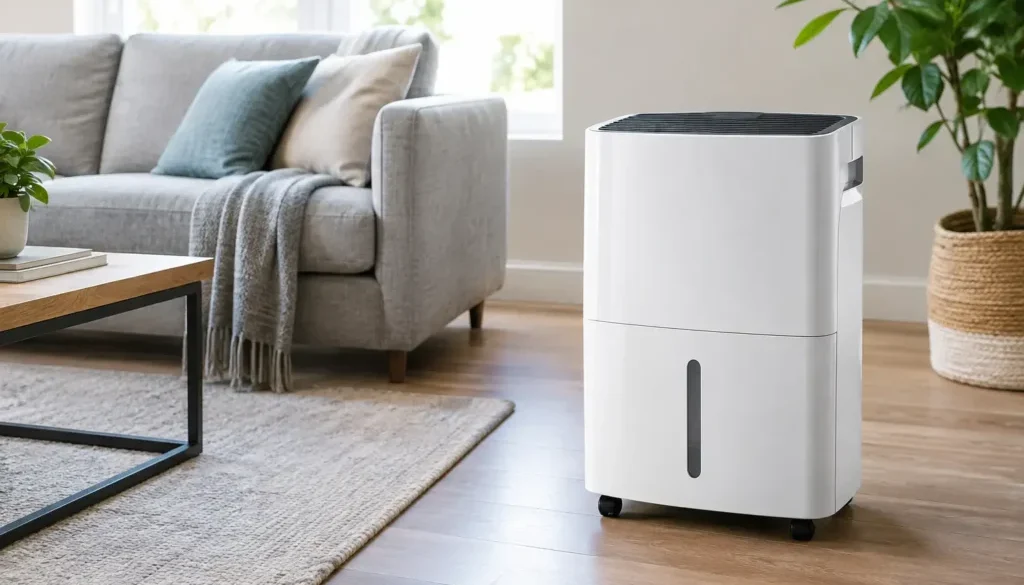
Unlike a portable dehumidifier, ventilation does not collect water in a tank. It exchanges air. This distinction matters because moisture is often produced continuously throughout a household. A dehumidifier can be useful in a single problem room or during a short-term drying period, but it may not address stale air, bathroom steam, kitchen moisture or underfloor dampness across the whole home.
The right solution depends on where the moisture starts, how the house is built, whether it is occupied continuously and how well it is insulated and sealed. A bathroom with no effective exhaust needs a different response from a weatherboard home with a damp subfloor or a tightly built new home experiencing condensation throughout winter.
Local extraction for bathrooms, laundries and kitchens
A well-sized exhaust fan is the most direct mechanical response to moisture generated in a wet room. It captures humid air close to the source and discharges it outdoors through suitable ducting. For best results, extraction should continue after a shower or laundry cycle, either through a run-on timer, humidity sensor or sensible household use.
The details make a substantial difference. An underpowered fan, long flexible duct run, blocked grille or venting into a roof cavity can leave moisture inside the building fabric. Kitchen rangehoods also need to discharge outdoors where practical. Recirculating units can reduce odours and grease but do not remove water vapour from cooking.
Local extraction is highly effective when dampness is limited to wet areas. It may not be enough when bedrooms feel stuffy, windows sweat throughout the home or mould returns in rooms without an obvious moisture source.
Whole-home mechanical ventilation
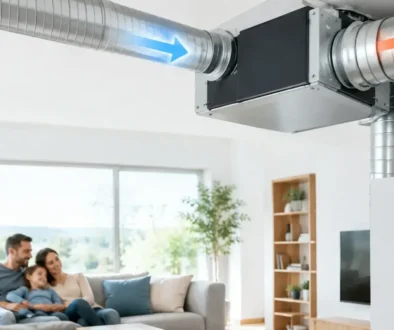
Centralised or decentralised whole-home systems provide planned airflow beyond individual bathrooms. They introduce fresh air and remove stale, humid air in a more balanced pattern, helping prevent moisture from drifting through the house and settling in cold corners.
A centralised system generally uses a network of ducts connected to a main unit. It can be a strong option for new builds and major renovations, where ducts can be incorporated early. Decentralised systems use compact wall-mounted units in selected rooms. They can be particularly practical in existing homes where installing extensive ductwork would be disruptive.
For many Victorian homes, heat recovery ventilation or energy recovery ventilation is worth considering. These systems transfer heat between outgoing stale air and incoming fresh air, reducing the heating penalty associated with ventilation. Energy recovery systems can also transfer some moisture, so their suitability should be assessed against the home’s humidity profile and the desired level of moisture removal.
The benefit is not simply lower humidity. It is steadier fresh-air supply, fewer stagnant zones and a healthier indoor environment without needing to leave windows open all day.
Positive pressure systems and their limits
Positive pressure ventilation introduces filtered outdoor air into the home, creating a gentle pressure difference that encourages indoor air to leave through existing gaps and designated exhaust points. It can improve perceived freshness and may assist in some houses with mild condensation or stale-air concerns.
However, positive pressure is not a universal cure for dampness. Its performance depends on the home’s leakage paths, outdoor conditions and whether moisture sources are being extracted effectively. In a poorly designed setup, warm moist indoor air can be pushed into parts of the building where it may condense. It should be considered as part of an overall ventilation strategy, not as a substitute for bathroom extraction or a diagnosis of the actual moisture problem.
Subfloor ventilation for moisture below the house
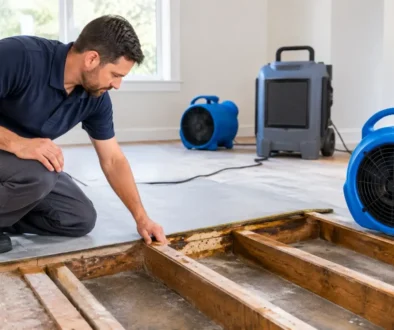
A damp or musty smell that seems strongest near the floor can point to a subfloor issue. In homes with suspended timber floors, moisture below the house may come from poor ground drainage, inadequate vents, plumbing leaks, wet soil or limited airflow.
Mechanical subfloor ventilation uses fans to move air through the underfloor space, helping remove humid air and reduce moisture accumulation. This can support drier conditions beneath the home, reduce musty odours and help protect floor framing. It is particularly relevant where natural subfloor vents are obstructed, insufficient or ineffective due to the site layout.
Subfloor fans will not fix a drainage failure or leaking pipe. Those sources need to be corrected first or at the same time. Mechanical airflow works best when paired with practical moisture management, such as improving external drainage and ensuring the subfloor is not receiving ongoing water entry.
Design matters more than the fan alone
Mechanical ventilation is not a one-size-fits-all product purchase. A system needs the right airflow rate, placement, duct design, controls and discharge location to solve the issue without creating unnecessary noise, drafts or energy use.
A home assessment should consider the building layout, insulation, window performance, wet-area use, occupancy, visible mould patterns and subfloor condition. It should also look for basic contributors such as unvented clothes dryers, indoor clothes racks, gaps around exhaust ducts and plumbing leaks. Ventilation cannot compensate indefinitely for water entering through a roof, wall or pipe.
Running costs matter too. Continuous low-level ventilation may use less energy and provide more consistent air quality than high-speed operation only after a problem becomes obvious. Systems with efficient motors, demand controls and heat recovery can help balance moisture control with comfort and energy efficiency. The best operating approach depends on the system and the home, so commissioning and clear homeowner guidance are essential.
Signs it is time to seek a tailored solution
Recurring window condensation, mould that returns after cleaning, lingering bathroom steam, musty cupboards, damp smells under the house and cold, clammy rooms all justify a closer look. So does a home that feels stale when windows are closed, even if mould is not yet visible.
For homeowners in Melbourne and across Victoria, winter condensation often exposes weaknesses that have been building quietly through the year. A professional assessment can separate surface condensation from more serious building moisture, then match the solution to the cause. Ecoflow Ventilation designs mechanical ventilation around the home itself, whether that means targeted extraction, heat recovery, decentralised room ventilation or subfloor airflow.
A drier home should not depend on daily window wiping or leaving the bathroom door open. When airflow is designed around how your household actually lives, mechanical ventilation can make fresh, comfortable indoor air part of the background – exactly where it belongs.