A timber floor can look perfectly sound from above while moisture is quietly causing trouble beneath it. Boards may cup at their edges, open at the joints or develop a persistent musty smell that no amount of cleaning seems to remove. Protecting timber floors from moisture is not simply about choosing the right finish. It means controlling the moisture moving through your home, from humid indoor air to damp subfloors and hidden plumbing leaks.
For Melbourne and Victorian homeowners, this matters because homes experience wide seasonal shifts. Cold mornings, heated rooms, wet winters and poorly ventilated underfloor areas can create the conditions for condensation and dampness to build up over time. Addressing the cause early helps protect both the appearance of your floor and the structure supporting it.
Why moisture changes timber floors
Timber is a natural material, so it responds to changes in moisture content. When it absorbs excess moisture, it expands. When it dries too quickly, it contracts. Small seasonal movement is normal, but prolonged or dramatic changes can lead to cupping, crowning, gapping, lifting boards and finish damage.
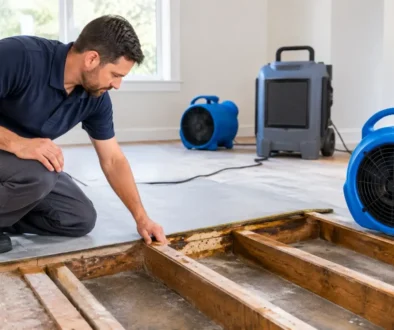
The visible floor is only part of the picture. In suspended-floor homes, damp air under the house can affect the underside of boards, joists and bearers. Moisture may also support mould growth and timber decay, particularly where airflow is poor. A floor that feels unusually cold, smells musty or becomes noticeably more humid in one room may be signalling an underfloor issue rather than a flooring issue alone.
Engineered timber is often more dimensionally stable than solid hardwood, but it is not waterproof. Excess humidity, wet mopping, water leaks and a persistently damp subfloor can still damage its surface layers, adhesives and joints. The right response depends on the flooring type, the construction of the home and, most importantly, where the moisture is coming from.
Start by finding the source of dampness
A coating or sealant cannot solve an active moisture problem. Before repairing, sanding or replacing timber flooring, identify whether the moisture is entering from above, below or within the home.
Water from above is usually easier to recognise. Leaking appliances, overflowing showers, damaged roof plumbing, wet shoes near an entry and spills left sitting on the floor can all cause localised damage. Check whether the issue is confined to one area, particularly near kitchens, bathrooms, laundries, external doors or windows.
Moisture from below can be less obvious. In older homes with suspended timber floors, wet soil, inadequate drainage, leaking pipes or limited subfloor ventilation can leave the under-house space damp for long periods. That damp air rises through gaps, penetrations and the floor structure. If there is a musty smell under the house, visible mould on joists or condensation on pipes, the subfloor needs proper attention.
Indoor humidity can be the missing link. Cooking without extraction, long showers, clothes drying indoors and insufficient fresh-air exchange all add water vapour to the home. When this humid air meets a cold surface, it can condense. Windows that regularly sweat in winter are a useful warning sign that moisture levels may be too high throughout the house.
Signs your floor may be affected by moisture
Look beyond obvious puddles. The following signs warrant closer investigation, especially if they keep returning after cleaning or minor repairs:
- boards that cup, buckle, swell or feel uneven underfoot
- gaps that appear suddenly, or change significantly with the seasons
- dark staining, peeling finish or white haze beneath a coating
- a damp or musty odour, cold floors or mould around skirtings
- soft timber, bouncy areas or signs of decay below the floor
These symptoms do not all have the same cause. For example, narrow gaps can occur during dry conditions, while cupping more often points to a moisture imbalance between the top and underside of a board. An accurate diagnosis avoids spending money on cosmetic repairs that do not last.
Protecting timber floors from moisture below
Where a suspended floor sits over a damp subfloor, reducing moisture at its source is the priority. Start outside by checking that surface water drains away from the home, downpipes discharge appropriately and garden beds are not directing water against the building. Plumbing leaks beneath the house should be repaired promptly, even if they seem minor.
The subfloor also needs a practical path for moist air to leave. Blocked or undersized vents, dense landscaping, stored materials and enclosed additions can restrict natural cross-ventilation. In some homes, opening vents or clearing obstructions is enough to improve conditions. In others, natural ventilation is unreliable because of the site, the home’s layout or consistently damp external conditions.
A professionally designed subfloor ventilation system can provide controlled air movement to help remove damp air from beneath the house. The system should be selected around the home, rather than treated as a standard fan installation. The number and location of fans, available vents, moisture load, external air conditions and access constraints all affect performance.
There is a useful trade-off to understand here. Moving air through a subfloor can help dry a damp space, but ventilation alone cannot overcome standing water, poor drainage or a plumbing leak. Those faults must be fixed first. Similarly, drawing in very humid outdoor air at the wrong time can be counterproductive, which is why assessment and system design matter.
Keep indoor humidity in a healthy range
Timber floors benefit from a home that is neither persistently damp nor excessively dry. For most households, a stable indoor relative humidity around 40 to 60 per cent is a practical target. It supports comfort while reducing the conditions that encourage condensation, mould and timber movement.
Daily habits help. Use properly ducted exhaust ventilation while showering and cooking, keep lids on pots where practical, and avoid drying large loads of washing indoors without effective ventilation. If a bathroom or laundry fogs up and stays damp long after use, extraction may be inadequate or not being used for long enough.
Whole-home mechanical ventilation can be valuable where humidity, condensation or stale air are recurring problems. Depending on the home, a positive pressure, balanced, decentralised or energy recovery ventilation system may be suitable. Energy recovery systems can exchange stale indoor air for filtered fresh air while recovering some heat, helping households manage ventilation without unnecessarily wasting winter warmth.
No single system is right for every property. A newer, tightly built home with window condensation has different needs from a weatherboard home with a damp crawl space. A tailored assessment considers moisture sources, airflow pathways, room use, building construction and the family’s health concerns before recommending a solution.
Protect the surface without trapping a problem underneath
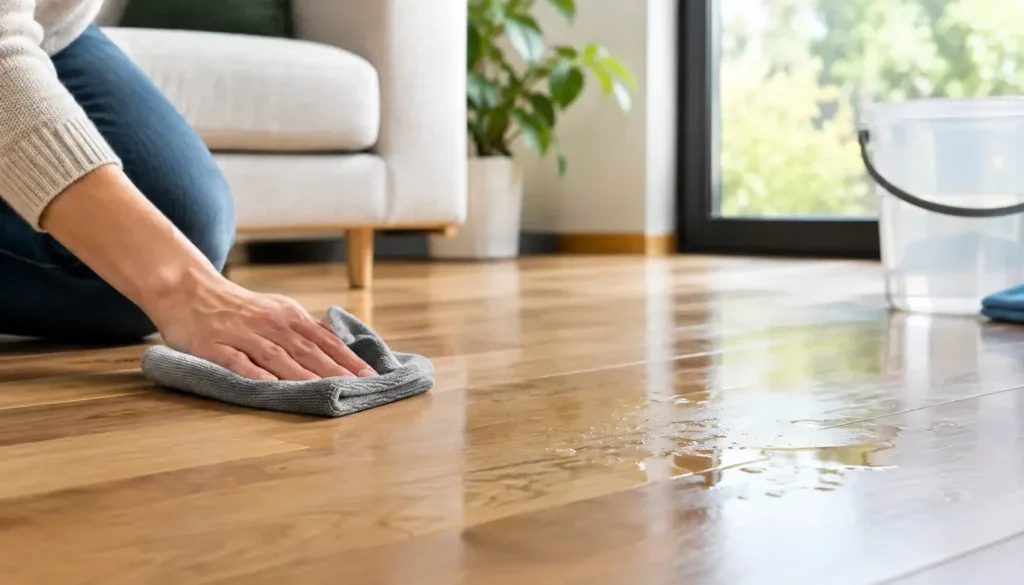
Good floor care still has a role. Wipe spills promptly with a dry or barely damp cloth, use mats at external doors and avoid soaking timber with a wet mop or steam cleaner unless the flooring manufacturer specifically permits it. Felt pads beneath furniture and sensible protection around pet bowls can prevent surface wear that makes finishes more vulnerable to water.
Use cleaning products suitable for your particular timber floor and finish. Excess water is more harmful than most homeowners realise, especially around board edges and joints. If you are considering re-coating or refinishing a floor that has cupped, stained or lifted, have its moisture condition assessed first. Sealing in a damp floor can delay drying and disguise a problem until it worsens.
For new floors and renovations, allow timber products to acclimatise as specified before installation, and ensure the subfloor or slab meets the flooring supplier’s moisture requirements. This is one area where cutting corners can lead to expensive movement and warranty disputes later.
When to bring in an expert
A recurring damp smell, visible mould, persistent window condensation or moisture under the house should be treated as a home-environment issue, not just a cleaning task. Likewise, if floorboards are lifting, softening or changing shape, arrange an inspection before carrying out repairs.
Ecoflow Ventilation helps Melbourne and Victorian homeowners assess moisture and airflow problems with the wider home in mind. The aim is not simply to move air, but to create a drier, healthier environment that protects the people living in the home and the materials that hold it together.
Your timber floor does not need perfection to perform well. It needs stable conditions, prompt attention to water and enough fresh-air movement for moisture to leave the home instead of settling into its structure.